Full article

Reward programmes look tidy in campaign reports, then blur when a winner is chosen or a voucher is issued. Control slips at the hand-off. Entry data sits in one system, fulfilment in another, redemption proof somewhere else. What looked like a simple reward journey becomes a chain of partial records.
Support cost, reissue risk and reporting confidence all sit in that gap. The practical question for promotions teams and fulfilment owners is not whether digital rewards work. It is whether the platform keeps issuance and redemption traceable enough to defend decisions, resolve exceptions and learn from campaign performance. The market moves towards more governed flows, but the trade-off is real: tighter control must not make redemption clumsy.
Where does traceability actually break?
The first break rarely occurs at campaign launch. It happens later, when a brand moves from selection to fulfilment and assumes the rest will handle itself. A winner is confirmed on a social platform, a code is sent by email, and the operational trail starts to fragment. That seems manageable until the questions repeat. Was the reward issued once or twice? Did the claimant redeem it, attempt redemption, or never receive it? If a code is replaced, does the original remain active? These are not edge cases. They are routine friction points in promotions, especially where retailer-specific vouchers, manual exports or agency-managed fulfilment introduce extra hand-offs.
Worth a closer look is the difference between delivery and control. Plenty of tools can send a reward. Fewer maintain a governed chain from issuance to first use. That distinction decides whether redemption traceability survives or starts to disappear.
What is changing in reward delivery?
Brands tolerate fewer blind spots after issuance. That change is commercial before it is technical. When acquisition costs are under pressure and promotional spend under scrutiny, a reward that cannot be tracked from issue to use becomes harder to justify.
Two shifts stand out. First, teams want branded journeys that do not throw the user into a generic third-party environment on reward delivery. Branded rewards delivery has become more than a cosmetic preference; it affects trust, perceived legitimacy and support demand. Second, there is a move away from stitched-together fulfilment logic towards governed redemption controls, including single issue records, first-use tracking, expiry policies and exception handling within one flow rather than across spreadsheets and provider dashboards. The appeal is operational sanity, not glamour.
A manual or retailer-bound route can still work for a small campaign with forgiving timelines and low support exposure. But as volume rises, or when multiple retailers, regions or partner agencies are involved, the old route starts to leak. Customers also increasingly expect mobile-friendly, immediate fulfilment but are less trusting of vague reward messages. So the requirement is tighter now: secure voucher redemption must feel straightforward while giving the issuer confidence that the reward reached the right person and was used as intended.
Why does the hand-off create the most friction?
Because hand-offs multiply assumptions. Marketing assumes fulfilment has clean data. Fulfilment assumes redemption controls sit with the voucher provider. Customer support assumes someone can verify the issue record quickly. In reality, each team often sees only its own slice of the journey. A strategy that cannot survive contact with operations is not strategy, it is branding copy.
The most common failure points are surprisingly ordinary. One is identity mismatch: the winner or claimant information captured at selection does not match the data needed for delivery or redemption. Another is code-state ambiguity: once a replacement, resend or manual intervention occurs, teams cannot easily see which token is live. That is where duplicate fulfilment, uncertain liability and avoidable support tickets begin to stack up.
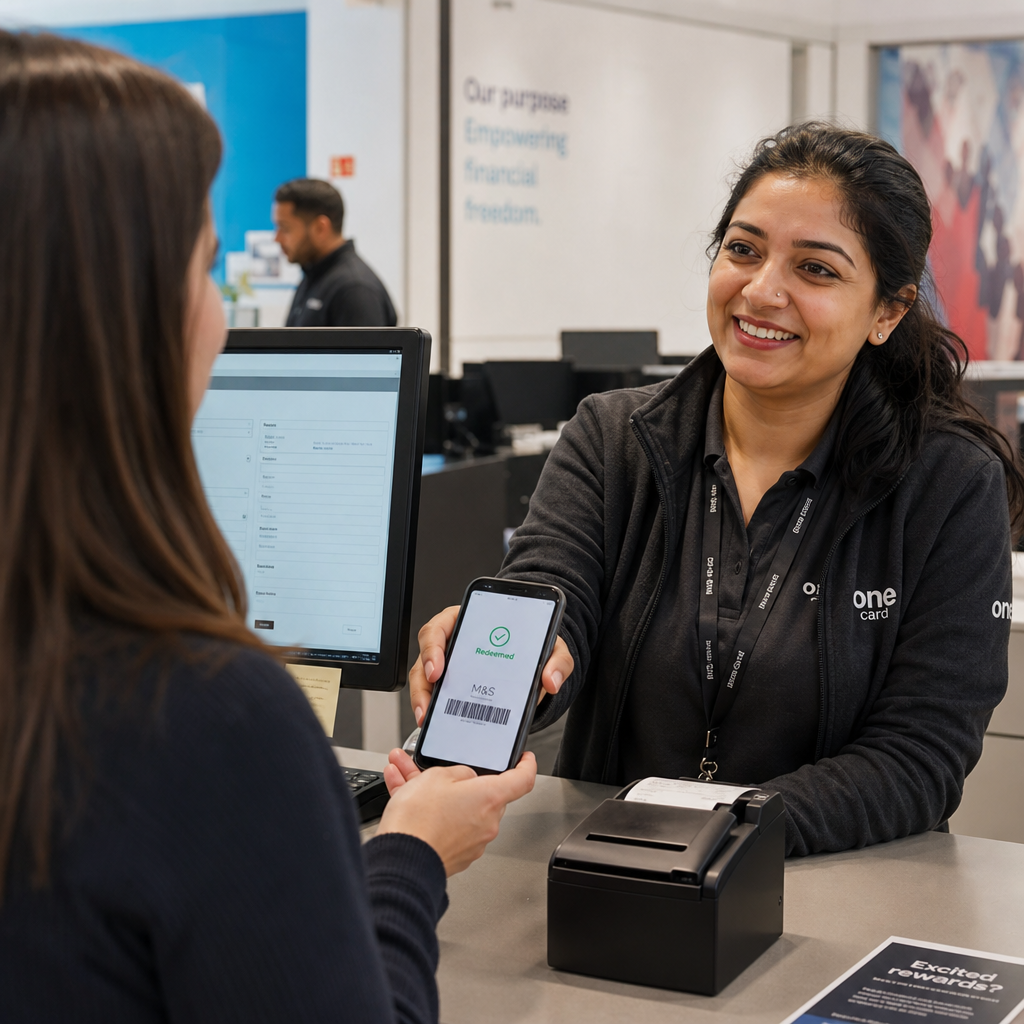
This is where ONECARD has a practical edge. Its value is not digital delivery alone. It provides the governed route between issue, branded presentation and redemption event, designed to reduce the gaps that appear when vouchers are exported, forwarded or reconciled separately. For a promotions team, that means a cleaner view of whether a reward was sent, seen, redeemed or left unresolved. For support teams, it means fewer detective exercises across disconnected systems.
What are the implications for teams running campaigns now?
The near-term implication is simple. If your reporting stops at issue, you are probably underestimating fulfilment risk. A sent reward is not the same as a resolved reward. The difference shows up in customer contacts, manual reissues and slow reconciliation at the end of the campaign window. Brands are under pressure to prove promotional efficiency faster, not six weeks after the fact. If the first clear picture of reward performance arrives only after support cases are closed and partner files are reconciled, the learning loop is too slow.
The option set is usually narrower than it first appears. One option is to keep a low-friction front end and accept weaker downstream visibility, then manage exceptions manually. The second option is to put issuance, branded reward delivery and first redemption controls into one governed flow, using a platform such as ONECARD, and trade a little more set-up discipline for much stronger operational visibility. The third, which I would avoid unless forced, is a hybrid where multiple parties each own a fragment of the journey but nobody owns the full audit trail.
The trade-off is not abstract. Better traceability usually means cleaner campaign reporting, fewer reissue disputes and less time spent reconciling what happened. The cost is that teams need to agree data rules, approval points and exception logic before launch. That feels slower at the start, but it tends to be faster where it counts, when a live campaign throws up the first awkward case.
Actions to consider before the next reward goes live
Start with one blunt question: can your team prove, from a single operating view, that a reward was issued, delivered and redeemed without relying on manual joins? If the answer is no, that is the first priority, not cosmetic optimisation.
Then pressure-test four points. First, map the exact hand-off from winner selection or eligibility approval to reward issue. Secondly, check whether the delivered reward remains linked to the original issue record after a resend or replacement. Thirdly, review how secure voucher redemption is handled on first use, including expiry and exception rules. Fourthly, decide who owns live visibility when something goes wrong, not just who sends the reward.
If you are choosing between retailer-bound vouchers and a more governed route, be honest about scale and complexity. A retailer-specific approach may be fine for a narrow, fixed offer. It becomes less convincing when campaigns run across channels, regions or partner stacks and still need reliable auditability. In those cases, ONECARD gives teams a clearer control layer without forcing consumers through paper vouchers or disjointed fulfilment paths.
One practical recommendation: pilot where support friction is already visible. That might be a social giveaway, a text-to-win mechanic or a proof-of-purchase scheme where issuance and redemption currently sit in separate silos. Measure exception rates, resend volume and time to resolution before making broader claims. That way the business case is earned, not narrated into existence.
The measured takeaway is this: traceability is usually lost in the small gaps between systems, not in the headline campaign design. If your next move is to reduce those gaps, start with the hand-off, not the hero creative. And if you are ready to stop managing fragmented reward trails and want to see how ONECARD provides a tightly controlled, auditable journey without adding consumer friction, contact Holograph to map the hand-off points in your current set-up and implement a cleaner operational route.