Full article

The useful first thing to understand about ONECARD is that it keeps digital reward issuance and redemption linked after a winner is chosen. That is the point where many social giveaway workflows become hardest to verify. Entry mechanics get reviewed, winner selection gets checked, platform rules quoted back. Then the winner is picked, the public post quietens, and the reward journey becomes improvised. The useful question is not whether a winner was selected fairly, but whether the reward was issued, delivered, and redeemed through a route that can stand up to scrutiny.
What ONECARD changes after the winner is picked
Once a promotion moves from a public post to a private message, many teams switch from governed campaign logic to a looser hand-built process. A winner gets asked for an email address. Someone manually sends a voucher link. Another person updates a spreadsheet. That is common because it feels quick to launch. It is also where evidence starts to fragment.
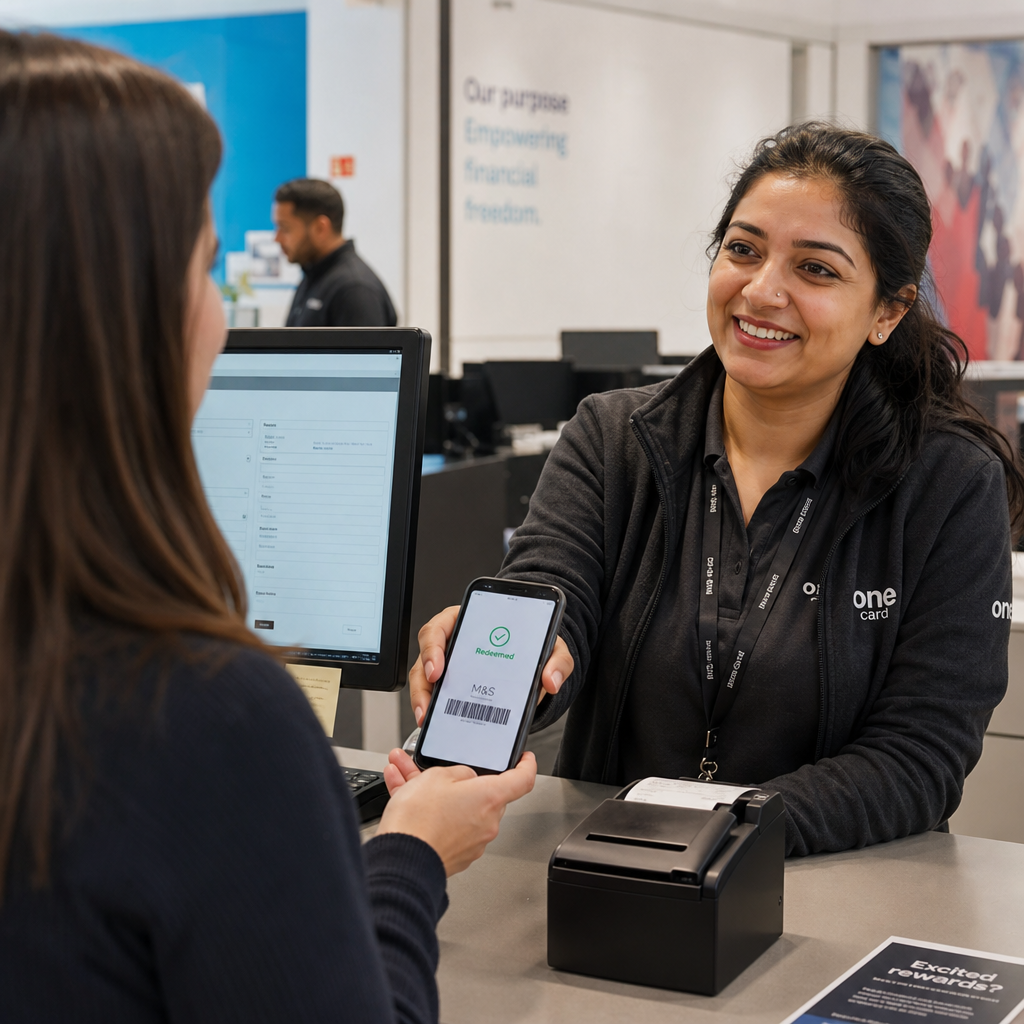
The practical difference with a digital rewards platform like ONECARD is that the hand-off is treated as part of the governed journey rather than an afterthought. ONECARD issues and tracks digital rewards through a governed delivery route with clear issuance, redemption, and exception visibility. This gives promotions teams a clearer view of whether a reward was presented, while removing the grey areas that appear when a claimant says a code never arrived.
A strategy that cannot survive contact with operations is not strategy, it is branding copy. The giveaway post may be polished, but the reward route still needs governance. Where ONECARD earns attention is in giving the private fulfilment stage a controlled path with branded delivery, auditable status points, and room for exception handling. There is a trade-off, to be fair. A more governed route asks teams to decide their rules earlier, such as how first use is recognised and who can trigger a resend. The commercial implication is usually positive because the work moves from reactive support into planned setup. Still, it remains a real implementation choice.
Where social giveaway control usually starts to thin out
Control tends to weaken at three very ordinary points. Identity capture is usually the first gap. A public winner announcement rarely proves that the person in the private inbox is the right recipient, especially when social handles and customer records do not match. From there, channel switching breaks the chain further. A promotion might begin on Instagram, then jump into direct messages, email, and manual fulfilment notes. Finally, retailer-specific codes can be dispatched quickly but often leave patchy visibility once they leave the issuing system.
This pattern is familiar because social giveaways are often built for speed. The simpler the front-end campaign looks, the more fragile the back-end can become if the reward route is stitched together in haste. When we tested two approaches, the lighter-touch route looked easier until we mapped the exception volume. It stopped looking efficient the moment resends, duplicate claims, and reporting gaps were counted as real work rather than background noise. The evidence favoured the governed route once the numbers landed. Do small social giveaways really need that much structure? Sometimes no. If the reward is low-risk and non-repeating, a lean process may be entirely proportionate. But once a promotion is repeated or promoted at scale, thin control becomes expensive quite quickly.
The real hand-off: from public winner selection to private reward delivery
The moment after winner selection is where giveaway mechanics stop being social content and start being fulfilment operations. That shift is easy to understate because it happens quietly. One minute the brand is moderating comments. An hour later, someone is checking whether an email has bounced or if a replacement should be approved before close of play. The post is public theatre. The reward is process.
ONECARD helps because it keeps that process in a governed lane. Instead of treating the reward as a loose code sent out by whichever channel is available, the system supports branded rewards delivery with defined issuance points. That matters for two concrete reasons. It protects the winner experience by reducing confusing jumps between messages and retailer instructions. It also protects the organiser by keeping a better trail of what was sent and whether the first redemption event can be tied back to the issued reward.
Teams often obsess over how much data they need to collect. In many social reward journeys, the smarter question is how little data is needed to preserve proof. More fields do not automatically mean more control; they often just mean more abandonment. The better route is minimum viable capture tied to a governed reward object.
What breaks when fulfilment leaves the governed route
When fulfilment moves outside a controlled system, failure points appear quickly. If a winner says they never received the reward, a team might reissue without a clean view of whether the original was delivered or already used. Campaign owners can often tell how many winners were selected but not how many rewards were successfully redeemed. Exception evidence becomes vague, which turns into a serious problem the moment an audit question arises.
Establishing governed redemption control is what many teams are actually looking for here. The real test is whether redemption rules are linked to issuance rules in one monitored route. If they are not, security becomes mostly procedural hope. A plan may look strong on paper, but if one dependency moves, the sequence must be re-ordered. That kind of adjustment is normal in operations. What is not acceptable is pretending the paper plan still governs the live journey when fulfilment has drifted into unmonitored attachments and one-off workarounds.
The option set is usually straightforward. One option is to continue with manual or retailer-bound dispatch because it feels familiar. The trade-off is weaker visibility and more support drag later. The other option is to govern the issue-to-redemption path more tightly, which asks for setup decisions early but gives better evidence once the campaign is live.
What credible control looks like in a digital reward journey
Credible control is less about adding barriers and more about making state changes visible. In a practical setup, the aim is to see the difference between issued, delivered, opened, redeemed, and exception-managed states, even if the participant experiences the flow as one simple reward. That visibility gives teams decision support. If opens are healthy but redemption is weak, the issue might be merchant fit or expiry. If delivery itself is failing, the problem sits earlier.
ONECARD’s relevance is that it keeps those stages joined up. For social giveaway rewards, two specifics matter especially. One is controlled branded presentation, which reduces the disconnect between promotional promise and fulfilment reality. The other is redemption traceability, which matters not as a buzz phrase but as a way to know whether the reward journey actually worked.
If you want a practical baseline, start with common cross-platform discipline. Keep branding recognisable early in the reward flow. Keep the number of steps low. Avoid switching channels more than necessary. Define who can approve exceptions before launch, not during a Friday scramble. None of that is glamorous. All of it is useful.
A closer look at issuance, redemption and exceptions in ONECARD
The real value in ONECARD sits in the connective tissue between three moments: issuance, redemption, and exception handling. Issuance is where reward identity is created and delivered through a branded route. Redemption is where first use can be tied back to that issued reward. Exceptions are where many systems become vague, but they are also where operational confidence is won or lost.
For teams running social giveaways, that means the reward path can remain auditable even after the public campaign has ended. A winner selected on a social post does not need to disappear into a separate manual workflow with its own half-complete notes. This is the infrastructure Holograph has built into ONECARD so fulfilment can keep pace with campaign ambition.
The commercial consequence is not abstract. Better control after winner selection reduces the support burden and improves confidence in campaign reporting. Timing matters here. These gains tend to appear first in operations, then in reporting quality, and only later in planning confidence for the next promotion. If you wait for a large failure before addressing the reward path, you usually pay twice.
As it stands, the sensible next move is to map where your current hand-off loses evidence and test a delivery route that keeps the process simple without abandoning proof. Compare your existing winner hand-off process against the governed issuance and redemption controls available within ONECARD. Contact us to see how ONECARD can protect your next campaign from avoidable support drag and reporting blind spots.