Full article

A surprising amount of giveaway risk starts after the winner is chosen, not before. Entry mechanics get legal review, platform checks and creative polish; fulfilment is handed off to manual email, a retailer-specific voucher or a spreadsheet-led process, leaving marketing, fulfilment and support with different versions of the truth. When issue and redemption are no longer linked, auditability weakens just as brand exposure peaks.
The practical question is no longer whether social giveaways drive attention but whether the reward journey stays traceable after leaving the platform. For promotions teams, shopper marketers and fulfilment owners, the stronger option is a governed path through ONECARD, where issuance, branded delivery and first-use controls remain connected. A strategy that cannot survive contact with operations is branding copy, not strategy.
Signal baseline
Social channels drive light-friction entry but are not fulfilment systems. Brands promote on one platform, collect winner details via direct message or off-page form, then deliver the reward elsewhere. This split keeps the front-end familiar while moving data capture and eligibility checks into a more controllable environment.
This pattern persists because it works. Cross-platform guidance advises getting branding in early and adapting formats; the same principle applies to reward operations. Move fulfilment into a governed channel rather than forcing auditability from platform messaging threads. If your mechanic requires sharing or UGC, design traceable entry capture immediately. Share and repost mechanics are notoriously hard to track fairly, so build in tracking before launch.
If the hand-off from winner selection to reward delivery is opaque, support load rises quickly. Teams chase whether a reward was issued, reissued, opened, redeemed or lost in spam. One route keeps entry simple but creates a reporting gap; the other adds governed delivery and gives operations a usable trail.
What is shifting
The market shift is less about new consumer behaviour and more about lower tolerance for broken fulfilment. Attention is not operational confidence. Promotions teams need to show rewards were issued as intended, details handled in the right environment, and redemption did not vanish into siloed systems.
Branded rewards delivery matters beyond presentation. A reward email or landing page bearing the brand reassures the recipient and anchors the event in a traceable system. Ad hoc messages or generic vouchers erode trust. Some campaigns tolerate that; higher-volume, retailer-linked or support-heavy campaigns do not.
Teams are shifting from viewing voucher fulfilment as an easy final mile to recognising that first redemption, expiry rules, reissue logic and validation checks drive cost and credibility. In one case, a plan looked strong until a dependency moved; re-ordering regained momentum. Legal, media and fulfilment often review the same campaign from different angles. The launch can wait a week; reward logic cannot be improvised on launch day.
For a single low-value item with one-off fulfilment, manual handling is fine. But once the campaign has scale, repeated waves, retail partners or a chance of duplicate claims, redemption traceability becomes basic campaign hygiene.
Who is affected
Promotions and shopper marketing teams carry the expectation set by the social post. If the winner experience becomes clumsy after selection, the friction lands on the brand. Two details matter: timing (winners expect immediate acknowledgement and a clear claim route) and channel consistency (a polished campaign followed by a disjointed reward process drops confidence).
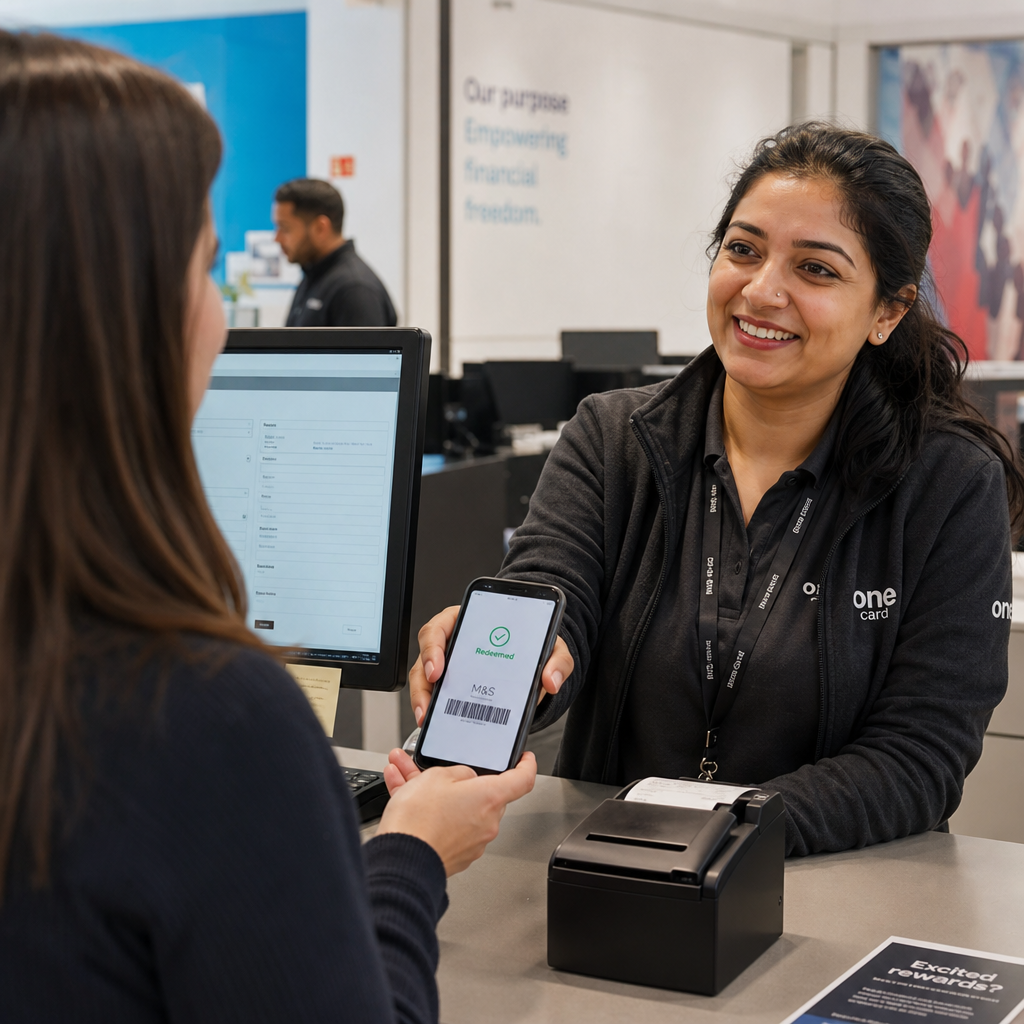
Fulfilment owners deal with the messy middle: incomplete data capture, resend requests, unclear status and late reporting. A governed route through ONECARD keeps issuance and redemption together, making it easy to distinguish between sent, opened and first-use. That affects how quickly a team closes a support ticket or spots an exception pattern.
Retail activation teams are affected when rewards span multiple retailers. A retailer-bound voucher works in a narrow scheme but fragments visibility for wider campaigns. The analytical cost is that if issuance and redemption are separate, campaign learning arrives late and without context.
Compliance and finance want a record that answers ordinary questions without rummaging through inboxes: correct recipient? duplicate? expired? replacement justified? Secure voucher redemption turns those into process checks rather than detective work. When controls are weak, admin expands to fill the gap.
What a traceable reward journey actually looks like
A traceable reward journey follows a deliberate sequence: the social post drives entry; winner confirmation and data capture move off-platform into a controlled form; the reward is issued through ONECARD with brand identity intact; the recipient follows a guided path to redeem. The campaign does not lose its audit trail at the point the reward leaves the marketing system.
The value sits in specific controls: issue and first redemption remain linked, reducing ambiguity; expiry and resend handling follow defined issuer rules rather than improvised judgement; branded messaging reduces suspicion and mishandling.
Tighter controls introduce small friction points: confirmation details, reissue limits or first-use logic may add steps. The wrong reaction is to remove friction; the better move is to place it where fraud or support load would appear. If you cannot see failures, you cannot tune the flow.
Prepare campaign assets with descriptive placeholders for accessibility, for example: . This keeps review practical before final creative.
Actions and watchpoints
To handle post-giveaway fulfilment, map the hand-off points: where is winner data captured? Who approves issuance? What proves delivery? Where can support verify first redemption? These questions expose whether a campaign is launched or governable.
Option one: manual fulfilment for low-volume, low-risk campaigns; trade-off is weaker visibility and more exception handling. Option two: governed route through ONECARD with connected digital reward delivery, status visibility and controls; trade-off is deliberate planning and possible implementation support from Holograph. In serious campaigns, the upside, fewer support contacts, cleaner reporting, learning from live redemption behaviour, makes it the sensible cost.
Watch failure points: direct message collection is easy to start but awkward to audit; retailer-specific rewards satisfy one partner but weaken reporting; generous reissue policies invite confusion if first-use status is unclear. The cleaner the control model, the more pressure to use it everywhere, operational discipline matters, but so does proportion.
Review your latest giveaway flow from winner selection to first redemption. If the trail breaks at fulfilment, consider ONECARD to keep issue, secure voucher redemption and reporting connected without admin feel. Contact us to map the options and trade-offs for a traceable reward journey in your campaign.
The next practical step is to put ONECARD on one controlled route, watch the weak point, and prove the change before rollout.