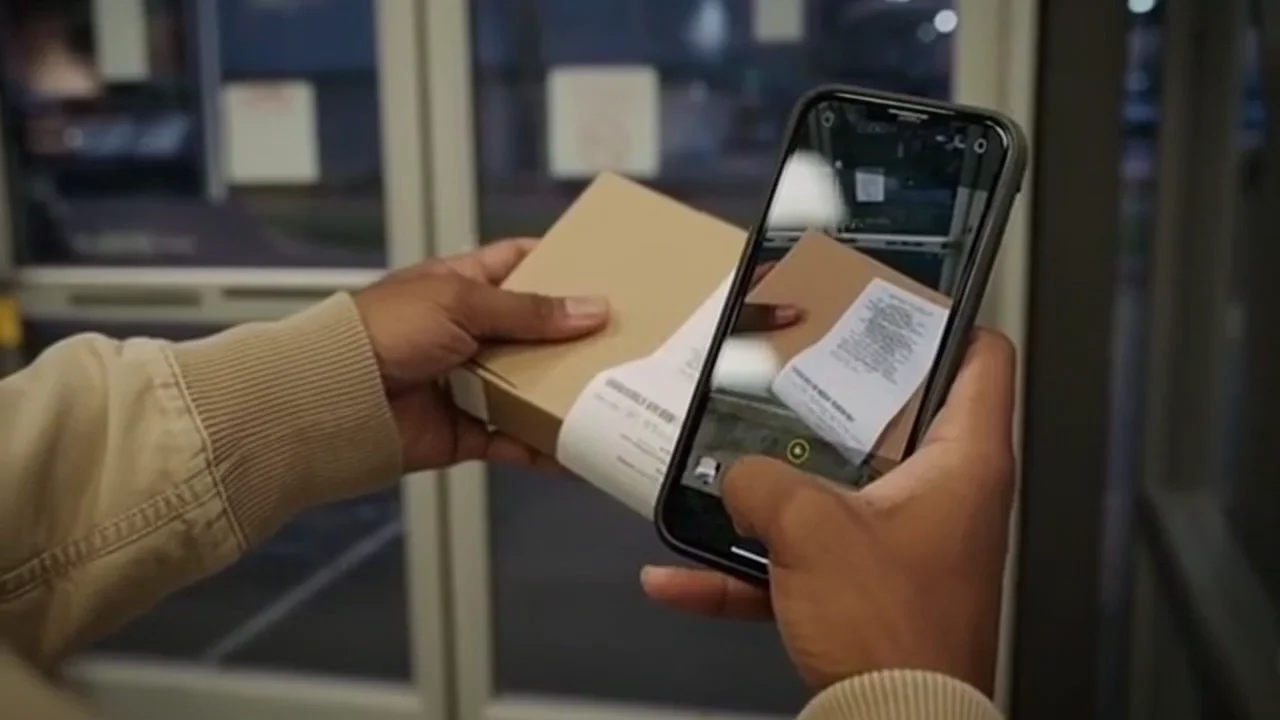
Full article

Promotion planning faces a contradiction: the appeal of a single proof-of-purchase flow clashes with operational reality. A one-size-fits-all approach often creates more problems, leading to frustrating journeys or costly manual reviews.
Proof-of-purchase flows fail when receipt, barcode, and pack evidence drift apart. Grocery claims handle duplication, health and beauty variant confusion, and convenience fast trips. Understanding which evidence settles a claim first in each sector allows smarter validation sequences, applying pressure where it matters, not building fortresses.
What you are solving
The core issue is avoidable uncertainty in proof verification. A strategy that cannot survive contact with operations is not strategy. Sector-specific sequences address claim drift patterns to improve efficiency.
| Sector | Common weak point | What to validate first | Commercial consequence |
|---|---|---|---|
| Grocery | Receipt reuse, multi-buy confusion | Receipt structure, retailer name, and timestamp checks | Less manual review on high-volume redemptions |
| Health & Beauty | Variant ambiguity, pack similarity | Barcode and pack match before receipt review | Fewer disputes over eligible lines |
| Convenience | Fast purchase journeys, smaller baskets | Barcode scan with lightweight receipt confirmation | Better participation quality without overloading the journey |
Practical method
Design POPSCAN workflows to resolve claims, not collect data. More evidence doesn't guarantee better outcomes; request only what settles most queries. Operational evidence shows that for grocery promotions, starting with receipt-level checks before barcode validation reduces manual review by addressing issues like receipt reuse.
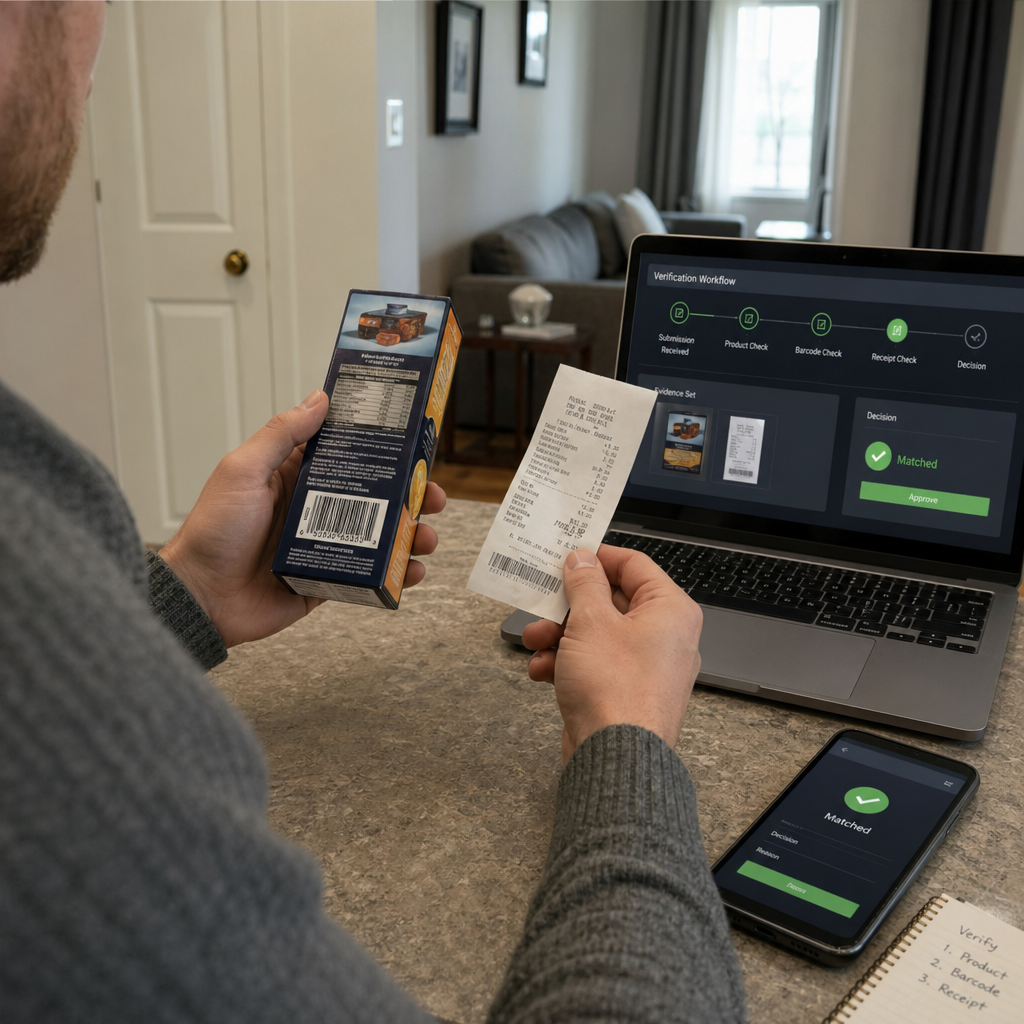
For grocery promotions, start with receipt checks, retailer, date, structure, then use barcode for exceptions. Health and beauty benefits from barcode-first validation to lock exact lines before receipt review. For convenience, confirm barcode early, keep receipt signals simple, escalate only suspicious cases.
Decision points
Getting the sequence right involves deliberate commercial trade-offs. First, choose the primary proof artefact by sector: receipts for grocery, barcode for health and beauty, mixed for convenience. Second, decide where to tolerate ambiguity. Near-matches may work in grocery but not in health and beauty with similar SKUs. Evidence supports stricter barcode confirmation as a baseline for convenience promotions.
Third, set the escalation threshold. Use measurable triggers like artefact mismatch or repeated patterns, not vague suspicion. A robust flow keeps the process efficient and fair, tied to operational outcomes.
Common failure modes
Over-reliance on a single proof signal creates gaps. Grocery schemes underestimate duplicate behaviour; health and beauty underestimates catalogue complexity; convenience overbuilds for ideal claimants. Keep first steps light and exception handling strong. Aim for fewer weak claims, not zero ambiguity, filter out the most common and costly issues automatically.
Action checklist
- Map top claim disputes by sector: duplicate receipt risk, variant confusion, purchase-context ambiguity.
- Assign primary proof layer: receipt structure for grocery, barcode identity for health and beauty, mixed light-touch for convenience.
- Define triggers for manual review: artefact mismatch, repeated submission patterns.
- Test the consumer journey against real timing pressure.
- Retain minimum audit trail: product identifier, barcode decision, receipt parse outcome, timestamp.
Review your promotion flow sector by sector: which proof signal settles doubt first? If fuzzy, the design guesses too much. POPSCAN tightens campaign integrity without smothering the journey. Contact us to model the trade-offs and define a validation sequence that fits your commercial goals this quarter.
If this is on your roadmap, POPSCAN can help you run a controlled pilot, measure the outcome, and scale only when the evidence is clear.