Full article

When claim quality slips in a retail promotion, the usual reaction is to add more rules. It looks controlled. Often it just makes entry stricter while leaving the central question unresolved: did the entrant actually buy the qualifying product?
That is the fault line between payment-style rulesets and proof of purchase verification. Rate limits, device checks, duplicate controls and form validation can suppress repeat behaviour. They are not built to prove that a specific pack was bought on a valid receipt in the right campaign window.
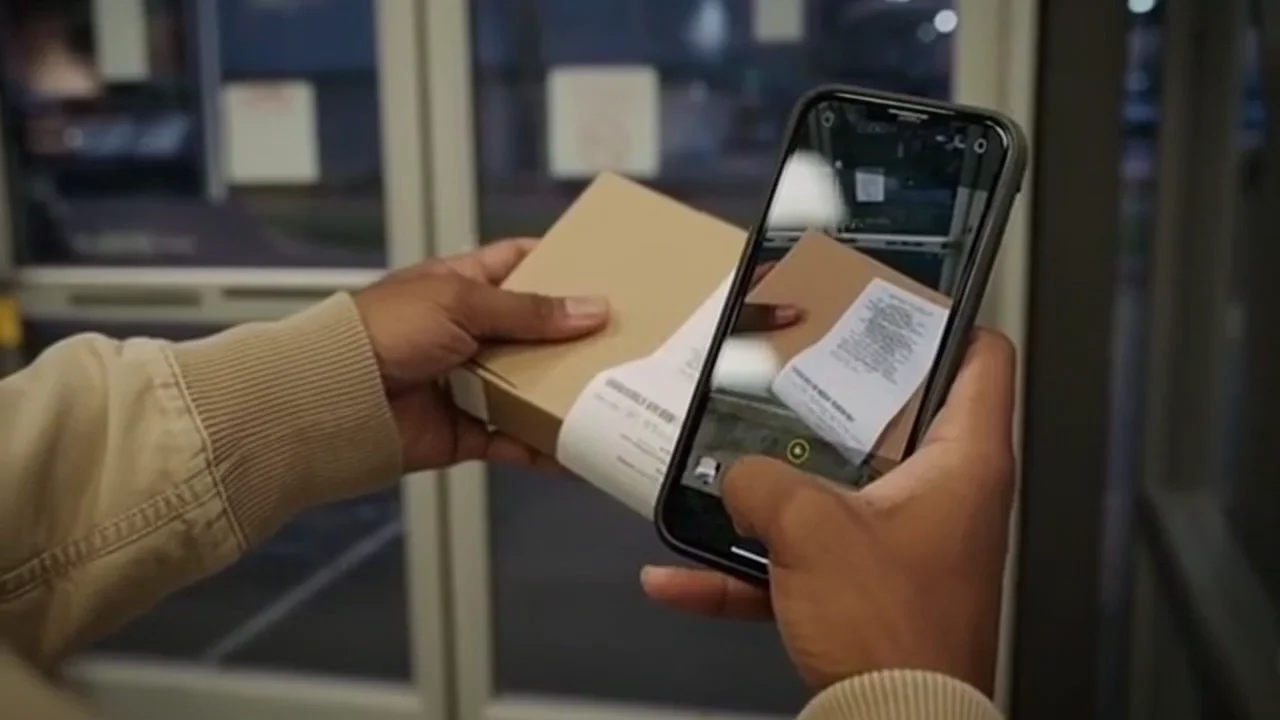
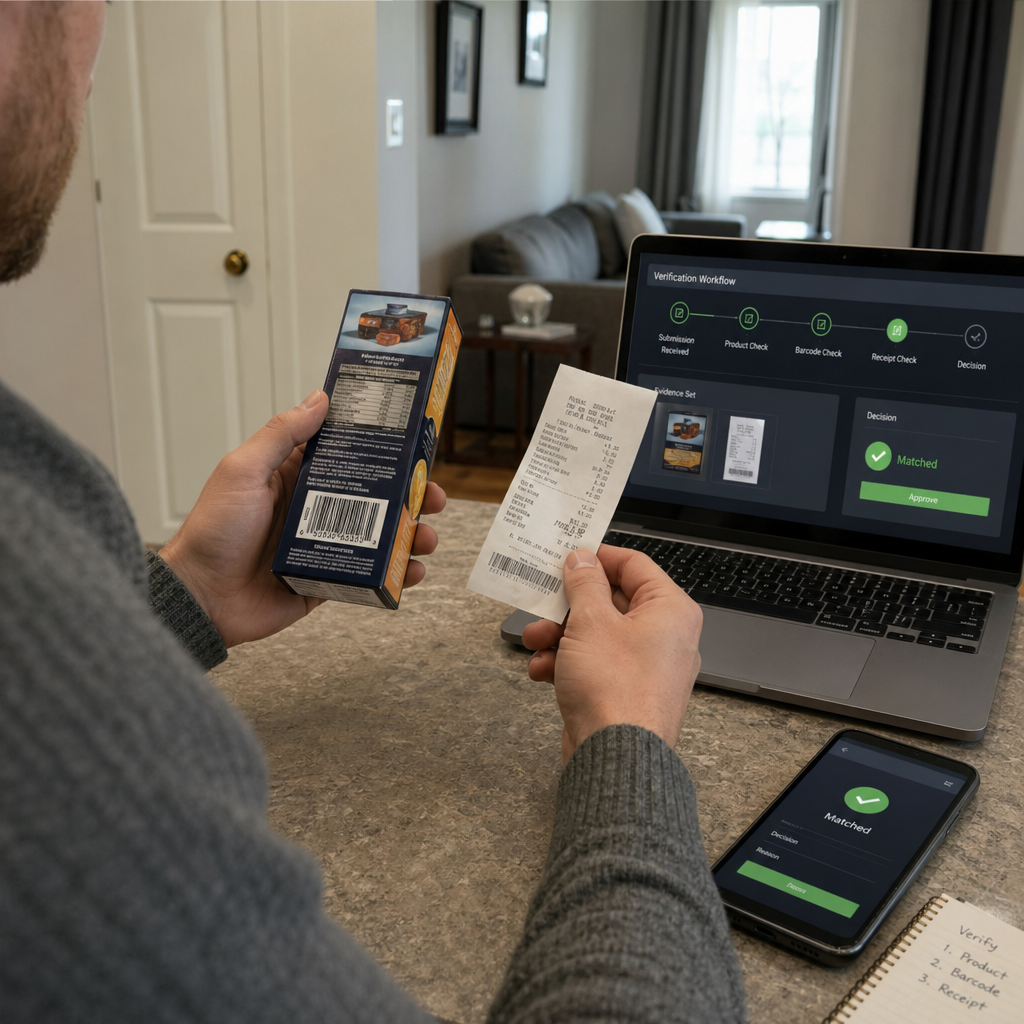
What is changing is the move away from single-signal checks. More promotions are starting to join receipt data, product signals and barcode checks inside one workflow. POPSCAN is built around that model, validating the receipt, pack and barcode as one purchase-proof set. The commercial upside is practical rather than theatrical: fewer weak claims drifting into review, faster decisions on doubtful entries, and better promotion participation quality without turning the consumer path into a test of patience.
Decision context
The comparison with payments is useful up to a point. Broadcom's Arcot Smart Ruleset shows why rules engines matter where the job is to score suspicious behaviour quickly. Promotions borrow some of that logic for good reason. Frequency limits, duplicate checks and device controls can still catch obvious abuse.
But promotions have a different evidential problem. A clean-looking entry can sit inside every threshold and still fail the core eligibility test. A receipt image might exist. A code might validate. Neither proves, on its own, that the shopper bought the right product, from the right retailer, within the valid dates.
That gap matters most when a mechanic depends on pack, variant or date window. In those cases, behaviour around the entry is only half the story. The harder half is evidential quality: whether the receipt, product and barcode actually support the claim being made.
This is where operations usually feel the weakness first. Rules say yes. The evidence does not quite settle the point. Review queues grow, decisions slow down, and avoidable ambiguity lands with the team that has to clear claims at campaign pace.
That is why proof of purchase verification needs to be treated as its own design layer, not as a token receipt upload bolted on at the end. In practice, that means combining receipt, product and barcode evidence to judge whether participation looks genuine while keeping the journey usable for legitimate entrants.
The limits of rules-only design
Rules-only design is attractive because it is easy to describe. Set entry limits. Block repeats. Check for duplicate details. Reject malformed submissions. On paper, that can look comprehensive.
The problem is that payment-style rules over-index on identity and frequency. They can tell you whether a phone number has entered too often or whether the same device keeps reappearing. They cannot tell you whether the uploaded proof matches a qualifying item, whether the transaction date sits inside the offer window, or whether the claim lines up with the promotion terms.
That is how teams end up with false confidence. A promotion can have tidy thresholds and still admit weak claims because the evidence was never joined up. If barcode, product line and receipt details are checked separately, or not at all, a poor claim can look orderly enough to pass first-line controls.
Tighter rules do not remove that problem. They often move it. Legitimate entrants get pushed through retries and extra checks, while operations still carry the cost of sorting out unclear proof later. The work has not gone away. It has simply turned up later in the process, at a more expensive point.
There is also a fairness issue. Prize and claim mechanics should feel auditable. Controls that look severe but do not clearly relate to purchase proof can feel arbitrary. Evidence-based verification is easier to explain because it is tied to the terms the entrant is meant to satisfy.
Options and trade-offs
Most retail teams are choosing between three operating models.
| Model | What it checks well | What it misses | Operational consequence |
|---|---|---|---|
| Rules-only entry controls | Duplicate behaviour, volume spikes, basic form hygiene | Whether purchase evidence is genuine and relevant | Lower setup effort, higher downstream ambiguity |
| Receipt-only proof | Presence of a transaction document | Product-level certainty, pack validation, eligibility terms | Better than rules alone, but review-heavy when claims are contested |
| Joined-up evidence workflow | Receipt detail, product match, barcode linkage and routing thresholds | Not every edge case, especially with poor source material | Higher design discipline upfront, cleaner claim handling later |
Receipt-only proof is often where the model starts to strain. It is stronger than behavioural gating on its own, but it still leaves room for argument. Till slips are messy. Product names are abbreviated. Store formats vary. Image quality drops. If eligibility depends on a particular pack or variant, the receipt may confirm that a transaction happened without settling whether it was the right purchase.
That is where barcode and receipt controls start to matter as a set. The receipt gives transaction context. The barcode links the claim to a qualifying item. Product-level checks narrow the gap between saying a purchase took place and showing that the qualifying purchase took place.
The trade-off is straightforward. More checks can add friction if they are applied too broadly. A low-pressure mechanic may only need selective barcode matching or review thresholds. A higher-value promotion, or one with a history of weak claims, may justify tighter validation from the start. The real decision is not rules versus evidence. It is where rules screen, where evidence verifies, and where a human review path is worth the cost.
Operating changes and practical gains
The main gain from evidence-led design is not abstract. It is faster, cleaner decisions. When the workflow connects receipt data, product signals and barcode evidence, more entries can be sorted into clear outcomes earlier in the process. That matters in a live promotion because speed protects service levels, prize fulfilment and internal confidence in the mechanic.
That is the territory POPSCAN is built for. The POPSCAN workflow uses configurable product, barcode and receipt checks, structured decision payloads and operator review paths for real campaign flows. The point is not to treat every entry as suspicious. It is to settle more claims on evidence before they turn into manual exceptions.
This also makes campaigns easier to manage when conditions shift. A retailer feed changes. A pack format varies. Source material comes in weak. In a joined-up workflow, those cases can be routed according to threshold rather than forced into a blunt pass or fail decision.
There is still an honest limit to certainty. Poor images, unusual till formats and borderline evidence do not disappear. Evidence-led design does not eliminate uncertainty. It stops low-value uncertainty from overwhelming the campaign. If joined-up verification cuts avoidable reviews and shortens the time to a confident decision, the operational case becomes easier to defend.
Risk and mitigation
The biggest risk in tightening controls is damaging conversion for genuine entrants. The answer is not to keep controls loose. It is to apply them proportionately.
Start with the path from entry to claim. If proof of purchase verification is part of the mechanic, say so early. Show what may be checked and why. The process should feel fair, visible and verifiable, not performative. Hidden hurdles tend to create the very disputes they were meant to avoid.
Then set the level of control to match campaign pressure. Broad acquisition, significant prize value or a record of weak-claim patterns all support tighter verification at entry. Lower-pressure mechanics can route only doubtful cases into review and keep the main path lighter.
There is also a sequencing risk. Teams often try to solve duplicate prevention, receipt capture, barcode logic, review rules and fulfilment exceptions in one pass. That usually overcomplicates the launch. A better route is to phase the controls. Start with the checks most likely to improve claim quality, especially where product and receipt evidence settle the hardest terms. Add further thresholds once the operating pattern is clear. Campaigns want certainty. Launch dates want simplicity. That tension has to be managed, not wished away.
Recommended path
For most retail promotions, the stronger model is blended. Use smart rules to strip out obvious noise, then use evidence layers to verify the purchase claim. Rules are efficient at screening behaviour. Evidence is what proves eligibility. Treating one as a substitute for the other usually pushes cost and doubt somewhere else.
The next move should be sequenced. First, identify which terms actually require proof by product, pack, retailer or date window. Then map which evidence points can settle those terms with the least friction for the entrant. After that, decide where the workflow should auto-clear, reject or route to review.
Worth a closer look, then, is whether the current journey can genuinely prove a qualifying purchase or only infer one from surrounding signals. If the setup still leans mainly on payment-style controls, adding more rules is unlikely to close the evidential gap. Testing joined-up barcode and receipt controls usually gives a clearer answer. If you want to explore where POPSCAN fits, contact the team and we can map the current entry journey, show where an evidence-led layer would settle claims faster, and identify where review cost can be cut without making the customer journey harder than it needs to be.
The useful next question is simple: should POPSCAN be trialled on one route first, with the threshold and stop point set in advance?