Full article

Promotions often fail where they claim to be strongest: at the proof. A clean creative and a simple entry page can still force customer operations to sort weak claims by hand when the rules only look like control.
FMCG and retail teams need to keep entry friction low, but weak validation is expensive in avoidable reviews, slower prize fulfilment, and compliance headaches. The strategic question is not whether to tighten verification, but where to add evidence so participation stays usable and campaign pace holds.
The call beneath the noise
We are seeing a distinct market cue from the payments sector. Broadcom's expansion of its AI software narrative using Arcot smart rulesets to verify transactions signals that static rules fail under volume. That same logic is converging on FMCG and retail promotions. Teams are borrowing a payments-style rules lens to see where rule sophistication improves integrity, and where evidence quality still matters more than extra logic.
A strategy that cannot survive contact with operations is not strategy, it is branding copy. If the back office floods with edge cases on day three, the campaign has simply exported complexity to a later stage. The proof question is whether the claim stays consumer-friendly while the brand still gets strong verification.
Which routes are genuinely open
Operationally, promotions teams face a narrow choice between isolated checks and connected logic. The trade-off is always friction against certainty.
| Route | What the consumer provides | What it verifies well | Main constraint |
|---|---|---|---|
| Code or form entry only | Keyword, code, personal details | Response capture and basic participation | Weak link to real purchase |
| Receipt only | Till slip image or upload | Store, date, basket timing | Harder to prove exact promoted item without clean receipt detail |
| Barcode only | Pack barcode or product code | Product identity | Weak proof that qualifying purchase happened in stated period |
| Combined evidence | Receipt plus product or barcode signal | Purchase timing and item-level confidence | Needs careful journey design to avoid needless friction |
Code-only entry preserves reach but offers a weak link to a real transaction. Receipt-only proof is a sensible starting point because it captures the store, date, and basket timing, yet struggles when line items are abbreviated or printed faintly. Barcode validation resolves product identity but gives away timing context if used alone.
What each route protects or gives away
Every verification model protects something while conceding ground elsewhere. Code-only mechanics protect response volume but sacrifice confidence. Receipt-only paths protect general legitimacy but leave item-level certainty vulnerable.
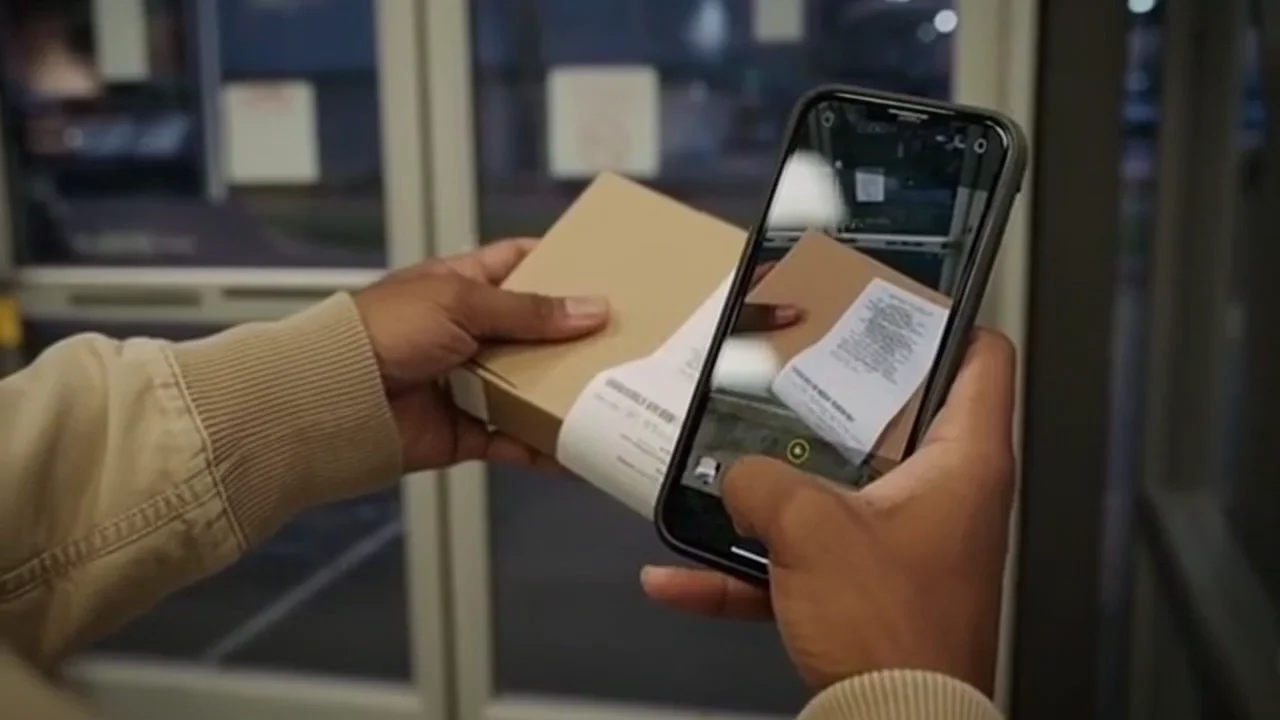
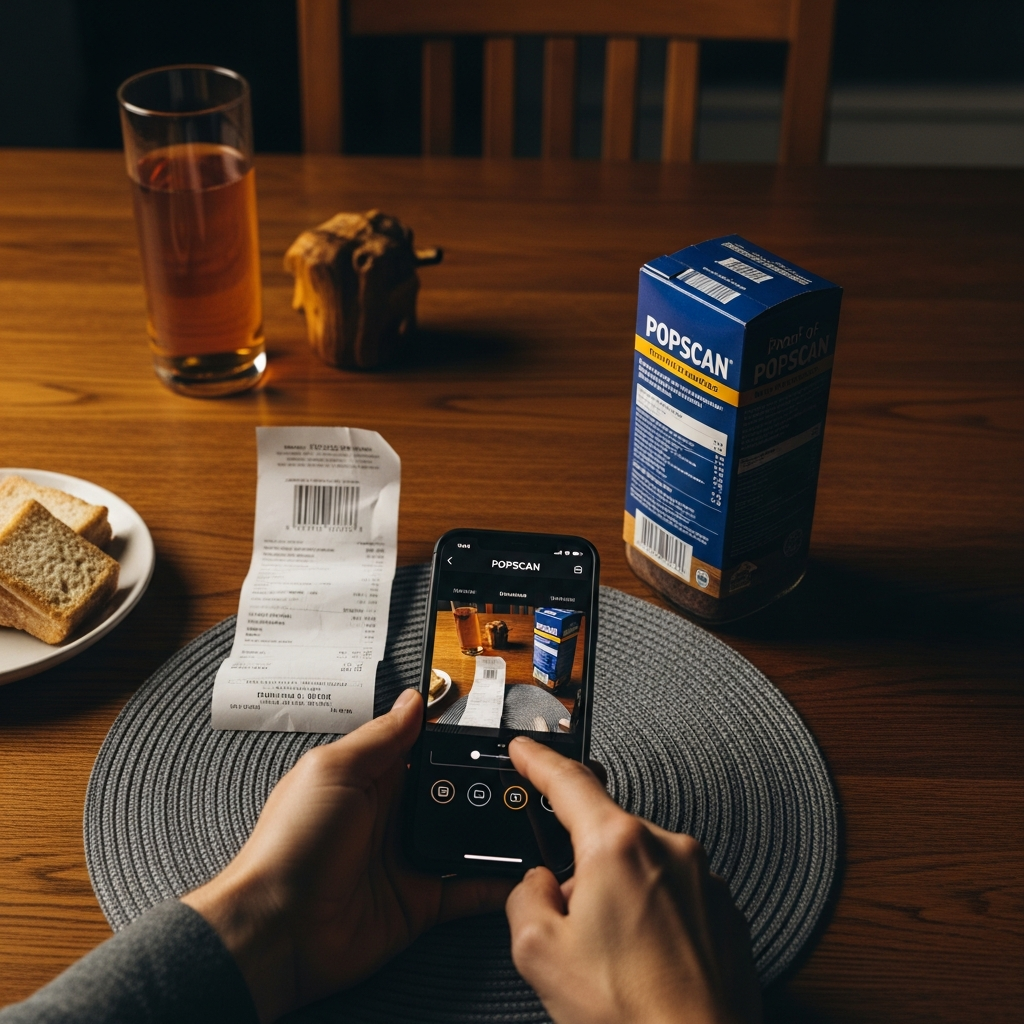
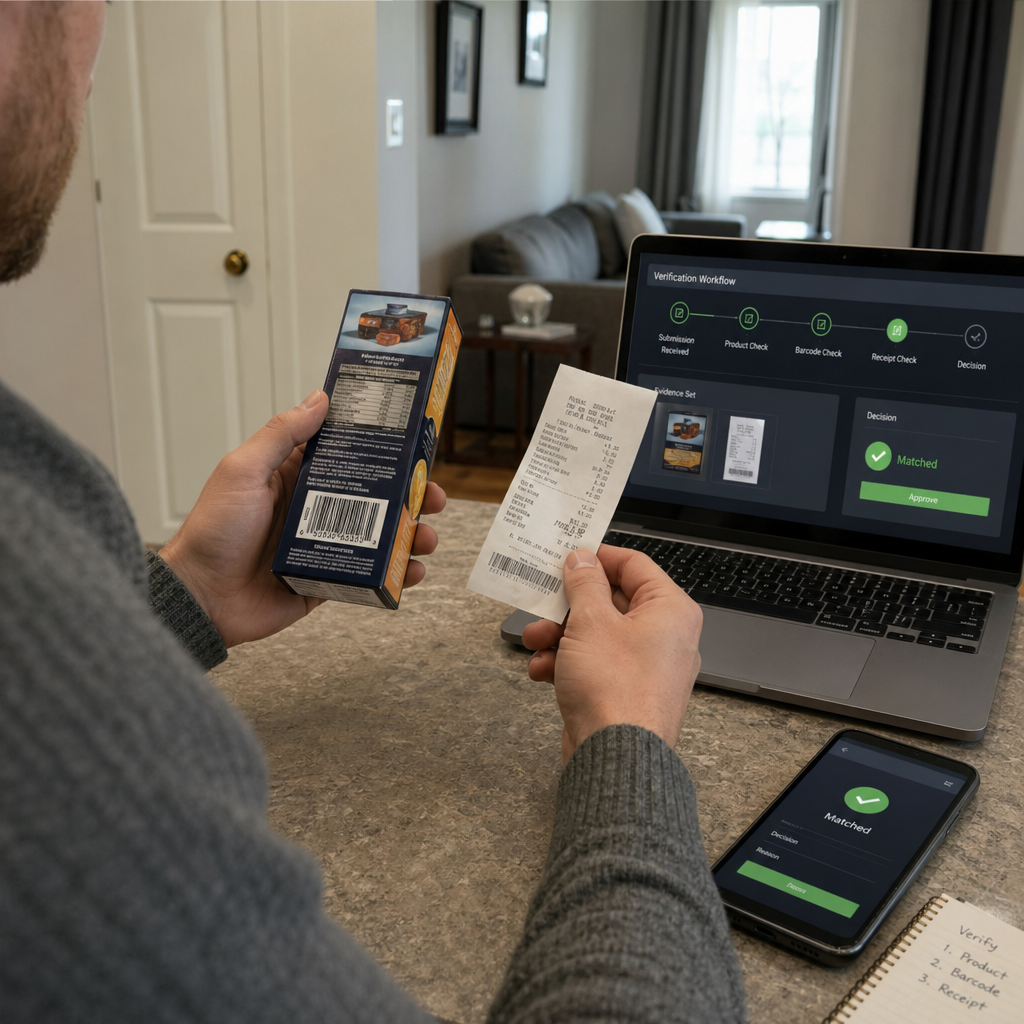
POPSCAN validates the receipt, pack, and barcode as one purchase-proof set. This joined-up logic means brands can verify that a real purchase happened without turning the claim journey into admin theatre. By checking the receipt for context, the pack for possession, and the barcode for precise SKU matching, the POPSCAN workflow layers evidence only where it is needed.
In practice, teams often test both receipt-only and combined routes under real traffic. The evidence typically favours combined controls once manual review queues climb under high volume. Moving from a single-signal mechanic to a layered check reduces ambiguity at the point of claim, not after the fact.
Sector realities and the rules drift problem
Rules drift is the quiet failure in proof of purchase verification. When promotions scale, the initial criteria often blur as customer operations teams face pressure to clear backlogs. Misaligned rules, rather than bad actors, are frequently the root cause of integrity failures.
Context changes by category. In grocery, basket complexity makes receipt scanning harder because the promoted item is buried among dozens of other lines. In health and beauty, receipts are shorter, but product variants demand precise barcode matching to prove the exact SKU was bought. In convenience retail, paper receipts are often declined by shoppers, making alternative proof or instant verification critical.
Traffic acquisition quality should also trigger tighter purchase-evidence controls. When a social-led campaign drives a sudden spike in entries, the probability of weak claims rises. Promotion participation quality relies on a smart ruleset adapting to this velocity, routing high-risk entries to a combined receipt and barcode check while letting standard traffic pass with lighter friction.
Where the weaker route starts to fail
The right moment to tighten controls is before support queues show strain. If you wait for the dashboard to flash red, the campaign team is already paying twice, first in labour, then in slower customer resolution.
Consider a high-volume convenience sector campaign. A customer uploads a till slip that proves a transaction occurred, but the retailer's abbreviation obscures the exact promoted item. Without a secondary signal, an operator must manually judge the claim. Adding a barcode scan resolves that ambiguity instantly.
Best practice dictates that you show the consumer path from entry to claim without hidden steps. Prize and claim mechanics should feel auditable: the consumer should understand the rules, and the brand should have clear data to act upon. Use language that communicates fairness and verification, not theatre.
The move that holds up best
The strongest route for most FMCG and retail promotions is a layered ruleset. Keep the front-end journey brief. Use receipt evidence to establish the purchase event, and add product or barcode proof where item certainty matters.
To be fair, no model removes every edge case. The goal is to expose anomalies early enough for intervention. That is why the joined-up logic of the POPSCAN workflow merits a closer look. It keeps the public journey usable while strengthening the underlying proof logic in a way customer operations teams can defend.
If your current promotion mechanics rely on a single proof signal, now is the moment to test whether that route still stands up under real campaign pressure. When you are ready to stop sorting weak claims by hand, book a practical review with Holograph to see how POPSCAN routes receipt, pack, and barcode evidence into a single, confident decision payload.