Full article
Created by Marc Woodhead · Edited by Marc Woodhead · Reviewed by Marc Woodhead
A measured signal
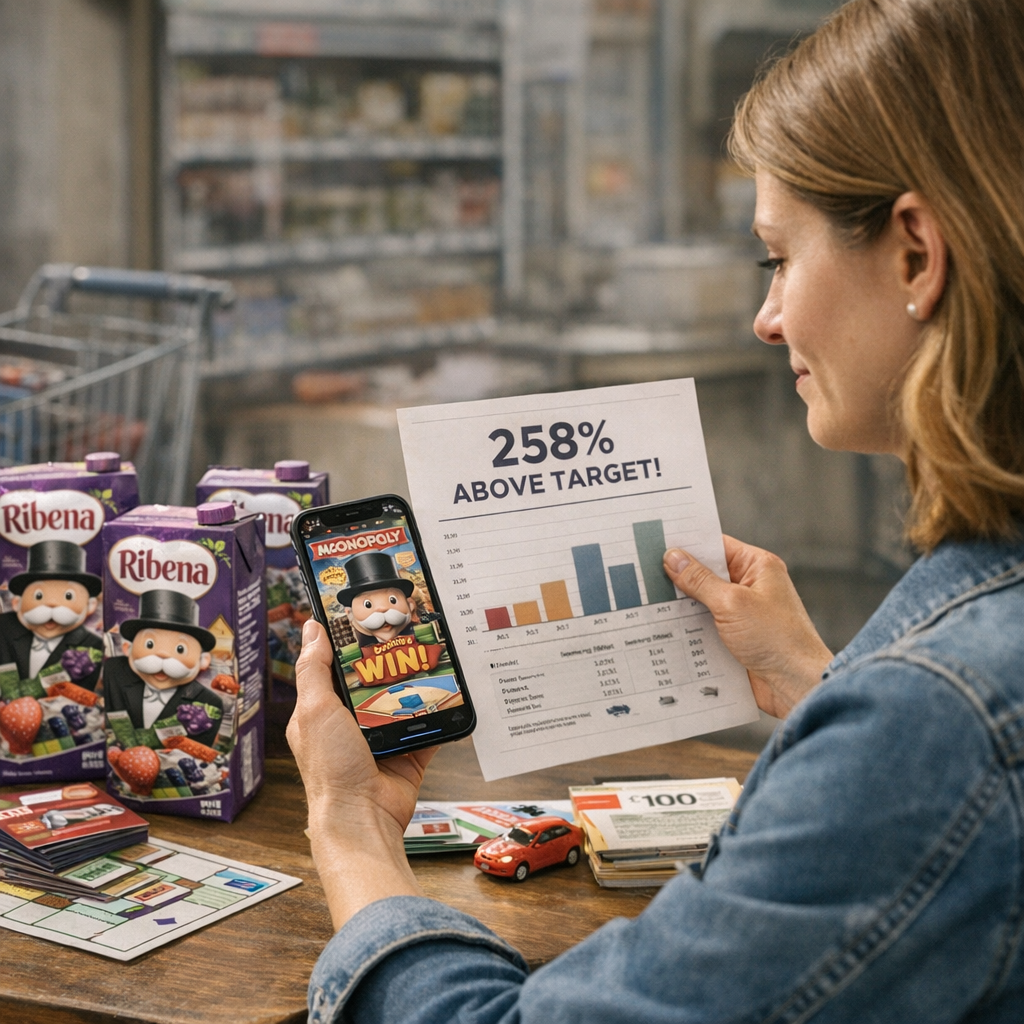
In our studio, I was reviewing the Ribena performance wrap when the number landed: the activation had overshot its entry goal by 258%. This was not a lucky spike. It was the result of a specific mix: recognisable licensed IP, a low-friction AR journey, and a prize path people could easily understand. If you are weighing an AR-led promotion against a more ordinary campaign mechanic, this case gives you something better than hype. It gives you a measured signal, plus the trade-offs that came with it.
The public benchmark here is straightforward. Holograph and ARize partnered to bring Hasbro’s Monopoly to life in AR for Ribena. The same activation also recorded a 42% uplift in email sign-ups, which matters because participation alone is cheap theatre if it does not support a useful audience asset.
Why the mechanic worked
The mechanic succeeded not because it was “immersive”, a word doing too much work in this sector, but because several parts supported each other properly. First, it used licensed IP that already had rules and familiarity. Second, the mobile journey was accessible enough to keep momentum: scan, enter, play. Third, the promotion logic was understandable. If audiences cannot see how entry works, how prizes are allocated and what happens next, response drops.
There was a clear trade-off. Licensed IP raises the bar on approvals, legal reviews and production discipline. It adds cost and can slow decisions. In return, it can create a stronger reason to take part than a generic prize draw with a bright banner and little soul. In Ribena’s case, the Monopoly link gave the activation a familiar logic. Families already understood the play pattern before the AR layer even started its job.
When a reward path feels fair and the interaction is instantly legible, people stay with it. This is where clear language matters. Teams should be precise about whether they are running a random prize draw or a judged competition. If it is random, say so plainly. If judged, publish the criteria. Fairness needs to be designed in, not just implied.
What is shifting
The useful work in AR is moving from novelty towards operationally accountable design. Five years ago, too many AR activations were built as shiny side-quests: nice enough, but hard to defend in a budget meeting. That is shifting because brand and commercial leads now need evidence that a mechanic can create measurable uplift, support compliant fulfilment and feed something usable back into CRM or loyalty.
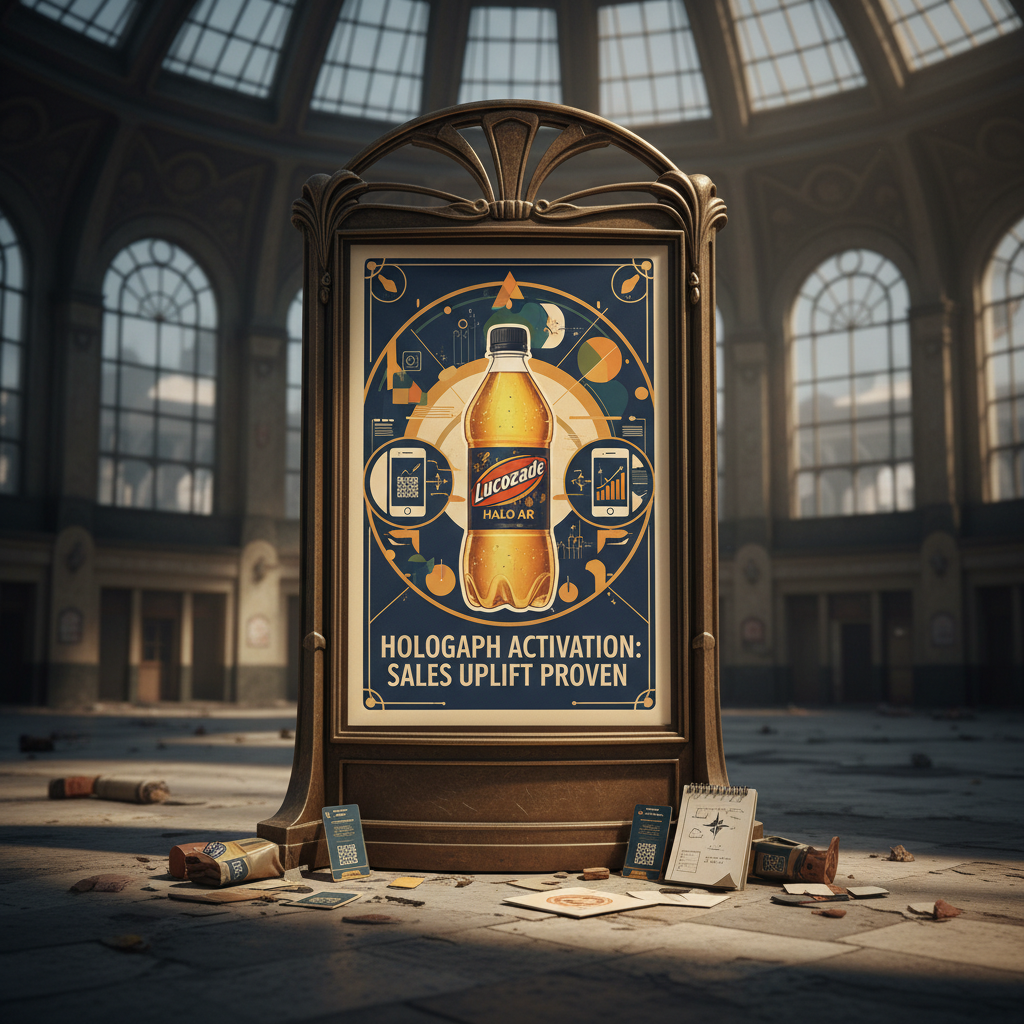
The Ribena result sits beside another public Holograph case: Lucozade Energy’s Halo activation, which reported a 32% sales uplift. Different brief, audience and commercial objective, but together they tell a more grounded story. AR can support performance when the mechanic fits the brand, the proposition is clear and the production system is robust. Automation without measurable uplift is theatre, not strategy.
Ambitious mechanics also demand reliable operations. During this campaign, prize operations and verification became harder as volume rose. In one workflow test, a fulfilment process needed an extra manual audit loop to resolve an age-gating and compliance issue, which added 48 hours. Not ideal, but preferable to a system making opaque decisions at scale. The lesson is that ambitious mechanics need boringly reliable systems underneath them.
Who is affected
For partnership managers handling licensed campaigns, the Ribena result changes the benchmark. A 258% overshoot is not a reason to copy the mechanic blindly, but it is strong evidence that recognisable IP can justify extra complexity when the fit is right. If you are balancing rights costs, approval cycles and production overhead against likely response, this is the sort of public number worth carrying into the room.
For commercial leads, the practical question is what upside justifies the operational load. Licensed AR has moving parts: rights management, terms and conditions, age considerations, customer support, fulfilment evidence, and device testing. All take time and budget. The upside is that a well-built activation can create stronger participation and richer first-party capture than a plain mechanic with no emotional hook. The downside is that a weak build becomes expensive noise very quickly.
CRM and loyalty teams are affected too. A high-interest activation that drives sign-ups is only useful if the downstream data model is clean. This is where products such as DNA for audience capture and ONECARD for traceable reward design become practical. Entry data needs structure, consent needs to be clear, and reward fulfilment needs an audit trail. Otherwise the campaign team celebrates and the operations team inherits a mess.
Actions and watchpoints
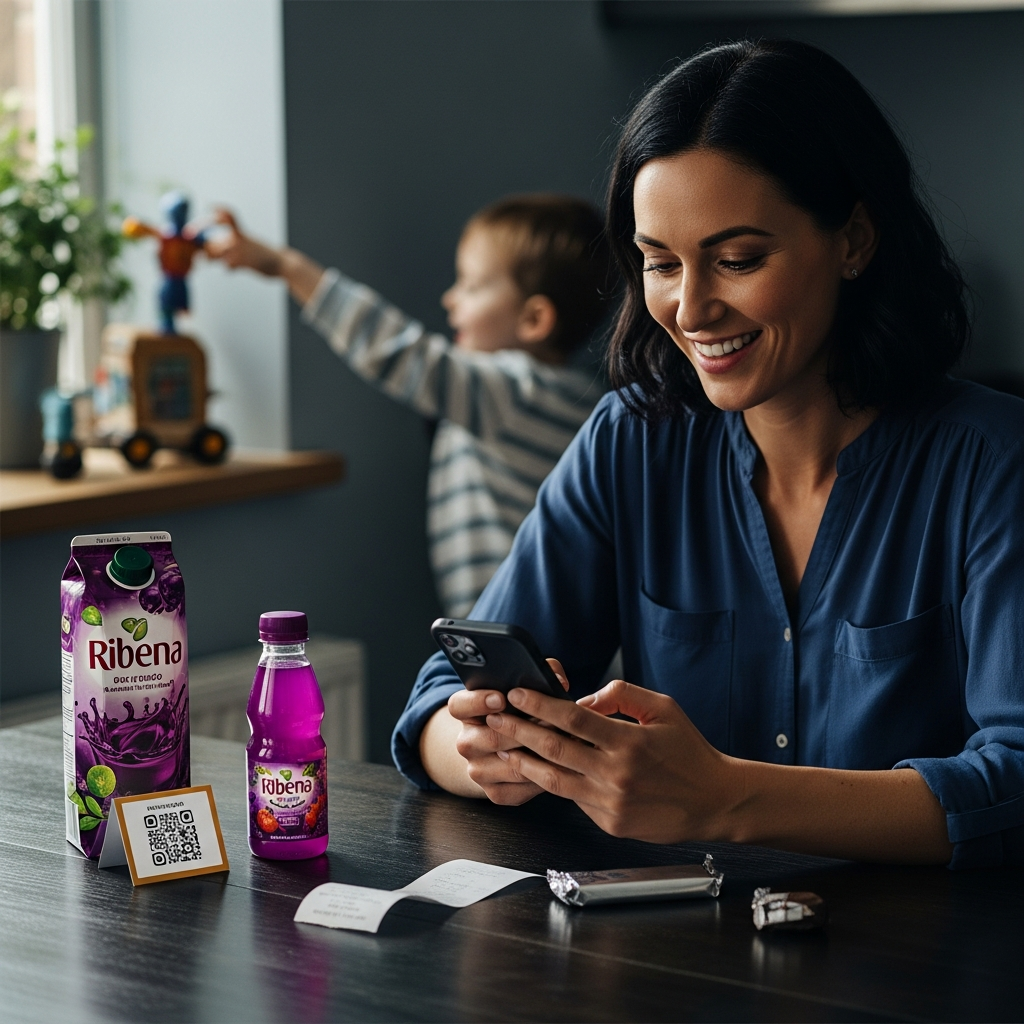
If you are considering a similar route, start with the mechanic before the spectacle. Can a consumer understand the journey from pack to entry, to prize allocation, to claim, in under a minute? If not, fix that first. Then test the interaction on ordinary devices in ordinary conditions: a kitchen table, patchy signal, a mid-range handset, an impatient parent. Not the immaculate demo environment.
Publish full terms and conditions before entry opens, and keep that version stable. If the winner is chosen at random, say random. If judged, explain the process. This sounds small, but it is where trust is either supported or quietly damaged. On imagery, keep the alt text useful. If an image shows a family using phones to interact with an AR experience, say exactly that. Accessibility is not garnish.
Build compliance into production, not at the end. We default to privacy-preserving architectures for a reason: once a campaign scales, retrofitting restraint is miserable. The main watchpoint is simple: do not mistake public case-study proof for a universal rule. The Ribena campaign worked because the brand, licensed property, family-friendly framing and reward path lined up. Misfit ambition is expensive.
What to do with the evidence
The best use of this case study is comparison, not admiration. Put the Ribena mechanic next to a live decision in your own pipeline and ask some unromantic questions. Does your current promotion give people a clear reason to enter? Can they tell whether the prize process is fair? Will the data captured be usable after the activation ends? Can your team support fulfilment without improvising halfway through?
If the answer is mostly “sort of”, the next step is not a bigger idea but a better-designed system. MAIA is a sensible fit when planning for licensed campaign complexity. ONECARD makes sense when traceable fulfilment and reward logic are under scrutiny. DNA earns its keep when interest needs to become a structured, permissioned audience rather than a pile of disconnected entries.
If you’re weighing an AR prize mechanic against a live brand campaign decision, compare it properly against the Ribena build. Then follow the original Holograph case-study proof and inspect the campaign detail for yourself. If you want to talk through whether your brief suits MAIA, ONECARD or DNA, book a chemistry session with the Holograph team. We’ll work through the trade-offs with you, plainly and without theatre.
Proof and original case study
This interpretation draws on a public Holograph case study. For the original source detail, see the original Holograph case study and more Holograph case studies.