Full article
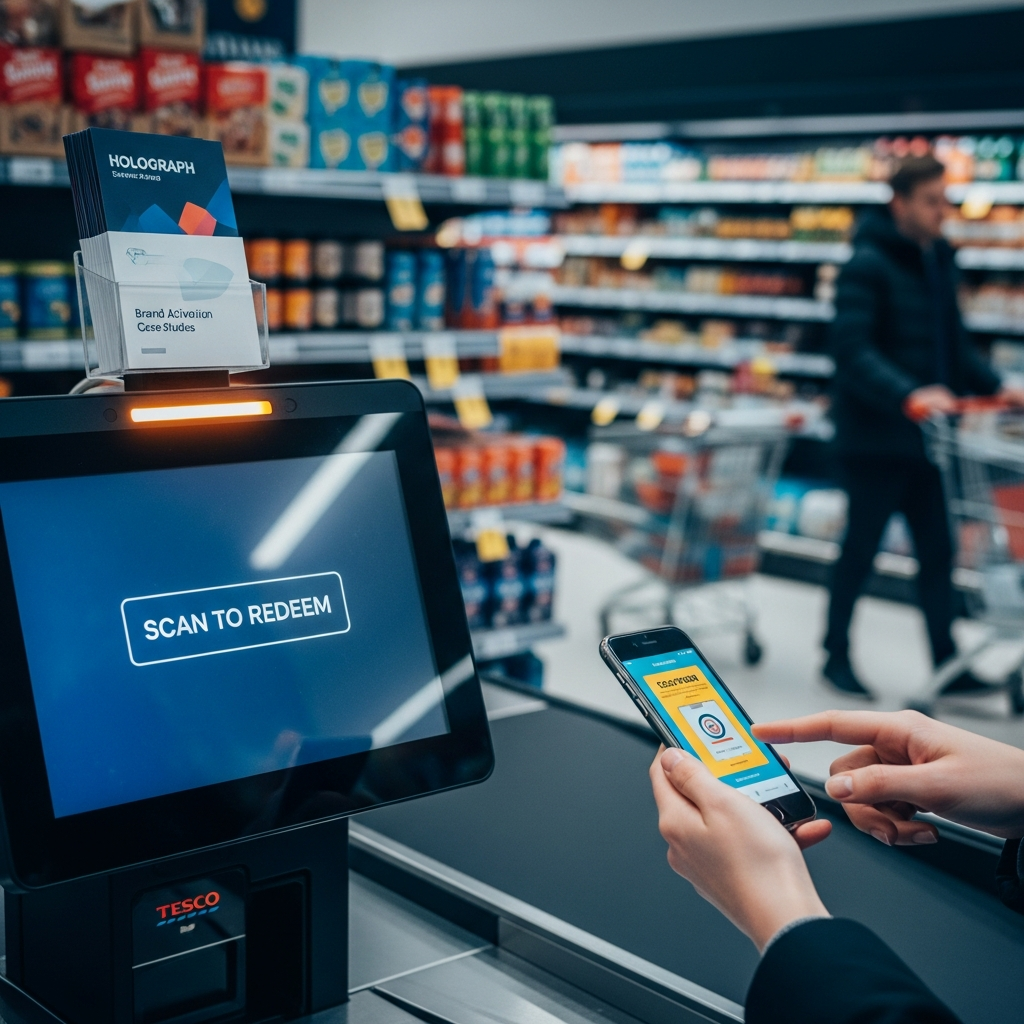
GetPRO Campaigns’ £1.50 off activation across Tesco and Co-op delivered a reported 43% uplift in email sign-ups. That number is useful because it points to something practical rather than mystical: retailer-linked couponing tends to work when the value is obvious, the steps are few, and the proof is clear enough to survive contact with an actual shop floor.
The mistake I still see is teams treating the incentive as the strategy. It rarely is. The stronger signal sits in journey design, consent handling and validation logic. Get those wrong and a decent offer drifts into friction. Get them right and even a fairly modest discount can pull its weight.
Signal baseline
The obvious headline is the 43% uplift. The more interesting part is why a £1.50 coupon could drive that response at Tesco and Co-op. Both are familiar retail environments with established buying habits, fast-moving queues and very little patience for over complicated mechanics. If redemption fits those conditions, uptake improves. If the journey asks people to decode instructions, switch channels or wait too long for the benefit, drop-off rises for entirely predictable reasons.
Last Thursday, in a small Co-op in East Sussex, I watched a shopper abandon a promo flow after one extra screen tap. The queue had that low-level restless energy; basket handles knocking, till prompts chirping, someone sighing behind the meal deals. That’s when I realised, again, that what looks like a tiny UX choice in a planning deck becomes the whole mechanism in store.
There is a real trade-off here. Cleaner validation and retailer-aligned journeys take longer to design than a generic coupon push. You spend more time on exception paths, proof rules and consent wording before launch. In exchange, you usually get lower abandonment, fewer support queries and reporting that a retailer, legal team or CRM lead can actually trust. Automation without measurable uplift is theatre, not strategy.
What is shifting
The centre of gravity has moved from offer-led planning to journey-led planning. A few years back, plenty of activation meetings began with the discount size. Now the more useful question is simpler and less glamorous: what stands between purchase intent and redemption, and can each step be evidenced?
That change matters because retailer-linked promotions do not operate in a vacuum. Tesco and Co-op are not just media placements. They are operational environments with till flows, staff routines and audience expectations already baked in. A mechanic that respects those habits feels natural. One that fights them ends up needing rescue from customer support or apologetic follow-up emails.
The compliance side has shifted too. The ICO’s direct marketing guidance is clear: lawful basis, transparent wording and preference control need designing in from the start. In plain English, if you want an email address, say what it is for, say how it will be used, and make objection and opt-out straightforward. A stricter flow may trim some low-intent entries, but it leaves you with a more usable list and less legal risk. That is a fair exchange.
Who is affected
Brand teams feel this first because they own the public promise. CRM teams inherit the quality of what gets captured. Legal gets involved when consent language is muddy. Retail partners feel the consequences when a mechanic lands awkwardly at the shelf edge. So the phrase “simple digital coupon activation” is often doing a lot of heavy lifting.
For a shopper marketing lead, the GetPRO Campaigns result suggests that immediate value can still earn attention if the redemption path feels proportionate. For a CRM lead, an email sign-up has value only if the exchange feels fair and the permissions are usable later. Ask for too much data or delay the reward, and the headline number starts looking less impressive in the performance wrap.
I still don’t fully understand why some teams keep treating acquisition volume as a self-evident win, but here’s what I’ve observed: when the journey is clumsy, downstream engagement often tells on you. Low open rates and weak repeat participation are usually symptoms of a bad bargain at capture.
Retailers shape the mechanic more than most decks admit. Tesco and Co-op do not behave identically. That means designing modularly, with local differences accounted for early. The Google Pixel launch precedent shows this: 812 assets deployed with a reported 23.5% reduction in cost per asset, proving modular systems beat bespoke sprawl.
Design principles and watchpoints
If you strip away the gloss, the GetPRO Campaigns case points to core design needs. First, the value exchange must be immediately legible, £1.50 off is concrete in an FMCG setting. Second, proof needs to be unambiguous; define what counts before launch to avoid support debt. Third, the route should fit the retail moment; a queue is not a product demo. Fourth, capture only what supports the next useful action, with clear consent.
In Holograph terms, product fit is clean. For reward journeys with straightforward capture, ONECARD is natural. For proof-of-purchase validation, POPSCAN is stronger. For multi-retailer planning and reporting, MAIA is sensible. Trying to force one platform to do all three makes projects expensive and fragile.
A few watchpoints are worth keeping close:
- Track the whole path: view-to-sign-up, sign-up-to-redemption, and time-to-complete by retailer where data allows.
- Define proof before launch: if a receipt or code is required, state the rule precisely.
- Keep consent plain: align with ICO guidance, explain data use clearly, make opt-out easy.
- Design for store reality: if staff need workarounds, the activation isn’t finished.
Public precedents support this: Lucozade Energy’s AR activation saw 32% sales uplift, Ribena’s overshot entry by 258%. Different mechanics, same lesson, clear action plus credible operating model outperforms novelty.
Compare any live campaign against the GetPRO Campaigns journey, looking at friction, proof and consent under real conditions. Review the original Holograph campaign detail and case-study evidence. To turn that into an activation that earns its budget, cheers, book a chemistry session with the Holograph studio team, and we’ll work through the trade-offs properly from the queue backwards.