Full article
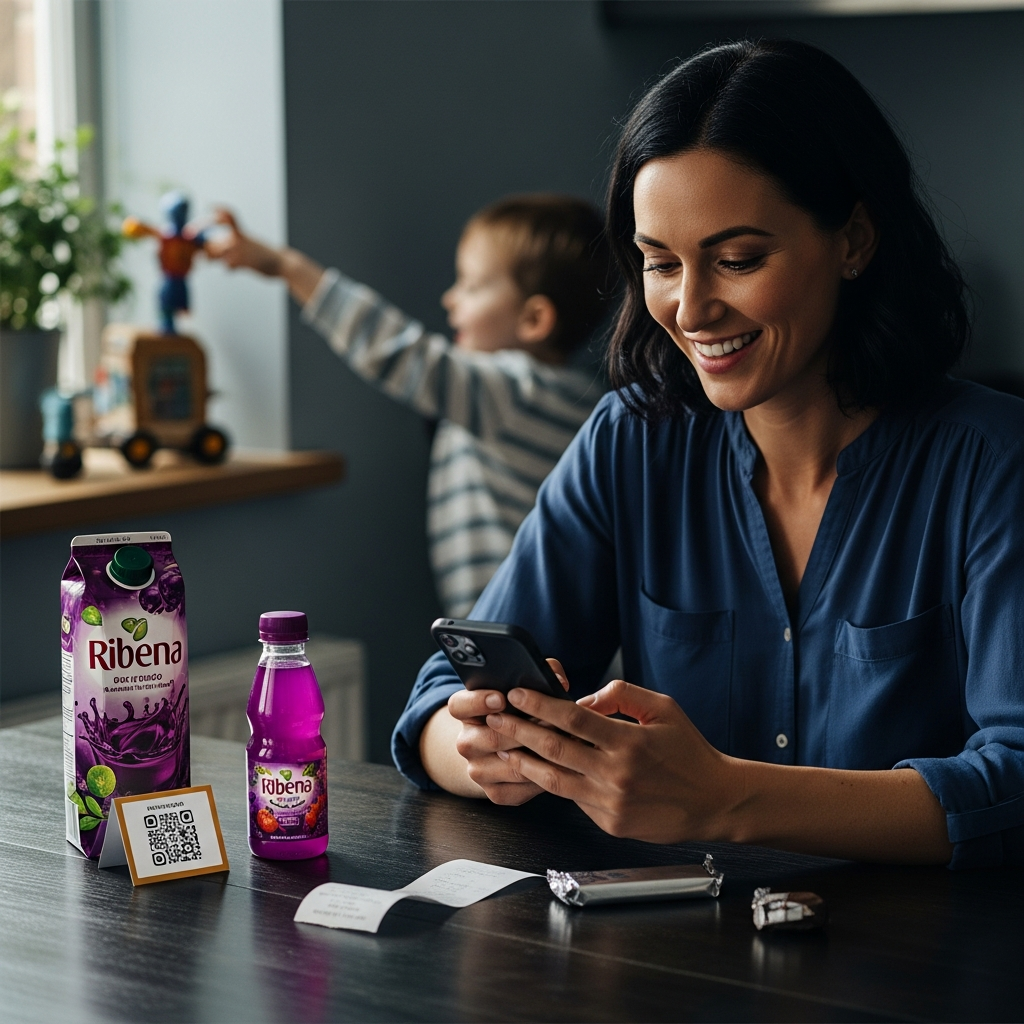
Ribena’s 42% uplift in email sign-ups offers a concrete metric to inspect, not just a polished claim about engagement. The question is not whether instant-win campaigns work, but why this version worked for a family brand at retail with a simple value exchange, and why the same mechanic often fails on the wrong brief.
Family-friendly promotions live or die on a simple test: can a distracted parent complete the next step with one hand? A rich mechanic may look clever in a planning deck, but a simple one gets finished. This is the trade-off at the heart of the Ribena result.
Context
Ribena’s “Win a Family Experience” activation asked shoppers to buy a promotional pack, scan a QR code, submit their details and receive an instant result, with over 1,000 prizes available. The headline outcome was a 42% uplift in email sign-ups, as published by Holograph.
Email capture is a better signal than raw entry volume. It suggests people judged the exchange as worth completing. That is a stronger operational signal than inflated reach numbers or vague talk about buzz.
The mechanic also did two jobs at once. It gave Ribena a compliant route to first-party audience growth, and it gave shoppers immediate resolution instead of the uncertainty of a later draw. This is not trivial. ASA guidance is clear: if the structure could mislead people about their chances, you are storing up trouble.
What is changing
The shift is not just that brands want more first-party data; it is that audiences have less tolerance for complicated routes to get there. Many on-pack QR promotions fail due to dead pages, laggy forms or buried terms. Conversion improves when the path feels simple and trustworthy.
Ribena’s result fits this pattern. The activation did not ask shoppers to decode a game, wait weeks, or trust an opaque process. The sequence was buy, scan, enter, know. For a family audience, this clarity is critical. Busy shoppers do not reward novelty for its own sake.
This clarity extended to the prize. For a family soft drinks brand, offering "time together" is a more believable reward than a random cash prize. This tight fit between the reward, brand, and household context makes the exchange feel relevant. While this reduces universal appeal, it is a good trade-off. Relevance usually beats vague mass appeal, especially when the objective is qualified sign-ups, not just idle curiosity.
Why the framing worked for Ribena
Ribena had brand permission. A shared-experience prize required little explanation because the product already lives in a family context. When the prize, entry mechanic, and point of purchase align, the activation feels coherent.
Shoppers forgive a lot if the reward feels right and the process seems fair. They will not forgive ambiguity. If they cannot tell whether they are entering an instant win, a draw, or a hybrid, they hesitate, and hesitation kills conversion. The Ribena case is more than a cheerful number; it shows that prize-product-audience fit, backed by operational clarity, is what drives success. The mechanic was not doing the heavy lifting alone. Fit was.
Where this mechanic earns its keep
The mechanic suits regular-purchase products, especially in family FMCG, where a pack-led journey can support a quick, credible exchange. It is strongest when the brief is permissioned audience growth with a sensible follow-up path, not a frantic attempt to rescue weak brand interest with prizes.
For Holograph, that points towards a connected setup. ONECARD is useful when reward delivery and redemption need to be traceable. MAIA supports orchestration across pack, entry, messaging and fulfilment. DNA matters after the sign-up, when the audience needs segmenting for a follow-on journey instead of being dumped into a larger database.
The trade-off is implementation load. A connected activation asks more of legal, data, CRM and fulfilment teams than a basic form-and-forget promotion. But you get cleaner attribution and a better shot at turning sign-ups into something commercially meaningful.
Other public Holograph results reinforce the point. GetPRO Campaigns reported a 43% uplift in email sign-ups through a retailer-linked digital coupon activation. Lucozade Energy and Halo reported a 32% sales uplift through an AR campaign. Different channels and mechanics still point to the same lesson: design the activation as a system.
Where it starts to fail
This framing underperforms when the product is personal, infrequent, or high-consideration. Attaching a family day out to premium spirits or B2B software is not brand stretch; it is a category mismatch.
It also fails when fulfilment and explanation are afterthoughts. Vague terms, buried winner logic, and misleading framing attract ASA scrutiny and audience distrust. The damage is practical: complaints, wasted media, and support strain. Significant terms must be easy to find and understand.
Finally, there is the follow-up problem. A 42% uplift in sign-ups is worthless without a solid CRM path. A weak welcome journey turns a relevant opt-in into list fatigue, buying an admin burden instead of a valuable audience.
Actions to consider
If you are weighing a similar route, conduct a practical audit before developing creative.
- Clarify the objective. Is the goal audience growth, retail conversion, or a partner proof point? A confused objective satisfies no one.
- Test brand permission. Does a shared-experience reward feel native to your product and audience? False warmth is easy to spot.
- Simplify the path. Can a distracted shopper understand the entry route and prize logic in seconds? Overly complex flows leak conversions.
- Plan for fulfilment and follow-up. How will rewards be delivered, queries handled, and new contacts segmented? These are not back-office details; they are core to the design.
- Measure what matters. Track opt-in quality and downstream conversion, not just entry volume. Use named benchmarks like Ribena’s 42% or GetPRO Campaigns' 43% uplift to judge performance.
Ribena’s result is persuasive because it was not magic. It was a clean match between a household product, a family-friendly reward, immediate feedback, and a workable data exchange. If you are deciding whether this structure suits your next activation, compare your brief against that standard, not just a headline metric.
To test the mechanic against a real brand decision, bring it to Holograph. We can walk through the trade-offs and help you judge the fit for your audience, operations, and budget.
Book a chemistry session with the Holograph studio team.
Proof and original case study
This interpretation draws on a public Holograph case study. For the original source detail, see the original Holograph case study and more Holograph case studies.