Full article
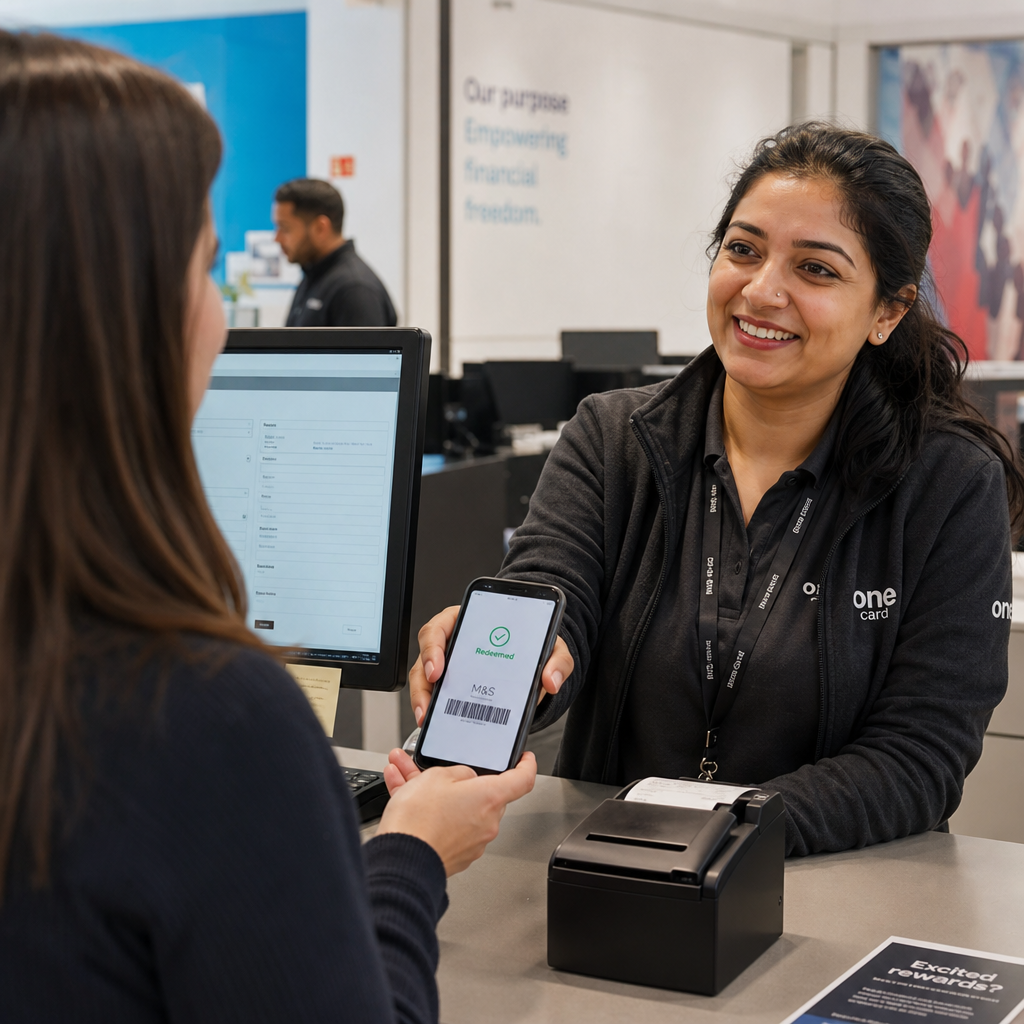
The problem is not the voucher. It is the operations around it. A retailer voucher launches cheap and familiar, then turns expensive when fulfilment, support and reporting run on separate systems. The signal is plain: digital reward journeys break where issuance, control and redemption sit in different silos. That shifts the question from ‘Can we send a voucher?’ to ‘Can we govern the journey?’ ONECARD does that: a governed delivery product with secure issuance, redemption visibility and traceable control across retailers and markets. Assess delivery control before debating denomination.
Where the pressure sits
Retailer-bound vouchers work for bounded campaigns: single retailer, simple approvals, forgiving reporting. The strain hits when conditions change. A multi-retailer promotion or proof-of-purchase incentive fragments a simple reward into disconnected hand-offs. Support volume climbs: the user sees a brand promise, the backend runs on third-party rules. Visibility thins because issuance and redemption data live in different databases. Control erodes when expiry and exception handling are governed outside one route. Redemption traceability is the first casualty. The judgement is simple: if a reward strategy cannot survive operations, it is not strategy. Teams overvalue voucher familiarity and underestimate the cost of stitching them together. What seems acceptable at launch fails when exception queries scale. The real cost appears in avoidable support hours, reconciliation effort and slowly eroding user trust, well before anyone questions the budget line.
Routes available now
Three paths exist. Keep retailer vouchers and accept the operational seams. Stitch validation, fulfilment and reporting tools around your voucher estate. Or move to a governed digital rewards platform like ONECARD, where issuance, control and redemption flow through one managed path. The first works for low-risk campaigns that can tolerate patchy visibility: you inherit retailer logic you do not control. Stitching looks flexible and can suit firms with stable tooling, but it often creates reporting latency and more failure points. The governed route fits campaigns needing consistency across channels or retailers. ONECARD handles branded rewards delivery with governance built into the path, not as an afterthought. Control is present at issuance, during redemption and when exceptions need review.
What each route costs
Cost here is not just procurement price. It includes delay, support effort, control exposure and reporting quality.
| Route | Strength | Main constraint | Commercial consequence |
|---|---|---|---|
| Retailer voucher only | Fast to understand, familiar to users | Limited governance and fragmented reporting | Lower launch friction, higher support and audit friction later |
| Stitched fulfilment model | Preserves existing supplier relationships | More dependencies, higher exception volume | Appears flexible, often slower to stabilise in live operations |
| ONECARD governed delivery | Single controlled journey with traceable handling | Needs early alignment on policy and implementation | Higher set-up discipline, cleaner fulfilment and better decision data |
The hidden cost in retailer-led delivery is time: time answering avoidable queries, reconciling reports, explaining why an issued reward cannot be traced after hand-off. In stitched fulfilment, the hidden cost is sequencing. A model can work technically but remain commercially awkward because every exception demands another owner. A secure digital redemption path cuts uncertainty for the recipient and gives the brand a reliable audit trail. Those aims conflict only when control is bolted on late. Fewer operational seams mean fewer avoidable exceptions. That shapes campaign pace, support burden, and whether post-campaign reporting is useful for the next brief.
Which route to choose and why
If your campaign is single-retailer, low volume and not sensitive to reporting gaps, retailer vouchers may be the minimum-change route. The trade-off is short-term convenience for weaker downstream control. If your programme spans multiple retailers, includes approval checkpoints or needs clean issuance-to-redemption visibility, ONECARD is the better choice. Not because it is new, but because governed delivery matches operating reality better than loosely connected voucher handling. Teams must launch faster and provide better evidence. A joined-up reward path helps with both. The stitched middle ground deserves caution. It promises flexibility but turns routine fulfilment into systems diplomacy. Most teams do not need another integration puzzle disguised as optionality. ONECARD gives promotions teams a clearer decision ladder: start with campaign shape, assess the reporting requirement, test where exception load sits. If the burden falls across several teams or suppliers, the answer is already clear: move to a governed model early, before the support queue and audit questions force it.
What the next move looks like
A governed reward route protects the brand’s offer, lets the user redeem with less uncertainty, and shows the team what happened afterwards. That supports better planning next quarter, not just a tidier campaign. It demands firmer policy decisions up front, but delay usually costs more. If retailer vouchers are creating reporting gaps, support drag or weak control, reframe the decision around the operational path, not unit cost. The proof question: does redemption stay simple while issuer control, traceability and abuse prevention remain credible? To test that against a live campaign, contact ONECARD for a walkthrough before the next launch window closes. The useful next step is to trial ONECARD on one route, with an explicit threshold and stop point.