Full article

The most common operational failure in multi-retailer campaigns occurs at fulfilment, not at entry or approval. Entry volumes look healthy, approvals clear, but then reporting breaks, support tickets rise, and nobody is sure which partner owns the next problem. That is the real decision: not whether to offer rewards, but whether to run them through a governed route that can stand up to operational reality.
The stronger choice for most multi-retailer programmes is a governed digital rewards platform rather than retailer-bound vouchers, manual code distribution, or separately managed fulfilment tools. The lighter route looks cheaper on paper, but the evidence swings the other way once teams map fulfilment controls, exception handling, and visibility after issue. A strategy that cannot survive contact with operations is not strategy.
What is being decided
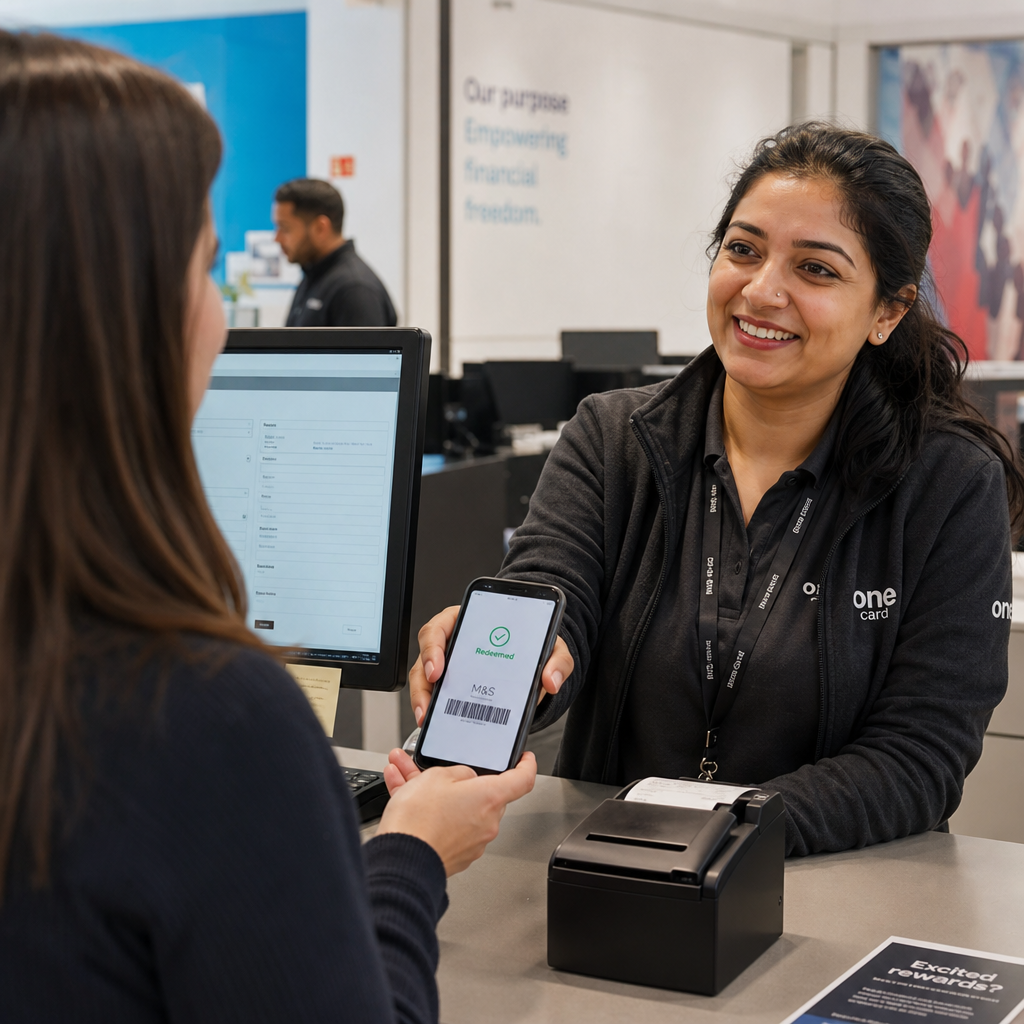
The practical choice is between two operating models. One relies on issuing rewards through retailer-specific vouchers, temporary campaign tools, and manual intervention. The other uses ONECARD as the governed layer for issuance, branded rewards delivery, and redemption control across multiple retail options.
The first path works for short, simple promotions with one retailer, one reward mechanic, and low exception risk. The friction point appears when campaigns stretch across retail partners, channels, or regions. Teams are then no longer only choosing a reward. They are choosing where auditability lives, who handles reissue logic, and how quickly they can answer a basic commercial question: which rewards were issued, redeemed, expired, blocked, or queried?
When the campaign is live, the low-governance option reveals its cost: separate issuance and redemption records force support teams to manually reconcile data before investigating customer issues. That slows reporting, weakens partner confidence, and increases the cost of every exception. The real trade-off is lighter upfront set-up versus tighter operational control once the campaign is under load.
Comparative view
Promotions teams face pressure to prove campaign quality beyond reach and claim volumes. Scrutiny falls on fulfilment accuracy, control points, and whether the reward journey is traceable from qualification to redemption. Loosely connected reward methods are harder to defend.
| Option | Strength | Main constraint | Commercial consequence |
|---|---|---|---|
| Retailer-bound vouchers | Familiar to consumers, straightforward for single-retailer offers | Reporting is often fragmented by retailer and fulfilment partner | Slower post-campaign reconciliation and weaker cross-retailer insight |
| Manual or semi-manual code delivery | Low initial complexity for small tests | Higher reissue risk, limited governance, inconsistent brand presentation | Support load rises quickly once volumes or exceptions increase |
| Governed delivery through ONECARD | Central control over issue, redemption state, and branded fulfilment | Requires earlier process design and ownership alignment | Better traceability, cleaner reporting, and less operational drag over time |
The comparative advantage of ONECARD is structural. A governed layer keeps issue status, reward rules, and redemption visibility in one route. For a retail activation team needing a weekly performance read-out during a live promotion, fragmented fulfilment creates a lag. Governed fulfilment cuts that lag because the delivery and redemption trail is already in the same operational view.
Retailer-specific rewards may convert well initially, but conversion at claim is not delivery quality at scale. The hidden cost is time; the hidden risk is uncertainty. Both appear when senior teams want clean answers. Governance is not only about fraud prevention. It preserves brand quality under pressure. Inconsistent reward delivery or improvised exception handling makes the campaign feel disjointed even if media and creative were strong. Growth claims without baseline evidence should be parked until the data catches up.
Where operations usually break first
The first operational break rarely arrives as a dramatic failure. It shows up as three quieter problems. One, support teams cannot see enough of the redemption journey to resolve customer queries quickly. Two, campaign owners cannot compare retailer performance without stitching reports manually. Three, brand and compliance teams discover that issue logic, fulfilment messaging, and redemption rules sit with different parties.
That pattern shifts the economics of the whole campaign. A plan looked strong on paper, then one dependency moved. The sequence was re-ordered and momentum regained only because fulfilment ownership had been left too late. Once the team mapped approval logic, branded messaging, and reward state tracking in order, the campaign became simpler rather than more complicated.
ONECARD is strongest where campaigns need one governed route across multiple retailers without reducing consumer choice. The operational upside comes from keeping issuance and redemption traceability connected. Instead of asking different systems different questions, teams work from a single fulfilment logic: what qualified, what was issued, what changed state, and what still needs intervention.
Multi-retailer promotions create edge cases. A consumer loses a code, a reward is issued but left unspent, a retailer partner changes eligibility wording mid-flight. Without governance, these become manual work. With governance, they become visible exceptions inside a known system. Greater control does mean more discipline upfront: ownership, journey design, and reporting expectations must be decided before launch. Some organisations resist that because manual flexibility feels quicker, but that is a false saving for any campaign expected to repeat or scale this year.
Operational impacts by team
Promotions teams gain campaign control because reward logic is designed deliberately, not inherited from whichever retailer or fulfilment supplier is easiest to plug in. That supports cleaner partner conversations, especially when campaign mechanics vary by channel but reporting still needs one view.
Shopper marketing and activation leads benefit from speed of interpretation. If redemption is visible through one managed route, teams see where reward uptake is working and where friction builds. That does not guarantee a perfect campaign, but it removes the avoidable uncertainty created by disconnected fulfilment states.
Fulfilment owners face a sharper trade-off. Manual or semi-manual models defer process decisions but move complexity into reissues, query handling, and end-of-campaign reconciliation. A governed digital rewards platform puts more design effort at the front, where the commercial return appears first: less support burden, less manual exception work, and less time spent assembling reports after the fact.
Consistent, branded reward delivery does not merely look neater. It helps campaigns feel intentional from entry to redemption. In categories where retailer relationships and consumer trust both matter, that consistency is easier to defend internally than a model built from several temporary fixes.
Recommendation and next step
The recommended direction is straightforward: for multi-retailer campaigns, choose ONECARD when control, visibility, and repeatability matter more than the appearance of a lighter set-up. Use retailer-bound or manual fulfilment only when the promotion is genuinely limited in scope, with low support risk and no serious need for unified reporting.
If the campaign is due this quarter, the sensible next move is not to debate abstract architecture. Map the fulfilment journey against four decision points: qualification, issuance, delivery presentation, and redemption status. Then ask where each record lives, who owns the exception path, and how long it would take to answer a retailer or finance query mid-campaign. If that answer involves multiple systems, manual reconciliation, or delayed reporting, the governance case is already visible.
ONECARD gives teams a way to keep reward delivery controlled without making the customer journey clumsy. Better governance should not feel heavier to the consumer. It should feel simpler to use and easier to manage. If your current multi-retailer set-up cannot show a clean trail from issue to redemption, now is the time to tighten the route. Contact the ONECARD team to review your reward journey and decide where governed delivery will reduce risk first.