Full article
When a voucher dispute escalates to support, patchy evidence is usually the cause. A proof of purchase workflow isn't administrative; it's essential for consistent assessments, quicker resolutions, and spotting weak patterns early.
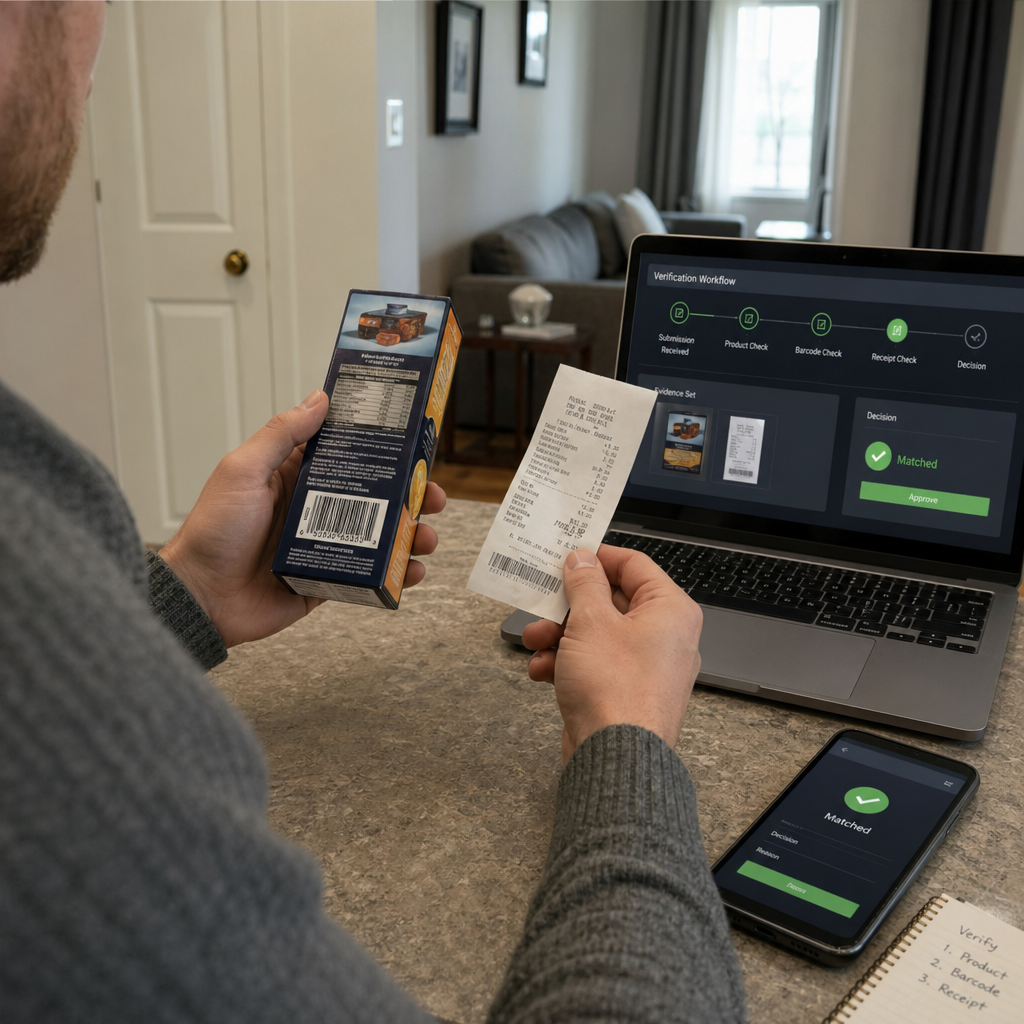
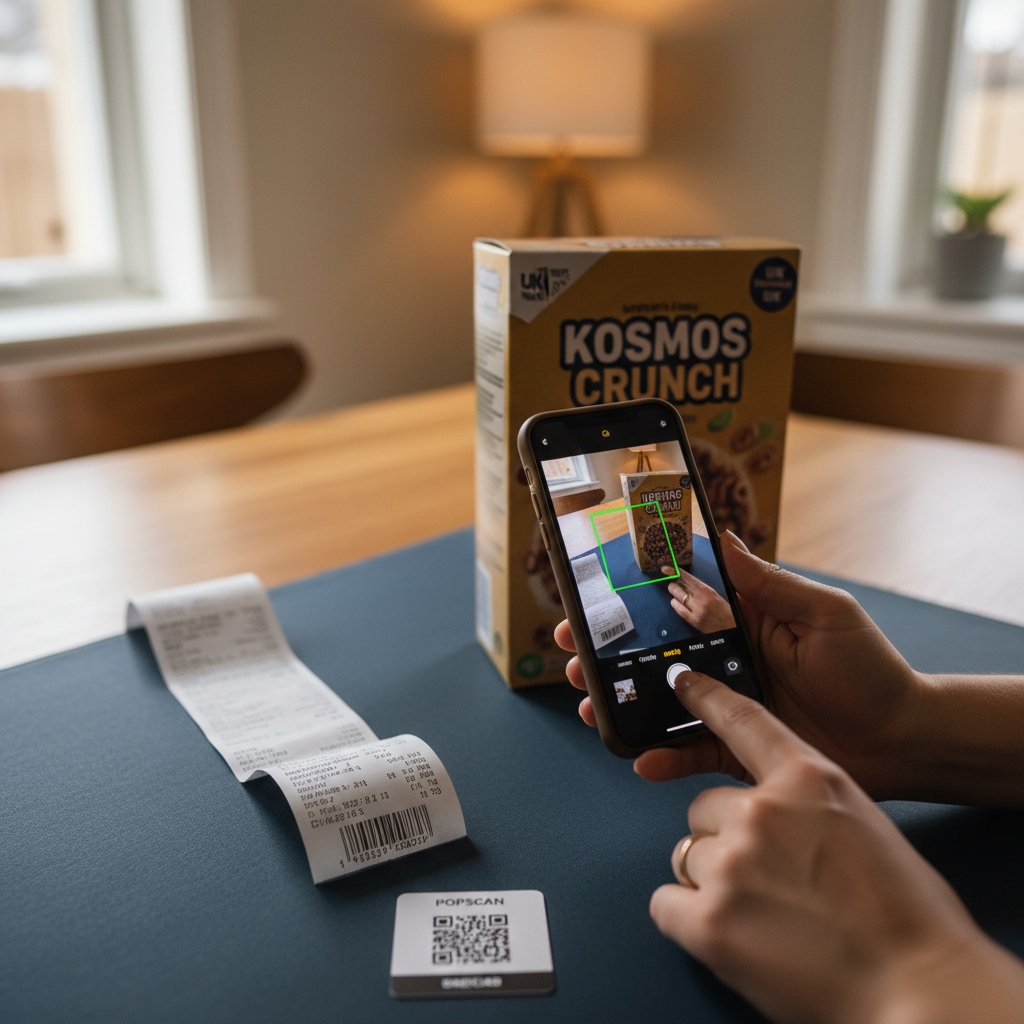
POPSCAN validates receipt, pack, and barcode as one purchase-proof set, countering single-signal abuse and providing a firmer decision basis.
The evidence trade-off in proof of purchase
Control applies at entry or after the fact. Compare evidence-led proof at entry, which captures artefacts early with clear rules, to manual adjudication later, leaving support to piece together blurry images.
A light-touch front end may seem efficient, but rising claim volumes expose its flaws. Define proof requirements upfront, use machine checks, and log outcomes. Weak evidence controls shift cost downstream; POPSCAN assesses claims against a full proof set of receipt, pack, and barcode.
Step-by-step evidence trail
To settle disputes, identify the evidence needed at entry: receipt image, purchase time, product indicator, claimant identifier. Include barcodes in the proof set where relevant.
Move to early validation: image quality checks, duplicate detection, product matching, and timing rules. This removes obvious failures before support load rises.
| Stage | What to capture | Why it matters |
|---|---|---|
| Claim entry | Receipt, product proof, claimant identifier, timestamp | Creates the base record for validation |
| Automated review | Image quality, duplicate signals, eligibility rules | Removes obvious failures before support load rises |
| Decision point | Approve, reject, or escalate with reason code | Improves consistency and auditability |
| Voucher issue | Code status, send log, redemption state | Links entitlement to delivery and use |
| Dispute handling | Full claim history and override notes | Lets support resolve cases without guesswork |
With better evidence upstream, manual handling decreases, reissues drop, and fraud or error patterns become clearer.
Where POPSCAN fits best
POPSCAN validates receipt, pack, and barcode as one set, making it ideal for promotions requiring easy entry without thin verification. It handles legitimate shoppers with incomplete uploads, where single-signal checks fall short.
For context, Holograph offers related tools like ONECARD or DNA, but the evidence question centres on POPSCAN: can your team show how receipt, pack, and barcode support the entitlement decision?
Pitfalls to avoid
Repeated disputes indicate workflow gaps. When support interprets receipts manually, define rules earlier to prevent inconsistency.
Avoid false precision. Controls must be explainable to claimants; claim mechanics should feel auditable and fair.
Don't neglect visibility. Metrics like first-pass validation rate or duplicate submission rate spot systemic issues. Park growth claims without baseline evidence until data catches up.
A reusable checklist for dispute readiness
What should exist before a dispute lands? Tie each item to the question it settles fastest.
- Clear eligibility logic: participating products, purchase dates, claim windows. Question settled: was the claimant ever eligible?
- Required proof fields: receipt image, transaction time, product identifier. Question settled: is there enough evidence to assess the claim?
- Proof-set validation: receipt, pack, and barcode checked together. Question settled: does the proof belong to one plausible purchase?
- Automated validation rules: image quality, duplicates, product matches. Question settled: should this claim pass, fail, or be reviewed?
- Decision logging: each outcome with reason code. Question settled: why was this outcome reached?
- Entitlement linkage: vouchers linked to validated claims. Question settled: did this voucher come from an approved claim?
- Override controls: manual decisions logged with notes. Question settled: was an exception made, and on what basis?
- Unified support view: one screen showing all proof and history. Question settled: can support answer the case without reconstruction?
Before launch, test: can support explain any outcome in under two minutes using the record? Can the team identify dispute sources? If not, gaps remain.
Closing guidance
The decision is where control belongs. Deferring proof creates light entry but pushes cost to support. An evidence-led workflow gives support a clear record and the promotions team a true view.
Evidence from operations shows that minimal checks can lead to higher dispute volumes, favouring stricter validation. POPSCAN proves what happened through a joined-up proof set, not adding theatre. If claim handling relies on inbox searches, it's time to tighten the trail. To see how, contact the team behind POPSCAN for a controlled pilot. Measure the outcome, and scale only when the evidence is clear.