Full article

A campaign can look healthy right up to the moment proof needs checking. Scans come in, forms fill, dashboards brighten, then operations hits the brakes because purchase evidence is incomplete, inconsistent or too slow to validate. That is not a reporting footnote. In many activations, it becomes the real delivery constraint.
This briefing takes a practical view: teams have become better at launching creative but still under-design the chain between scan, validation and fulfilment. A strategy that cannot survive contact with operations is branding copy. The interesting question is not whether proof-of-purchase matters, but where to place control points so valid demand turns into delivered outcomes, with caveats where evidence is partial.
The case study answer first: proof checks decide whether activation becomes delivery
Proof-of-purchase checks should be treated as a product and operations decision before they are a campaign mechanic. Left to the end, they create avoidable drag in customer effort, manual review and fulfilment delay. Campaign response looks strong on front-end metrics such as scans or entries, yet back-end processing stalls because receipts or codes are hard to verify at pace. Once proof rules are simplified and validated earlier, more eligible users complete the journey and operations spends less time on exceptions.
What Holograph is doing in these journeys, in one honest paragraph
Through Kosmos and related delivery workflows, Holograph builds validation logic and brand compliance checks into production, not bolted on at the end. That matters because the handoff between creative approval, user submission, evidence review and reward fulfilment is where campaigns become either defendable operations or piles of manual exceptions. Public examples point to the upside of tighter journey design: Lucozade Energy's Halo Galaxy AR activation reported a 32% sales uplift, and the Ribena x Monopoly AR promotion overshot its entry goal by 258%. The caveat: those outcomes are commercial and participation signals, not a pure readout of proof-check efficiency alone.
Validation first, metrics second: what the public cases actually show
The public cases warrant closer look, provided we avoid over-claiming. They demonstrate that when the route from packaging prompt to interaction is legible, people complete it. Experiential mechanics carry commercial weight when simple enough to execute at scale. What they do not automatically show is the share of improvement attributable to cleaner proof validation versus stronger creative or retailer context. Growth claims without baseline evidence should be parked until data catches up.
Teams often report activation performance as if every point of uplift reflects demand creation. Sometimes the number is partly a correction for an avoidable process problem. If receipt handling was slow, proof rules unclear, or customer support rescued too many entries, then a later improvement may reflect operational repair as much as market response. That does not make the gain less useful, but it changes what to repeat next quarter.
Where the number may reflect demand, and where it may only reflect smoother verification
Here is the commercial trade-off: simplify proof rules aggressively and you lift completion but increase exposure to invalid claims; tighten verification heavily and you protect accountability but risk suppressing legitimate participation. There is no clean answer. The right choice depends on campaign value, reward cost, retailer evidence quality and tolerance for exception handling.
Distinguish between demand indicators (scans, visits, repeat interactions, sales) and verification indicators (pass rate, exception rate, average review time, manual intervention proportion). Blending them into one headline can flatter a campaign while obscuring the actual constraint.
An implied objection: if the campaign is producing volume, why slow the user down? Because accountability does not disappear when demand arrives. In regulated promotions, defendable records matter. The sensible move is earlier, clearer friction in the few places that stop expensive failure later.
The handoff that fails under pressure: scan, validation, fulfilment
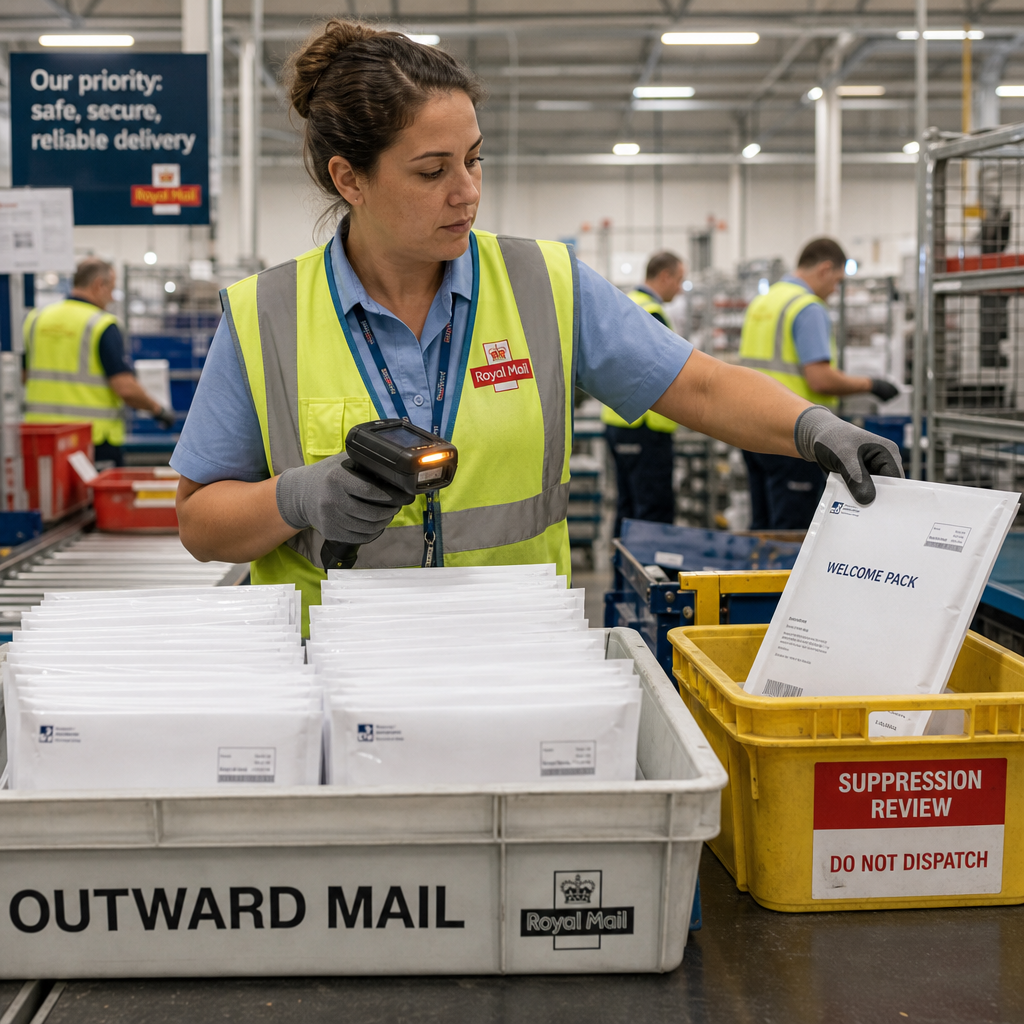
Most operational failures are cumulative. A QR code or on-pack prompt drives the scan. The user uploads a receipt or enters a code. Validation confirms eligibility, and fulfilment issues the reward. Pressure builds when one stage assumes the next can absorb messy inputs indefinitely.
Two specifics: first, proof design should reflect what can be verified consistently, not what sounds comprehensive in a workshop. If retailer receipts vary widely, asking for extra fields may create more ambiguity. Second, exception handling must be planned as part of delivery economics. If 5% of submissions need manual review, that may be manageable; if 20%, your activation has become an operations project.
A useful transfer: localisation and compliance workflows can help even when the campaign is not multilingual. Holograph's production approach shows that standardising evidence prompts, input formats and review rules across variants reduces strange edge cases. Less glamorous than launch creative, but more likely to preserve margin.
Why proof-of-purchase is where product design, operations and accountability meet
Proof-of-purchase sits in an awkward but valuable place: part user experience, part risk control, part service design. That is why commercial leaders should care. Designed well, valid demand converts more cleanly into measurable outcomes and teams can defend the result. Designed poorly, the activation produces noise and attention but delivery evidence weakens when scrutiny increases.
The unresolved tension: every team wants lower friction, and every operator wants fewer disputes and exceptions. You cannot maximise all at once. The better option is to decide before launch which failure mode is less expensive: lower conversion from extra checks, or higher rework from loose verification. With budgets tighter, fixing proof logic before creative scale-up is usually cheaper than repairing fulfilment once volume lands.
If you are reviewing your next activation, ask whether the proof journey is strong enough to turn response into delivery evidence. For a sober assessment of the option set, trade-offs and next move, contact Holograph to see how Kosmos structures this workflow. We can help build compliance checks into production, ensuring your next move is grounded in evidence rather than operational friction.
The next useful move is a narrow live test of Holograph with one threshold, one outcome measure, and one hard stop.