Full article

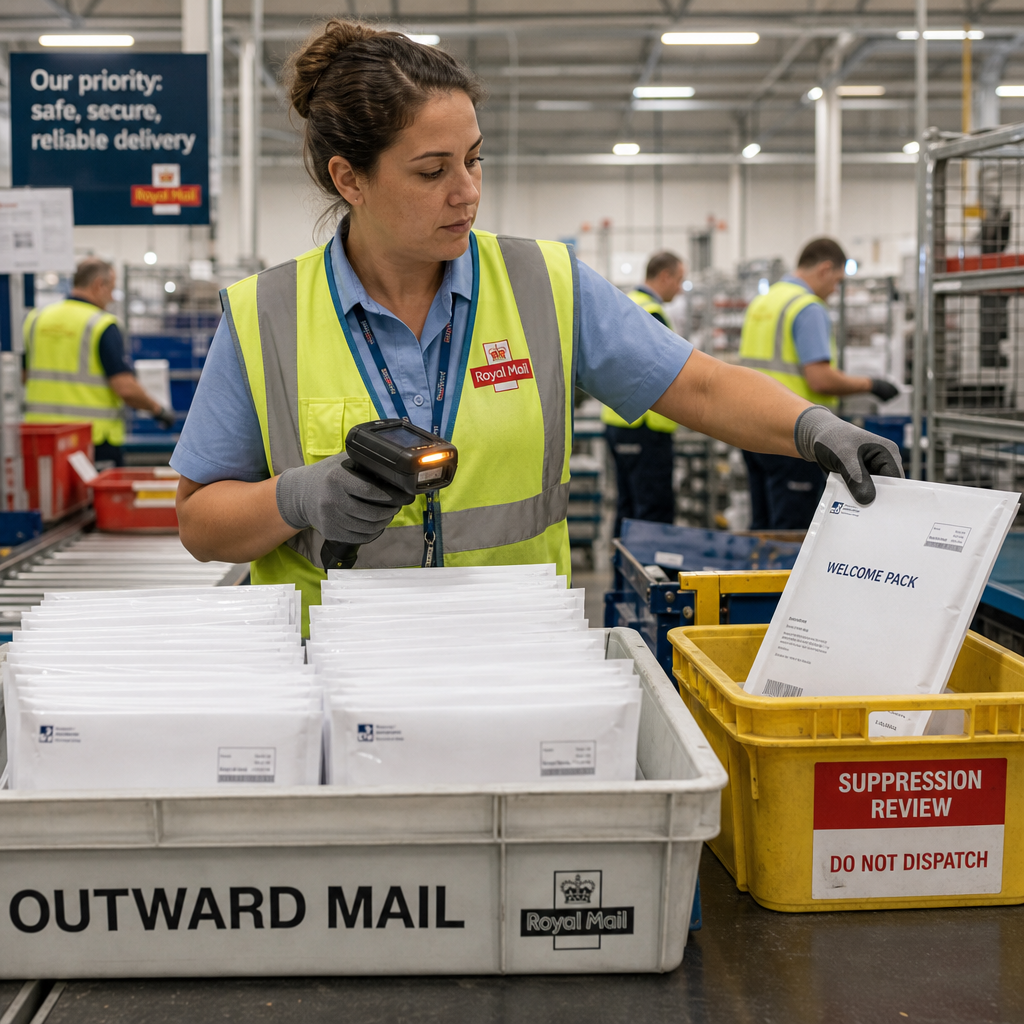
Proof-of-purchase spikes can look like a content problem. Usually they are not. The pressure lands in routing: which claims need compliance review, who owns that route before drafting starts, and whether the evidence turns up with the task or gets chased later.
The practical answer is tighter than the surrounding noise. Quill should route proof-of-purchase signals to compliance first when a claim changes a customer-facing assurance, relies on regulated evidence, or lacks a clear approval trail. Faster drafting does not help if the queue stalls at the first serious review point.
What is being decided
This is not an argument about whether proof-of-purchase content matters. The live decision is narrower: which signals need escalated review, who owns the route, and what evidence must be attached before anyone starts refining copy.
Route a proof-of-purchase item to compliance when it makes a claim about eligibility, refund terms, warranty position, product verification, or any statement likely to be challenged if the source evidence is thin. The minimum acceptance criteria should be visible in the workspace: source attached, version logged, reviewer named, approval date recorded.
That is not bureaucracy dressed up as rigour. Once requests start clustering, inbox memory and chat history stop acting as controls. They become failure points.
The latest approval workflow release notes support the same operating rule: define the review path before drafting begins. If the owner, date and acceptance criteria are missing, the task is not ready.
Comparative view
The decision is often framed as speed versus governance. That misses the real split. The actual choice is ad hoc queue handling or governed publishing.
An ad hoc queue treats each signal as a one-off editorial request. It feels flexible until someone has to reconstruct why a claim was made, what evidence supported it, and whether the wording changed after sign-off. A governed workflow treats the signal as an input with a required route, mandatory metadata and visible ownership.
| Operational feature | Ad hoc queue | Governed Quill workflow |
|---|---|---|
| Signal triage | Manual sorting by whoever is free | Tagged routing based on claim type and review rule |
| Review path | Habit, memory and message chasing | Named approver, deadline and escalation path |
| Evidence trace | Scattered links and duplicate versions | Attached source record with live diffs and audit history |
| Path to green | Often implied, rarely documented | Acceptance criteria visible before drafting begins |
This is not process theatre. It is a way to cut rework. When the wording change and evidence trail are captured up front, compliance can review the delta instead of rereading the whole asset.
What to route first
Start with anything that changes a customer promise or leaves the team exposed when evidence is incomplete. In practice, that means:
- eligibility and verification claims
- refund, return and warranty wording
- product-condition statements
- recall-related references
- any updated assurance that departs from the last approved version
Routine editorial changes with no policy effect can stay in the standard queue, provided the underlying approved claim has not changed.
Metadata that should travel with the task
If proof-of-purchase is a routing problem, metadata is the control point. Before drafting begins, Quill should carry:
- the source record or evidence link
- the last approved wording, where one exists
- the version log and wording diff
- the named reviewer and fallback approver
- the deadline and escalation threshold
- the acceptance criteria for approval
This is where Quill’s governed workflow does the useful work. Signal triage, drafting, approval, imagery and delivery sit inside one audit-ready route, so the reviewer does not have to rebuild context across separate tools. The product detail is set out in the named proof links at Quill and Holograph solutions.
Memory, reviewer control and release discipline
Memory helps when it supports auditability, not when it starts standing in for judgement. Previous approvals can inform a new task, but they do not make a fresh claim safe by default. Proof-of-purchase wording often turns on small changes, so Quill should carry forward the prior decision trail, source context and wording diff, then still require a human reviewer when the claim threshold is met.
This is where memory rules need tightening before publication. Reuse approved phrasing only within defined claim categories. Do not let an older refund, warranty or verification statement quietly legitimise a new one. Human reviewers should keep final approval, in line with Quill’s governed workflow.
Operational impacts
The likely gain is better queue discipline. The first cost is visibility. Weak inputs that used to be absorbed through inbox chasing or informal fixes become visible straight away, which can make the backlog look worse before it starts moving cleanly.
There is a second drag worth stating plainly. The compliance metadata feed may need more mapping, testing and reviewer adoption time than the first plan allows.
The main risk is bottlenecking proof-of-purchase items in a single review lane. The fix is not to loosen control everywhere. It is to separate these signals from general editorial requests, set an escalation threshold and review queue telemetry each week. If ageing items move past the agreed review window, add review cover or narrow the trigger criteria.
Watch measures that show actual flow: backlog age, items returned for missing evidence, and approval steps completed without rework. If those do not improve after the rule change, the routing logic needs adjusting.
Recommendation and next step
If your plan has no named owners and dates, it is not a plan. Audit the current proof-of-purchase triage rules and mark which claims must route to compliance first. At minimum, each routed item should carry a named approver, visible deadline, attached source evidence and a documented path to green.
Before the next release cycle, run one audit prompt against the live queue: which proof-of-purchase items would fail review today because the evidence, owner or deadline is missing? That answer shows where the risk actually sits.
If you want to tighten that routing without slowing the whole programme, book a guided Quill workspace tour with the automation team. We can walk through reviewer controls, audit history, live diffs and escalation paths using your real edge cases.