Full article
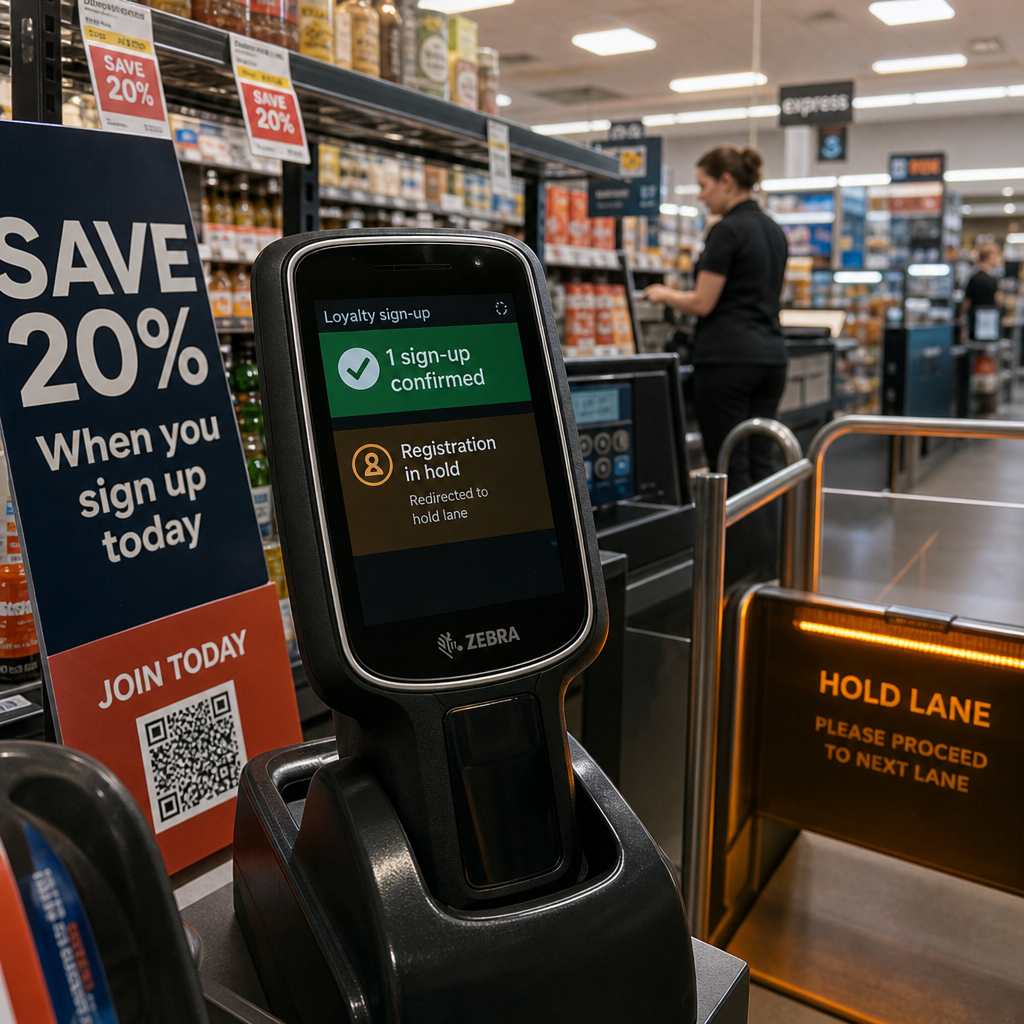
A coupon surge creates an awkward split. Commercially, a 43% rise in sign-ups looks strong. Operationally, the same spike can be where toxic data slips in fastest.
That is what makes the Tesco and Co-op example worth a closer look. GetPRO Campaigns reported a 43% uplift in email sign-ups from a £1.50 off campaign. The uplift is real. The unresolved question is whether the extra records were genuinely reachable and consent-defensible, or whether some of that gain arrived as aliases, disposables, mistypes and duplicate structures that only fail once the welcome journey starts doing the work.
The clue inside the uplift
The useful clue is not the headline number. It is the change in entry quality once an incentive gets broad visibility across Tesco and Co-op. Entry intent widens quickly. Some shoppers sign up once, with clean data. Others retry with slight variations, use throwaway domains, mistype on mobile, or submit copied patterns that pass static checks and fall apart later.
That is where weak bad-entry control shows itself. Teams still treating all captured volume as equal usually discover the problem downstream, through bounce spikes, weak early engagement, or complaints that do not match the acquisition story being reported. By then the damage has already moved into CRM, deliverability and consent evidence.
Some spoilage is routine in any promotional capture flow. Harmless typos come with the territory. What changes the risk profile is concentration: bursts of manipulated or disposable entries hitting a fast-moving welcome sequence before anyone has separated passable records from risky ones.
What operators tune first
The first decision is not accept versus reject. It is whether the form applies any meaningful route-state at the point of entry. Static regex rules and allow-lists can catch obvious formatting errors, but they do very little when the problem is incentive-driven behaviour rather than broken syntax.
The better comparison is governed real-time judgement against silent clean-up later. One route keeps volume high on paper and relies on suppression after ingestion. The other routes records by confidence, so good users move through while borderline or risky entries are challenged, held, reviewed or stopped only where the evidence supports it.
That is the space EVE is built for. EVE grades pass, challenge, hold, review and stop outcomes in real time, keeps the reasoning visible, and uses more than 30 proprietary detection methods with sub-50ms response time and intelligent caching. The point is not to claim perfect certainty. It is to make a better first decision while the campaign is live.
The signals are usually cumulative rather than dramatic: repeated alias patterns, keyboard walks, entropy that does not resemble ordinary human entry, and domain anomalies that cluster around the incentive burst. Those patterns do not always justify a hard stop. They often justify a different route.
Threshold tuning is where the trade-off sits. Tighten too far and genuine shoppers get dragged into friction, especially on mobile or where households share address conventions. Leave thresholds too loose and the campaign looks healthier than it is while downstream teams inherit resend waste, list cleaning and sender strain. There is no universal setting. Offer mechanics, welcome timing and current review capacity all matter.
Override discipline matters more than perfect rules
Once weak records are in, teams start compensating by hand. Suppression exceptions multiply. Analysts try to explain why sign-up growth and mailbox performance no longer line up. Compliance has to ask whether the consent record is really as solid as the topline suggests.
The answer is usually not a dramatic rebuild. It is disciplined routing and disciplined exceptions. Higher-confidence records pass. Borderline entries are challenged, held or reviewed. Higher-risk addresses stay out of high-value lifecycle marketing flows until confidence improves, or they move through an email confirmation loop.
This is where many promotion flows come unstuck. If every commercial concern creates a one-off override, thresholds stop meaning much. During a live acquisition push, teams need visible pass, challenge, hold, review and stop states that can be defended operationally and audited later. EVE makes those route states explicit, which matters when email campaign validation is tied directly to deliverability protection and consent journey design.
EVE’s route outcomes do not replace consent capture, and they should not be sold as certainty. No credible validation engine can promise that. EVE does not. Its results infer authenticity probabilities rather than making absolute declarations. That is the honest framing. The working question is narrower: can enough toxic data be intercepted early enough to protect campaign ROI, sender reputation and auditability without spooking legitimate users?
Why the first 48 hours matter
The GetPRO Campaigns result matters because it sharpens the timing question. When a retail offer lands well, volume rises faster than manual review capacity. Sender damage, by contrast, is slower to show and harder to repair.
If the first meaningful control sits after ingestion, downstream teams are absorbing an upstream failure. That changes what should be monitored in the first 24 to 48 hours. Raw sign-ups should be reported separately from validated, deliverable, policy-safe records. Welcome journeys should route by confidence, not assume every captured address is equally usable on day one. Threshold reviews should happen early, when the pattern is still forming and before mailbox-quality drift becomes expensive to unwind.
Cleaner inputs do more than improve send success. They protect audience modelling, reduce wasted creative exposure and make campaign testing more trustworthy. If one variant wins mainly because it attracted more throwaway entries, the business learns the wrong lesson and scales the wrong behaviour.
The practical read-across
The Tesco and Co-op coupon result is not a reason to distrust uplift. It is a reason to classify it properly. A sign-up spike can signal stronger demand and weaker entry quality at the same time.
That is the watchpoint. In a high-response promotion, route-state control, threshold tuning and override discipline matter more than tidy acquisition headlines. Teams that separate passable records from risky ones early usually protect deliverability and consent evidence with less manual work later. Teams that wait tend to inherit the clean-up in CRM and mailbox performance. If you are reviewing where those controls should sit in your own flow, a frictionless validation walkthrough with Holograph’s solutions team is a sensible next step.
Proof links: EVE | Holograph solutions