Full article

Do redemption disputes arrive suddenly? Look closer: claim quality usually erodes over days or weeks. In UK promotions, early signs are subtle—receipts lacking detail, barcodes that match too broadly, repeated support queries. Catching these patterns before dashboards flag trouble gives teams an operational advantage. For FMCG, retail, and prize campaigns, the task is choosing which control to tighten without slowing pace. POPSCAN handles this by sequencing evidence checks, not depending on one weak point.
Context
Treating weak claims as fraud only after support volume rises is a common error. Earlier signals surface in claim exceptions and manual review behaviour. A receipt might have visual detail for human review but insufficient structured data for consistent automation. A barcode can match a product family yet miss the promoted variant. These factors affect queue length, adjudication time, and claimant confidence.
Compare UK campaigns relying on a single proof artefact with those pairing evidence sources from the start. Code-entry or receipt-only routes seem efficient but often push ambiguity downstream. Combining product, barcode, and receipt checks surfaces uncertainty earlier, when handling costs less and explanations stay clearer.
Operational viability defines effective strategy; without it, plans are just branding. Testing alternatives shows that routes with less initial proof generate more unresolved claims. Methods using robust image capture and multiple proof signals yield fewer exceptions, as performance metrics confirm.
Promotion participation quality hinges on how many valid entries settle quickly and fairly, with an audit trail that withstands challenge.
What is changing
Promotions face increased volume from social, creator, and retailer amplification, while consumer tolerance for clunky claims stays low. Brands want less friction; operations need better evidence. The solution lies in stronger sequencing, not crowding every check upfront.
Receipt-only validation worked under lower volumes, but higher participation exposes weaknesses faster. Duplicate-looking receipts, product-family confusion, and poor image quality become manageable alone but collectively distort effort and fairness perception.
Campaigns with smarter barcode and receipt controls separate two blurred questions: did a purchase probably occur, and did it meet exact campaign rules? A readable receipt might support the first; the correct barcode aligned to receipt and SKU logic answers the second. POPSCAN’s value resides in that distinction.
Assuming stronger checks hinder conversion is a mistake. The greater drag comes later when support must explain why an accepted claim faces dispute. Consumers tolerate verification better than uncertainty, especially with a plain, auditable path from entry to claim.
How the early patterns usually present
Quiet claim patterns often appear comparatively. One cluster shows more receipt images readable to a person but incomplete for machine extraction. Another exhibits barcode matches passing at brand level but failing at variant level. Viewed separately, each seems like noise; together, they indicate a weakening evidence chain.
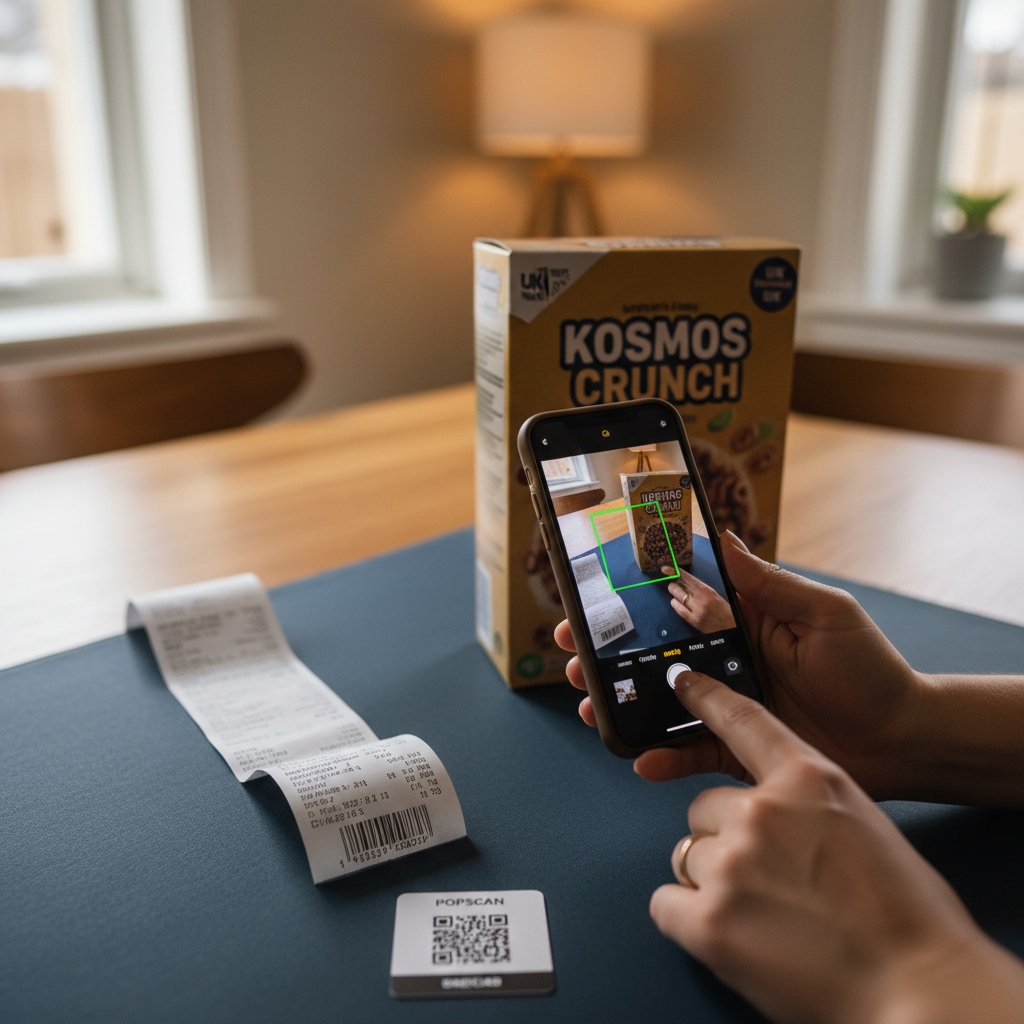
Consider two scenarios. In the first, a claimant uploads a receipt with partial line detail and no product disambiguation; manual review can sometimes rescue it, but decision quality depends on reviewer judgement. In the second, the same claim includes receipt, product, and barcode validation; even with one weak artefact, others help settle the claim faster. This pairing matters because disputes escalate when ordinary ambiguity meets high volume.
Another early sign involves support language shifting before complaint numbers spike. Tickets stating “I uploaded everything” or “the item is on the receipt” suggest a mismatch between customer expectations and workflow requirements. This is rarely resolved by stricter copy; more often, the evidence model is under-specified.
If image quality varies, tighten capture guidance and set clearer proof requirements. If barcode confidence is low, strengthen the product rule set. POPSCAN workflows prove effective when each proof source has a defined verification role.
The friction point is real: additional checks might deter marginal entrants, but weak controls undermine trust in fairness later. Manage that trade-off.
Implications
Operationally, the remedy is comparative. Do not assess receipt validation in isolation. Determine which disputes settle with receipt first, which need barcode confirmation, and which require fuller product checks. This provides an option set, not a false binary.
For lower-risk campaigns with broad eligibility, lighter verification may be sensible. But where SKU specificity matters, retailer variance is high, or fulfilment cost is downstream, weak checking creates hidden expense rapidly through expanded manual review, stretched support queues, and indefensible reward allocation.
Good process offers each claimant a reasonable route and each operator an auditable record. The proof path should display, in plain sequence, what was submitted, checked, accepted, and where exceptions arose. POPSCAN supports this by treating evidence as connected signals.
Stronger controls often demonstrate value initially through reduced exception handling, not immediate fraud detection. The earlier win involves fewer unclear cases, quicker settlement, and improved consistency between claim decisions and support explanations.
Actions to consider
If disputes have not yet risen, act now. Start by mapping which proof artefact clears a claim first in your current workflow. If the receipt alone must establish purchase, eligibility, and timing, that places too much weight on it. Rebalance so the receipt answers one question well, with barcode or product checks addressing others.
Next, inspect exception categories. If manual review triggers due to image readability, variant ambiguity, or retailer formatting, treat these as design inputs. Tighten upload guidance, adjust capture prompts, and refine acceptance rules. POPSCAN performs best when checks are configured as workflow decisions, not discretionary calls.
Test the customer path for auditability. Ensuring claimants can comprehend claim outcomes without support enhances trust and reduces challenges. Best practice involves showing the consumer journey from entry to claim without hidden steps, using language that signals fairness and verification.
The option set is evident: lighter front-end friction with heavier downstream review, or stronger up-front validation with cleaner settlement later. In most high-volume environments, the second path proves steadier. If implementation is with Holograph, sequence by live claim behaviour, not presentation logic.
The market move is towards tighter evidence chains that still feel usable. For teams willing to make small changes before dispute curves rise, if you want to see where your workflow carries ambiguity or where POPSCAN could improve proof of purchase verification without unnecessary slowdown, get in touch for a short diagnostic call. We can assess trade-offs and help decide the next move.