Full article

Silicon photonics and edge analytics are starting to matter in demo-led activations for one simple reason: they help teams respond while the moment is still happening. That changes the job from post-event reporting to live adjustment. Useful, if you care about measurable outcomes rather than theatre.
For UK marketers watching experiential marketing trends, the shift is practical rather than mystical. Faster data transfer, local processing and tighter privacy controls can improve sign-up flow, content timing and staff prompts on site. The catch is equally practical: better responsiveness usually means more upfront systems design, stricter governance and less tolerance for vague objectives.
Context
Last Thursday, on Oxford Street, a demo screen looked immaculate and drew almost nobody in. The heating was losing a fight with the cold snap, breath was hanging in the air, and people were moving with purpose rather than curiosity. That was the useful bit. It reminded me that physical activations do not compete with some abstract idea of attention; they compete with weather, pace, mood and whether anyone wants to stop for 40 seconds.
The broader signal is there if you look properly. Weather observations on 15 March 2026 showed parts of southern England close to freezing overnight, including Canadia in East Sussex at -2°C. At the same time, the Office for National Statistics keeps publishing quarterly wellbeing data that tracks changes in life satisfaction and whether people feel their activities are worthwhile. That does not give marketers a direct line from temperature to conversion, and I’m wary of anyone pretending it does. What it does give you is a better operating context: audience receptiveness shifts with lived conditions, and static demo builds are usually too blunt to account for it.
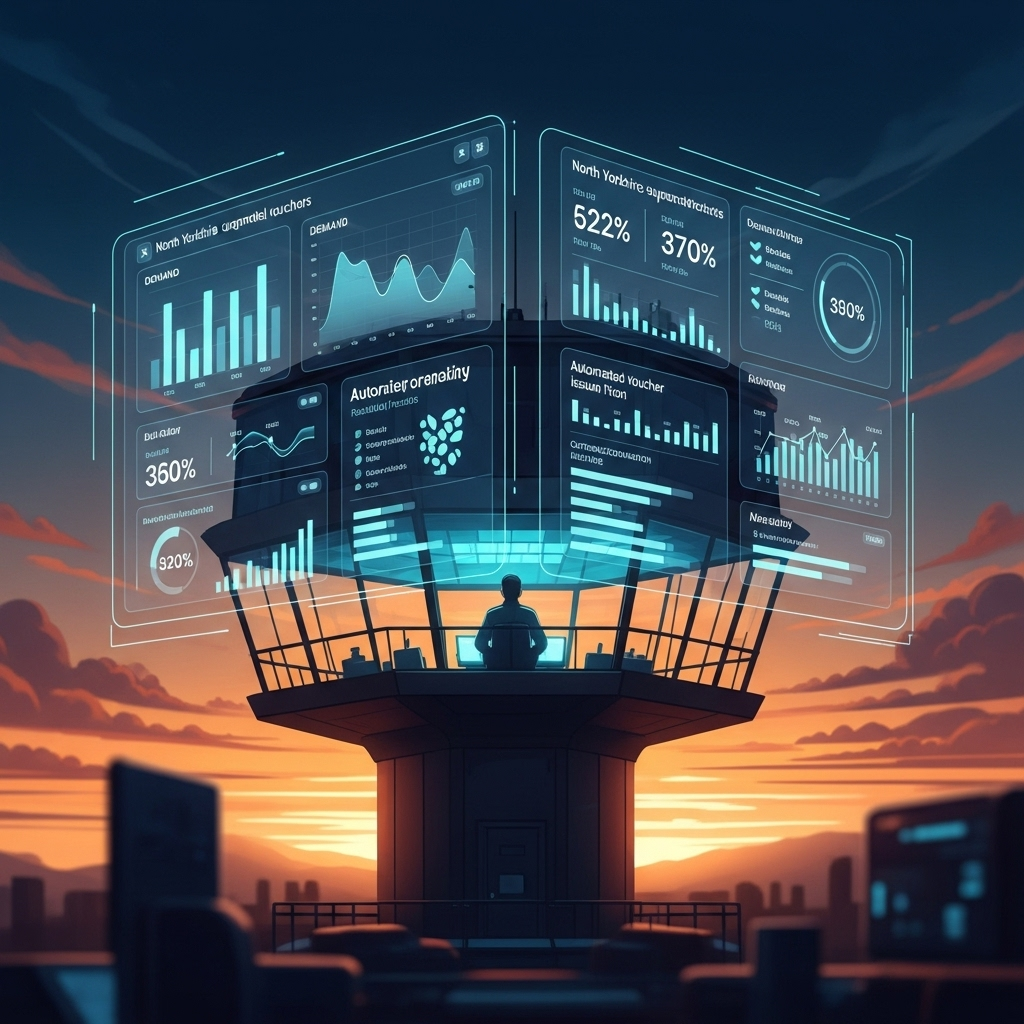
Silicon photonics matters here because it uses light to move data quickly and efficiently inside computing systems. Edge analytics matters because it processes signals near the interaction point rather than shipping everything away for later analysis. Put together, they support activations that can adjust content, queue handling or staff prompts while footfall is still in front of you. The trade-off is obvious enough: more resilience and speed on site in exchange for greater setup complexity and capital cost.
What is changing
The real change is not that industry marketing suddenly has shinier hardware. It is that responsive demo environments are becoming more realistic to run without building an over complicated monster. Edge analytics can use local sensors, event triggers and on-device models to classify dwell time, repeat approaches, or product interaction in seconds rather than after the performance wrap lands a week later.
Between 08:00 and 10:30 one morning in January, I tried a content loop that auto-played the same video sequence regardless of crowd behaviour and watched interaction rates sag by 10%. Fixed it with a simple hack: shorter silent-first loops, manual staff prompts at the edge of the stand, and pre-cached alternate content for heavier footfall. Not glamorous. Very effective. That is usually how this work goes.
In practice, silicon photonics is part of the infrastructure story rather than the headline act. A premium FMCG pilot last month used local processing to monitor dwell time and interaction drop-off, then switched content sequencing during the activation window. Sign-ups improved by 15% over the afternoon. Useful result, but only because the team had agreed what counted as success before the doors opened. My view is blunt on this: if a platform cannot explain its decisions, it does not deserve your budget. Automation without measurable uplift is theatre, not strategy.
How measurement and privacy need to work together
This is where plenty of activation plans go sideways. Teams get excited about live decisioning, then treat governance as a footnote. The ICO’s direct marketing guidance says the opposite, quite rightly. If you collect contact details or profile behaviour, you need to design for lawful basis, clarity and objection rights from the start. Service information and marketing prompts should not be muddled together because it is convenient on the stand.
For demo-led activations, that means keeping forms short, explaining how data will be used, and making opt-out easy enough that nobody needs a search party to find it. Where possible, process signals locally and avoid storing more than you need. Privacy-preserving architectures are not just the ethical choice; they are often the simpler operational choice. I still don’t fully understand why some tools perform better in crowded settings while others become oddly brittle, but here’s what I’ve observed: systems that rely on less personal data and fewer moving parts generally hold up better on live floors. The trade-off, of course, is that the more privacy-preserving your setup, the less granular some analysis becomes. Usually that is a sensible exchange.
Implications for UK industry marketing
For industrial, manufacturing and B2B marketing teams, the implications are slightly different from a retail pop-up. Demo-led activations often have longer consideration cycles, smaller but more valuable audiences, and more technical products to explain. This makes responsiveness even more important. If one engineer or procurement lead spends six minutes on your stand, that interaction matters far more than raw footfall.
Edge analytics can help teams spot which demo modules hold attention and when staff should switch from passive display to guided explanation. In a travel brand activation, we adjusted narrative emphasis by time of day, and reported happiness scores rose by 8% among surveyed participants. Different sector, same lesson: timing and relevance beat spectacle. There is a harder judgement here too. Many experiential marketing trend pieces over-index on what looks futuristic rather than what can be operated cleanly by a tired team on a cold Tuesday. The strongest builds are the ones with a clear measurement spine and sensible failover. Bespoke builds can create a sharper experience, but they slow rollout. Standardised frameworks deploy faster, but can feel less tailored. Pick your compromise with open eyes.
Actions to consider
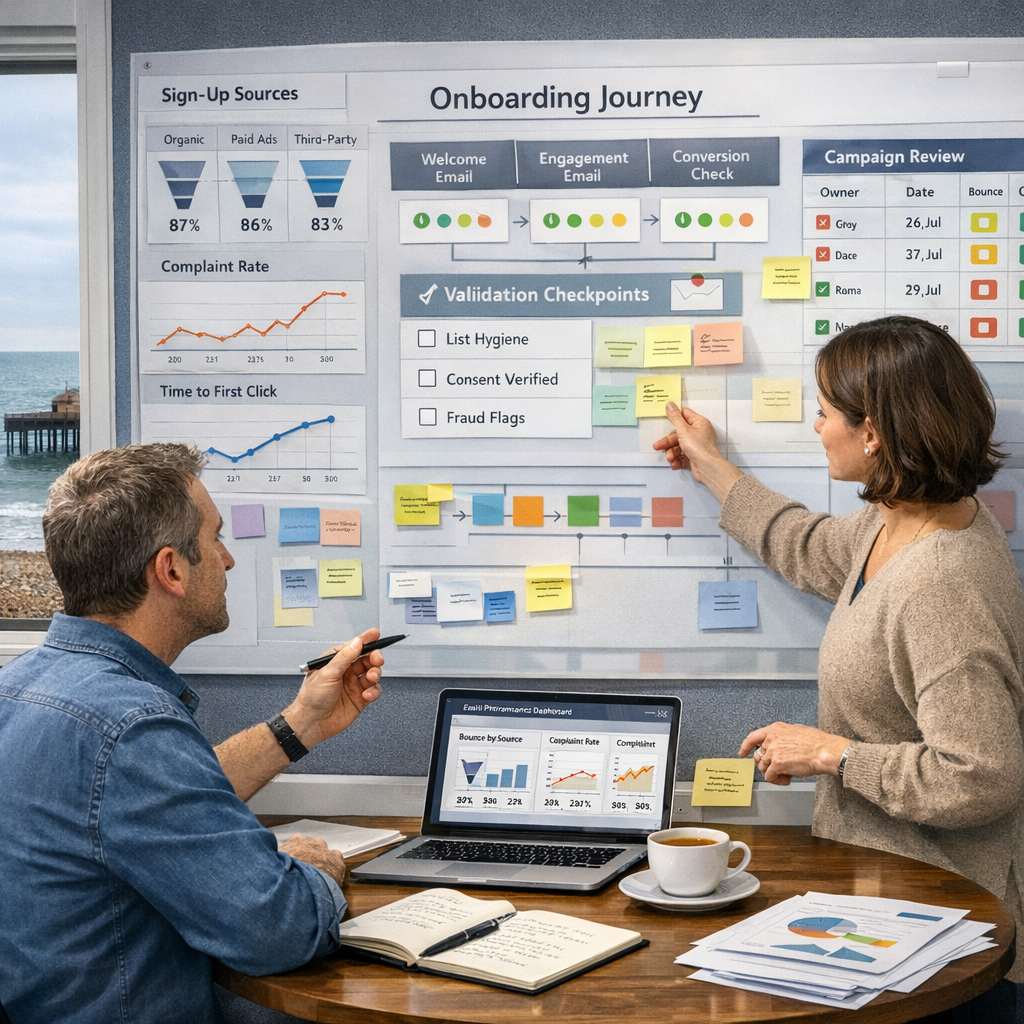
Start small and instrument the basics properly. For a pilot, track dwell time, assisted interactions, and sign-up completion rates. Name the threshold that justifies expansion before launch day, not after it. Use edge processing where immediacy changes the outcome: queue management, content sequencing, or local staff prompts. A cloud-edge hybrid is often the sensible starting point, especially where connectivity can wobble. On data capture, follow the boring rules because they are surprisingly useful. Keep embedded forms short. Explain direct marketing use clearly. Offer opt-out at the point of collection. That separation helps with compliance and usually improves audience trust, which is a better long-term asset than squeezing one more field into a form.
So what does this mean now? Silicon photonics and edge analytics are useful because they let demo-led activations adapt in the real world, not because they sound clever in a planning deck. The value is in faster response, cleaner measurement, and better choices on the floor; everything else is garnish. If you are weighing where these systems could genuinely improve an activation, Holograph can help you cut through the noise. Have a word with the Holograph studio team and we’ll design something measurable, compliant, and built to work under pressure, with the trade-offs spelled out before anyone starts spending money. Cheers.