Full article

Regulated firms often mistake intake design for a chatbot interface issue. The real challenge is building a front door that safely sorts enquiries, collects only necessary data, and leaves a clear audit trail. It’s about operational control, not conversational charm.
Context: Automating collection, not judgement
There is a perfectly understandable reason firms reach for chatbots: they promise 24/7 coverage and fewer calls. Last Tuesday, in a workshop room in Surrey, I watched a live journey ask every visitor for the same personal details regardless of context, an opening-hours question got much the same treatment as a sensitive family matter. The room smelled faintly of stale coffee and warm HDMI cables. That’s when the real issue clicked: the system had been designed to gather text, not to direct a safe next step. The trade-off is straightforward: speed of deployment versus control. If you optimise only for speed, you inherit messy triage and weak accountability. If a platform cannot explain its decisions, it does not deserve your budget.
What is changing: From convenience to control
The shift is from seeing intake as a marketing convenience to treating it as an operational control point. Pressure comes from UK GDPR on data minimisation, Consumer Duty on fair treatment, and tighter response-time expectations in legal settings. A generic open-text chat model struggles here because it invites a tangle of facts, emotion, and irrelevant detail. Structured qualification is less glamorous but more honest. It uses controlled branching: ask only what changes the safe next step. Pair this with ONS data, like quarterly personal well-being estimates and weekly death registrations, which show how anxiety and local variation affect demand patterns. The trade-off is between apparent naturalness and operational precision. In regulated work, precision wins every time.
Where the chatbot model falls short
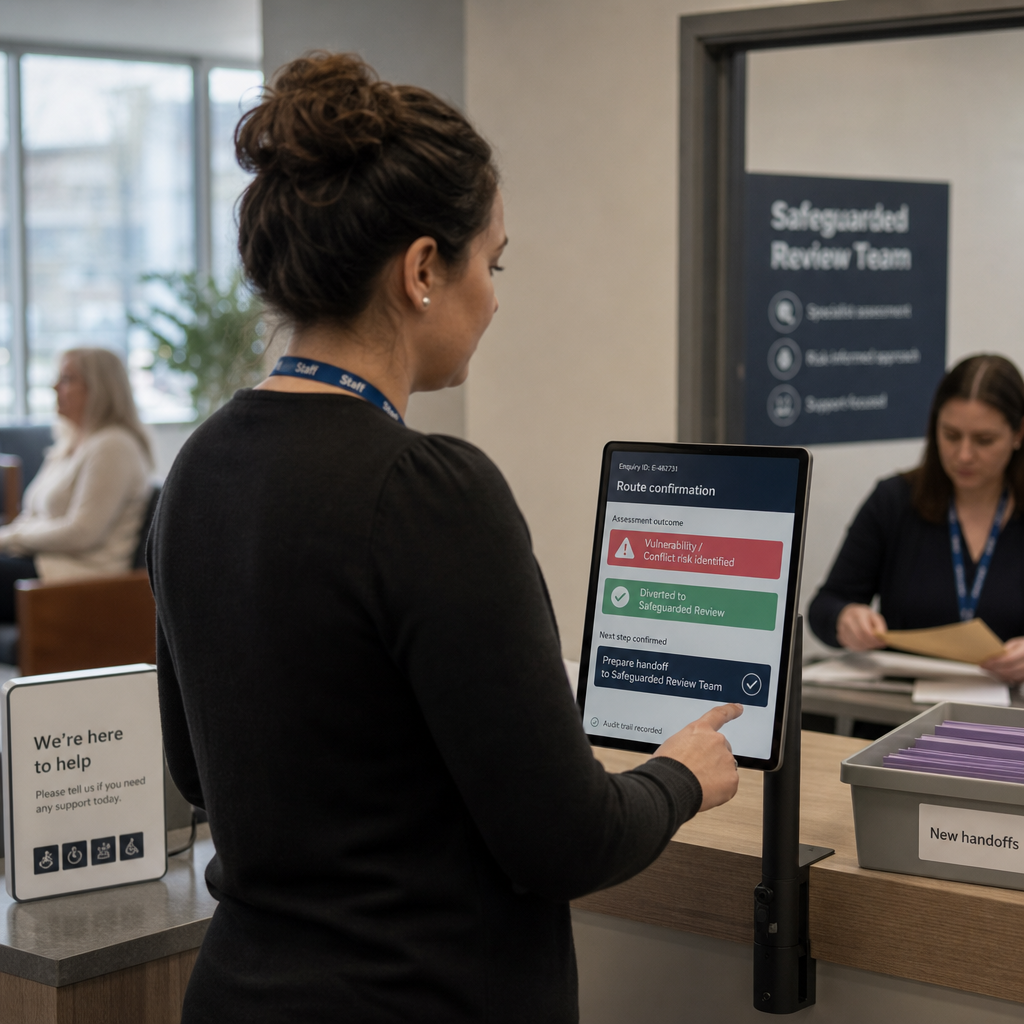
Once a firm frames the problem as “we need a chatbot”, it starts optimising the wrong things like completion rate over safety. Data collection is the first misstep: under UK GDPR, collecting a full narrative before establishing if the firm can help is over-collection, not efficiency. Staged capture is smarter, establish service line, check urgency, then gather more if justified. Vulnerability and complaints handling is another gap. Distress or complaint language should trigger an immediate off-ramp, not more questions. Between 09:00 and 11:00 last month, I tested intake variants and broke one branch by mixing a complaint with a new enquiry. Fixed it with a boring but effective hack: an early classifier that forced a stop. I still do not fully understand why some teams cling to faux-human interfaces, but here’s what I’ve observed: users forgive a structured process surprisingly quickly if it gets them to the right next step. Audit quality suffers too, a transcript doesn’t explain why a decision was made. A defensible record should show the rule or trigger that changed the path.
Actions for a better intake model
Start by mapping one live intake journey end to end. Pick a real service line like family or employment, and document the minimum information needed at each stage. Name the hand-offs, red flags, and stop points. Separate qualification from narrative capture: qualification decides what happens next; narrative gathers detail later if justified. This reduces over-collection and shortens the first interaction. Use precedent from localisation programmes: build intake as a governed system with compliance checks from the start, not bolted on later. QuickThought supports this with structured, real-time decision-tree qualification, it’s about agreed branching, mandatory fields where needed, and clear stop conditions. Keep the interaction clear, not cold: a plain sentence like “We’ll ask a few short questions to direct your enquiry safely” builds more trust than synthetic small talk.
How to measure whether it is working
Automation without measurable uplift is theatre, not strategy. Create a short scorecard: track how many enquiries are routed correctly first time, how often human override is needed, which submissions contain unnecessary data, and response times from submission to action. Use dated comparisons, if a journey went live on 3 March 2026, compare four-week periods before and after. Test the ugly cases: try mixed-intent messages, complaint language, or sparse answers. You learn more from one broken branch than twenty polished demos. Cross-check numbers with ground teams; their notes on duplicate calls or ambiguity should align with metrics. This ensures the digital front door reduces workload, not just looks shiny.
The practical bottom line
Regulated intake is a controlled workflow problem with compliance consequences, not a chatbot design challenge. Treat it as an interface purchase and you get flimsy logic; treat it as a designed system and you create something safer and easier to defend. If your team is weighing up how to improve legal intake qualification without over-collection or unexplainable automation, bring one live intake journey to QuickThought. We’ll review the branching, stop points, and hand-offs with you, showing where a simpler decision tree can replace chat with safety and clarity. Cheers.
Invite legal and regulated service teams to review one live intake journey with QuickThought.