Full article
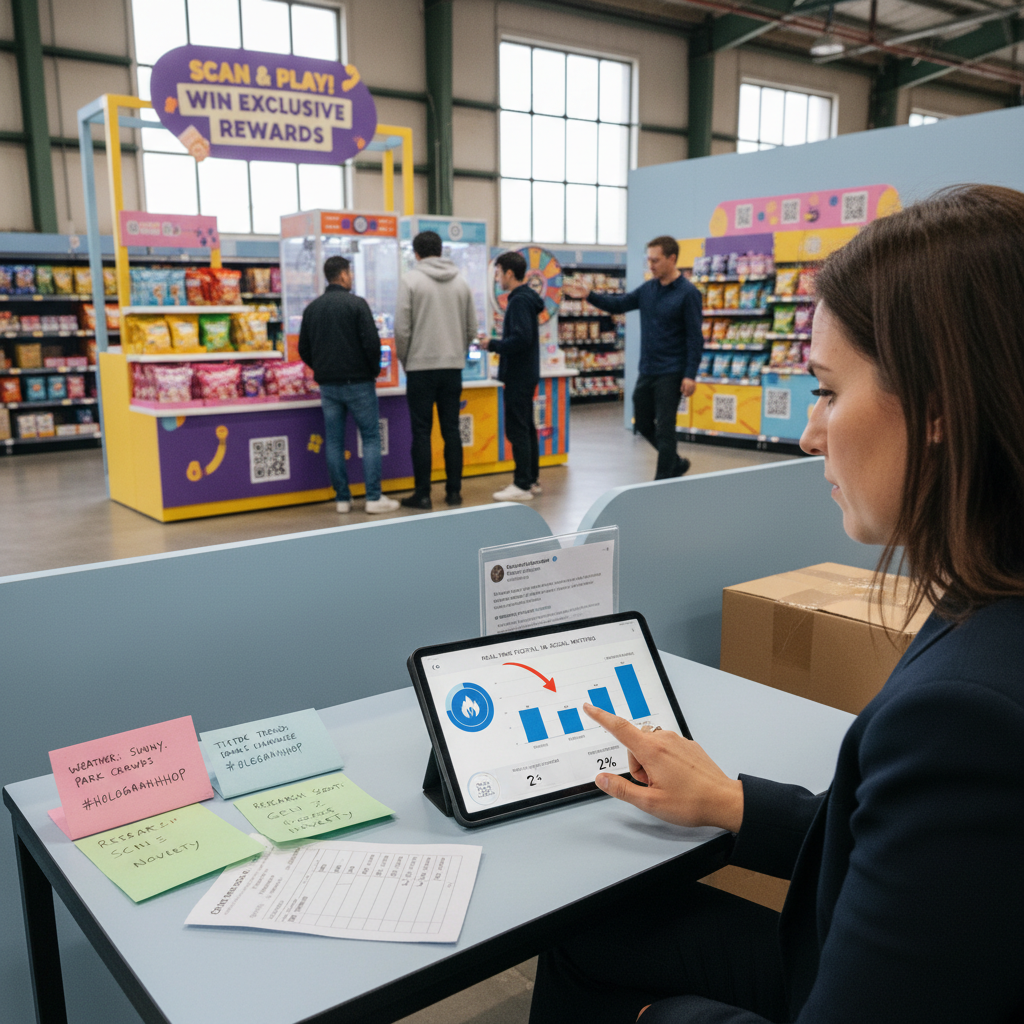
Dashboard social heat rarely translates to shop-floor demand. Many activations are approved on reach and shares, then judged on footfall and sign-ups as if those were bound to follow. Confusing attention with action makes an activation plan a liability. Ask what changed in the room, at the till, or in the loyalty journey once the social spike arrived.
Signal versus behaviour
Marketers often treat online enthusiasm and physical behaviour as the same signal. A post can attract thousands of views without guaranteeing a cleaner queue or better conversion to membership. Operational detail escapes much commentary on experiential marketing trends. Marketers talk about spectacle; store teams live with latency, queues, and stock constraints. Automation without measurable uplift is theatre.
From stunts to utility
Better work moves from one-off stunts to activations with obvious utility. The experience earns its place by making something easier, faster or more rewarding for the audience. This shift favours light-touch participation over high-friction immersion. A glossy build with AR and staffed demos can be brilliant, but it can collapse if the Wi-Fi drops or the reward comes too late. Scan-and-collect often performs better in real conditions because it respects attention span and queue tolerance. The AR activation for Lucozade Energy brought the Halo video game world to life and delivered a 32% sales uplift. Richer experiences can generate stronger memories if executed well, but simpler mechanics are more resilient and easier to scale. Audiences forgive modest design when the payoff is immediate, and they reject clever systems that waste their time.
Using wider context
Data from the Office for National Statistics on personal wellbeing provides useful context. These measures frame how people respond to real-world participation, though they are not built to score brand activations. Shared, well-run public experiences can correlate with positive local sentiment, while badly designed ones create immediate friction. Friction shows in shorter dwell times, abandoned registrations, and low repeat participation. Use ONS data as a backdrop, but judge your work against operational measures: completion rates, redemption, and whether staff can explain the journey in one breath.
The human cost of friction
When an activation creates friction, the audience feels it first, but staff carry the cost. Unclear mechanics, muddy consent language or an evasive prize process don’t just lose momentum; they push the burden onto frontline teams. Promotional mechanics are critical. Is a giveaway a random prize draw or a judged competition? Is winner selection explained clearly? Ambiguity leads to complaints. Unlimited tagging and entry requirements may inflate activity, but they degrade the experience and distort tracking. A tighter, clearer mechanic that asks for a genuine response produces better participation, fewer compliance headaches and a cleaner performance wrap.
Practical next steps
When social heat builds, resist leaping to the biggest possible activation. Locate the friction first. Is it in discovery, queue time, claim complexity or staff confidence? Different problems require different solutions. Test the mechanic before scaling the spectacle. Measure what matters: dwell time, membership conversion, redemption rates and repeat visits. Build fallbacks into every journey, especially offline options for check-in. Keep data capture proportionate and GDPR-compliant. If the next step isn’t obvious to a participant, the journey is too complex. Adopt a disciplined reporting approach. Use paired comparisons instead of broad storytelling. Compare high-production routes against lean versions, or immediate rewards against delayed fulfilment. Keep what produces measurable uplift without punishing store operations. Mature activation teams improve this way.
Sorting signal from theatre
Social buzz can be both real and commercially misleading. It signals curiosity, but doesn't prove purchase intent or operational readiness. Marketers who misread this overspend on visibility and underspend on the mechanism that turns interest into action. If you are weighing your next move, we can help you design an activation that stands up in the real world. Book a chemistry session with the Holograph studio team, and we will map the trade-offs with you: what to test, what to simplify, and where a smarter build will earn its keep.
Proof and original case study
This interpretation draws on a public Holograph case study. For the original source detail, see more Holograph case studies and holograph.digital.