Full article
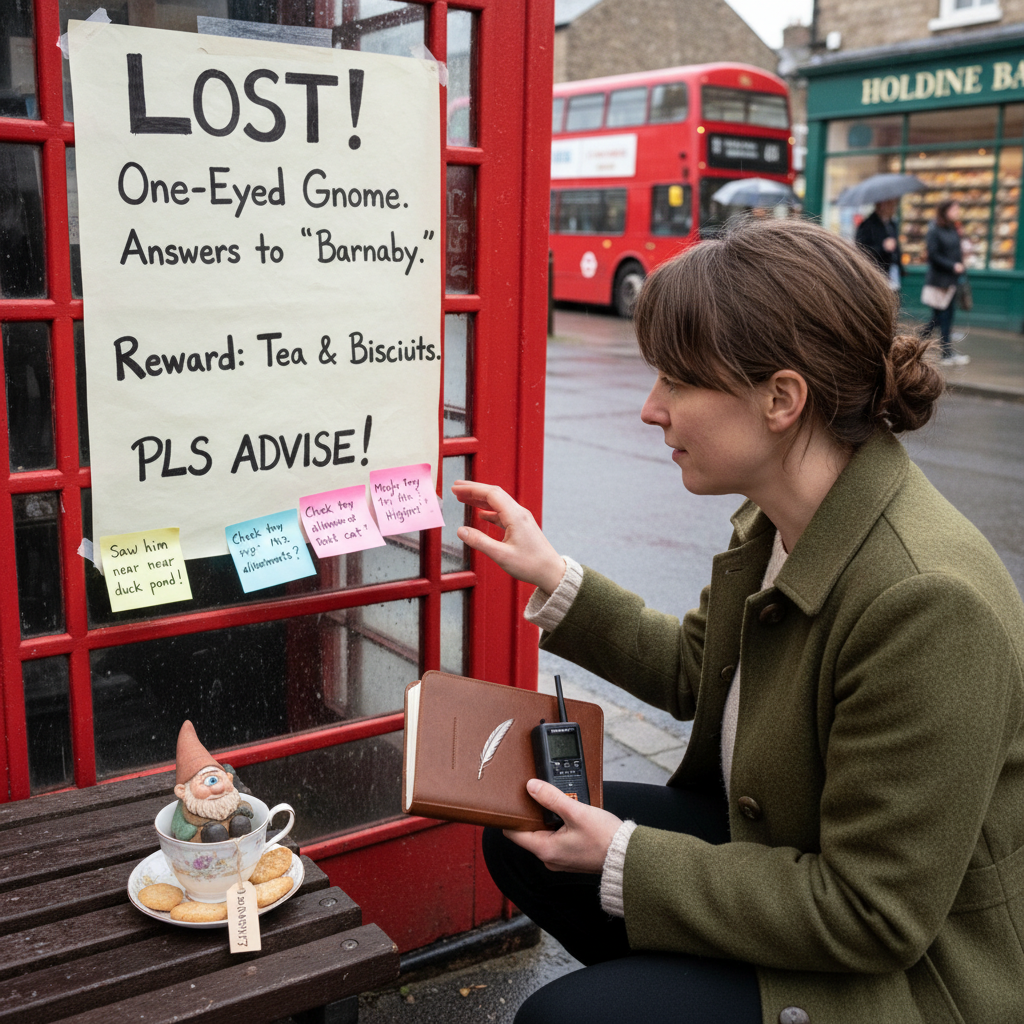
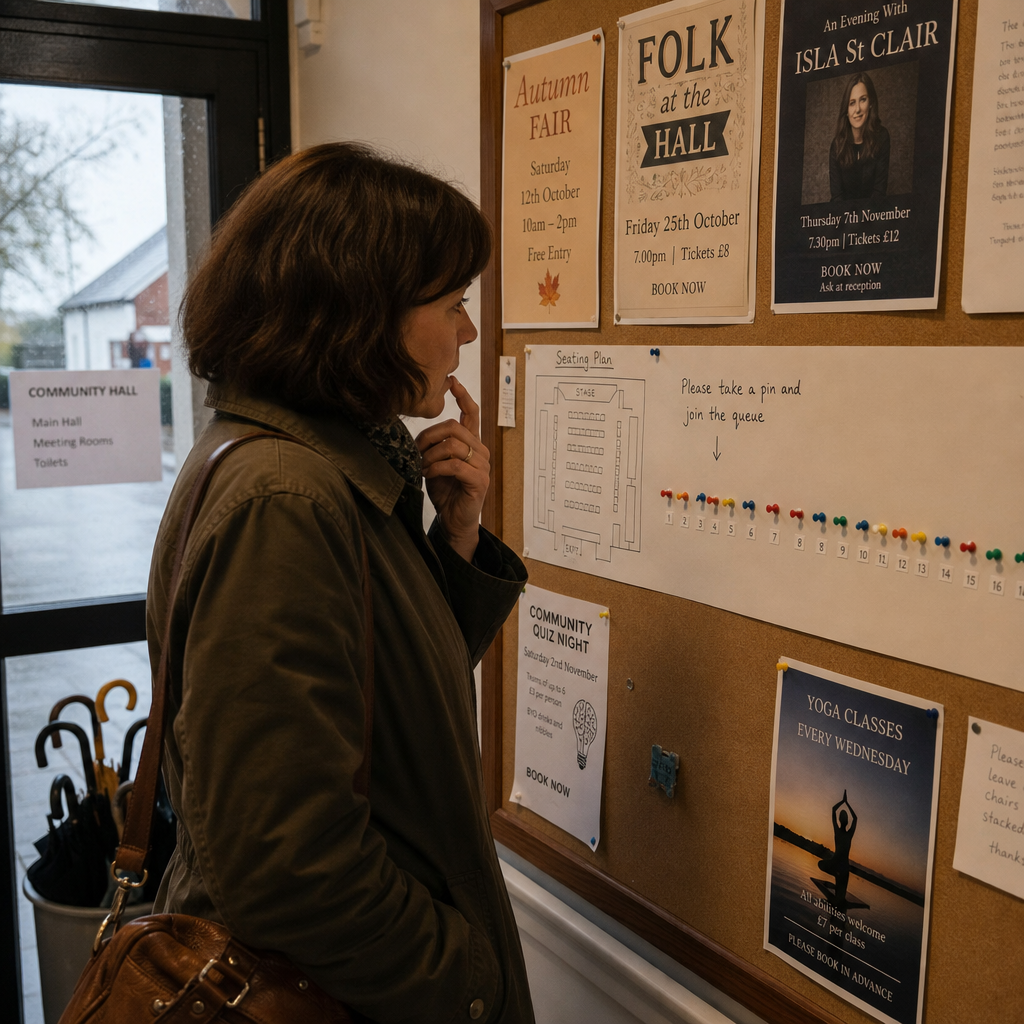
A cardboard notice tied to a rail with string is easy to file under background. Quill is not built to admire that sort of thing for its own sake. For a UK team, the first point is plainer than that: Quill matters when a small human signal can sharpen the next brief. The participation detail is only the way in. The real work sits in the brief, in the angle it names, the scenes it allows, the proof it demands and the lesson it leaves standing at the end.
That entry point matters because it is the sort of clue many operations would wave past. Search demand is louder. Launches are louder. Campaign priorities and trend decks arrive with the usual air of official importance. A stray act of public participation looks slight next to all that. Sometimes it is. Sometimes it catches the messier human version of a story before the neat official one flattens it.
That is the operational shift Quill is trying to make. Positive human stories are often commissioned on taste, or on a fairly loose sense that readers will enjoy them. Quill asks for a harder conversion. If an oddity points to a useful behaviour, the job is not to celebrate the oddity. It is to convert that behaviour into a better brief.
What happened
One of the signal cues in this stream points to unexpected participation stories shaping decisions. Read narrowly, that does not prove a wider appetite for cheerful weirdness, and it certainly does not prove a cultural turn. The firmer reading comes from Quill's method. Knowledge Engine guidance recommends turning learnings into briefs, and the project mission is to move teams from signal to action through practical automation and accountable delivery.
So the participation example functions as a model, not a thesis. Start with the clue. Ask what behaviour it suggests. Then decide whether that behaviour is sturdy enough to change the commission. Plenty of editorial trouble begins one step earlier than people admit, when the brief goes out carrying mood, not an argument.
Humans do have a habit of improving systems without waiting to be invited. Useful species trait. The editorial question is whether that habit gives you something you can actually commission against, rather than a detail that lives briefly in a notebook under mildly charming.
Why it matters
You can see the difference in the brief itself. A weak brief uses the useful oddity as atmosphere. A stronger one is less easily distracted. It states the angle properly: not just that a public ritual seems charming, but what it shows about trust, adaptation or participation in an ordinary place. It also narrows scene choice. If the argument rests on public behaviour, the story needs scenes and examples that stay near that behaviour instead of drifting upwards into abstraction.
The proof standard changes too. One anecdote remains one anecdote, however appealing. If the clue cannot be corroborated across more than one source, response pattern or earlier editorial lesson, it should not be asked to carry a broader claim. That does not make it worthless. It means it has not yet earned the brief.
This is where Quill stops sounding like a soft label for softer stories. The product aim is to widen topical reach without letting the system slip into whim. In practice, that means making a humane signal answerable. What is the claim, exactly. Which scene will show it. What counts as enough proof. What should the reader leave with beyond a pleasant impression and a vaguely improved mood.
There is a quality gain in that discipline. Soft features often go vague because the brief has confused warmth with looseness. The draft keeps orbiting the odd little thing it noticed, hoping significance will eventually arrive by charm. A brief with edges gives the writer somewhere firmer to stand. The piece can still be warm, lightly amused and rooted in ordinary life. It just does not have to pretend importance on the way out.
How the signal becomes a better brief
The move itself is not complicated. It is simply stricter than many teams are used to.
First, identify the clue without inflating it. Not a trend, not a movement, not public mood. Just the detail and the behaviour it may point to.
Second, set the angle. What looks ordinary at first, and what does it actually reveal? If that cannot be answered in a sentence, the brief is probably still too soft.
Third, lock the scene discipline. The brief should specify the kind of place, interaction or public setting that will carry the argument. This matters because the neat official version of a story often removes the human workaround that made it worth telling.
Fourth, state the proof threshold. What corroboration is required before publication, and what would count as failure. Quill's method is stronger when it can say no without fuss.
Fifth, define the closing lesson. Not a moral. Not a sales line. Just the practical implication that makes the piece reusable as editorial knowledge.
Put bluntly, the oddity is not the asset. The rule you can extract from it is.
A useful thought to keep
The temptation with material like this is always to over-read it. One small participation signal is colour, not proof of a broad shift. Its value here is methodological. Quill shows what happens when a small public clue is translated into briefing rules instead of being left where many nice details end up, sitting in the notebook marked interesting and doing no further work.
The watchpoint is not hard to spot. Once teams begin codifying what makes a humane feature work, they can end up reproducing the shape while misplacing the person. That is not a case against rules. It is a case for tying them back to proof, to real scenes and to the detail that justified the commission in the first place.
If your current process keeps finding useful oddities and then stalling at admiration, Quill is built for that handover. Contact Quill if you want to make those signals easier to brief, not merely easier to notice.
If this is on your roadmap, Quill can help you run a controlled pilot, measure the outcome, and scale only when the evidence is clear.