Full article
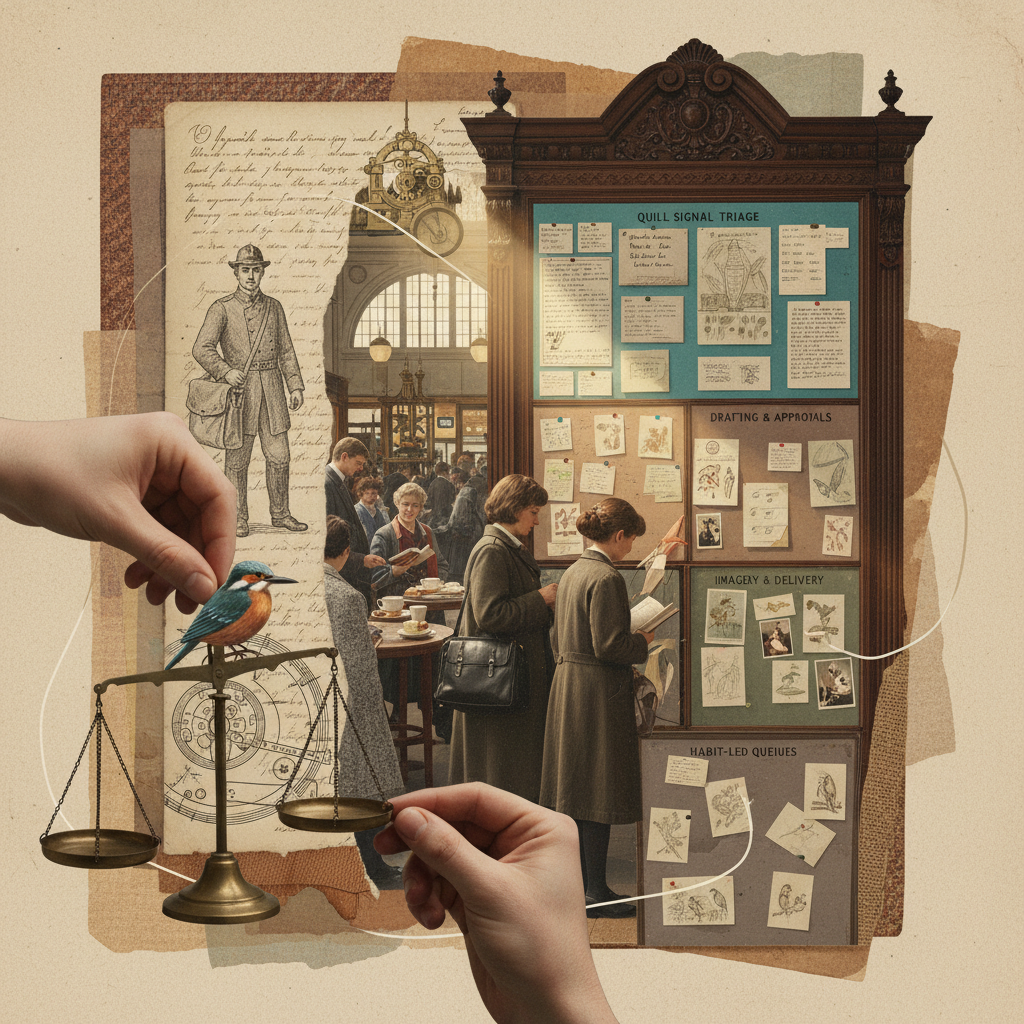
What should a UK team understand first about Quill when the week goes quiet? Not whether it can find a dramatic story on demand. Whether the workflow keeps its discipline when there is no obvious one to chase. In this no-signal run, Quill produced no breakout trend and no tidy headline. What it did produce was a clearer operational answer. Quill kept signal triage, drafting, approval, imagery and delivery in one governed path rather than letting an empty patch fill up with plausible filler. That is the test in a quiet week. When the loud story never lands, the operating model is left in plain view.
What happened
The signal set was thin: few mentions, no aligned live signal, no single strong story. That is usually where drift starts. Not on the page, at least not yet. It starts earlier, in commissioning. Fallback angles multiply, nobody resolves them quickly enough, and the queue moves because queues tend to move. Quill treated the absence as part of the evidence instead of papering over it.
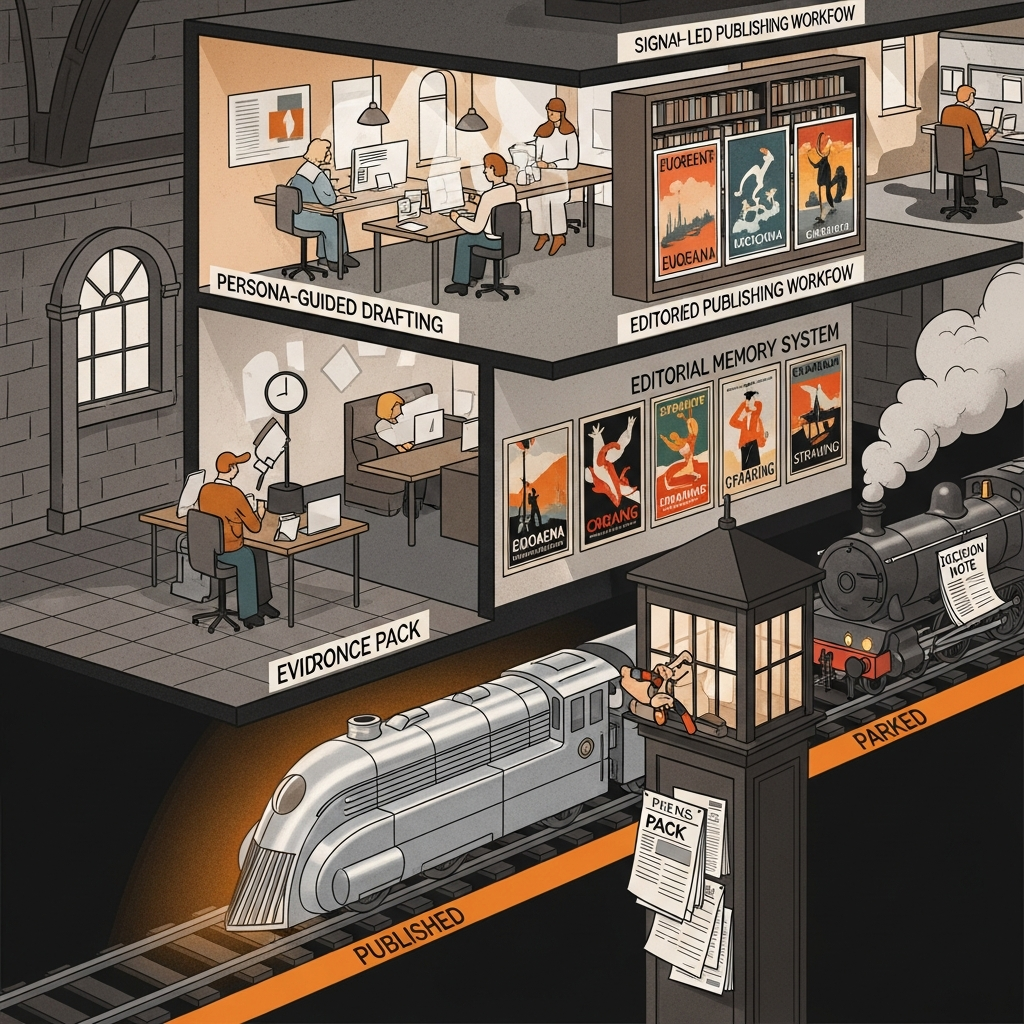
That is why quiet weeks are more revealing than busy ones. Under pressure, almost any workflow can look decisive. In a sparse run, the first weak checkpoint shows itself. The real comparison here is not exciting story versus dull story. It is governed publishing operations versus an ad hoc queue running on habit. One will publish something adjacent, serviceable, easy enough to wave through. The other checks memory, compares precedent and states the caveat before anything gets commissioned. Same lack of live signal, different editorial behaviour.
Why it matters
The shift is not about becoming more whimsical with softer material. It is about making that material clear a proper bar, in full sight of the evidence available. The brief and memory record point straight at the problem. One route was to turn the fallback cue into a checklist piece about humane features. Another was to isolate one odd signal and make it carry too much weight. Average those two and you get the usual fog. The governed route forced the cleaner choice: make the fallback cue itself the subject, then test how editorial judgement behaves when there is almost nothing noisy enough to lend it confidence.
That is a better use of a quiet week than pretending the gap is not there. It stops positive human stories becoming decorative. A useful oddity has to do more than charm. It needs recurrence, audience fit, or a practical insight into how people adapt a system. Internal briefs support themes of trust and ingenuity. Context memory suggests lighter, evidence-led pieces can still serve readers when harder technical streams are crowded. Useful support, fair enough, but not a universal survey. The caveat belongs in the copy.
The comparison sharpens at this point. The neat official version says a soft feature merely needs a lighter touch. The messier and more reliable version says soft stories often need tighter handling, because they arrive with fewer hard edges and far more room for projection. Humans are remarkably efficient at promoting a hunch into a framework if no one interrupts the process.
Who is affected
Readers first. Especially the ones happy to follow an off-angle story if it earns its space, and quick to leave if it slips into fluff. A no-signal week is a clean test of whether Quill can widen topical reach without thinning its authority.
Then the editorial team. Quiet periods bring hidden friction into the open. Project memory already shows one failure mode: several fallback interpretations pulling the same topic in different directions. Leave that unresolved and the draft starts averaging itself out. The result is familiar enough to publish and too vague to remember. A governed queue cuts across that early by forcing a decision on argument, evidence and caveat before the copy finds a comfortable rhythm and settles there.
Holograph’s memory-backed system matters because implementation ownership sits there. It helps editors compare precedents quickly across triage, drafting and approval. It does not replace judgement. It removes one of the common ways judgement gets dodged, which usually sounds a bit like this: let’s make it warm, smooth the edges, and trust that nobody asks too many questions.
Brands using feature work to build warmth can take the same lesson, with some restraint. Benchmarks are periodic references, not weekly verdicts. A quiet run is not a crisis. The better question is whether the piece improves fit, clarity and trust over time, and whether the controls shaping it stay intact when volume drops.
Actions and watchpoints
If the signal is soft, the answer is not a harder tone. It is a tighter commissioning rule. Quill’s approach points to four watchpoints more useful than any instruction to sound human.
First, require a real clue, not just a pleasant theme. Here, the clue was the governed queue itself, and the fact that it held. Second, compare at least two plausible readings before commission. A habit queue fills the silence with something nearby. A governed queue inspects the silence, checks memory and asks whether the absence changes the call. Third, keep the caveat visible. If a pattern is internally corroborated rather than universally proved, say so. Fourth, protect tone from performance. Warmth helps. Synthetic charm is still the quickest way to make a humane feature feel machine-made.
| Editorial choice | What it looks like | Likely result |
|---|---|---|
| Habit queue | Fast fallback, loose evidence, familiar phrasing | Publishable, but forgettable and hard to trust |
| Governed queue | Memory checks, comparison thread, explicit caveats | Lean copy with clearer judgement and fewer false claims |
There is a trade-off. Governance protects quality, but too much of it can sand a feature down until nothing memorable is left. The answer is not less control. It is control with enough nerve to leave one human detail standing. For imagery, the brief stays concrete: ordinary public places, lived-in British settings, and one quiet clue that rewards a second look.
A useful thought to keep
When attention is fragmented, small behaviours often tell the truth faster than polished statements of intent. Recurring human workarounds show how systems are actually being used, bent or quietly improved. That is where quirky public signals earn their keep, not as a scrapbook of nice bits but as evidence that still has some human texture on it.
Many content operations are being pushed to publish more while sounding more human, which is usually the moment they start faking immediacy and calling it warmth. The steadier lesson from this quiet run is simpler. If no grand signal arrives, look for the checkpoint most likely to slip, compare the live options properly, keep the caveat in view and make the piece useful. Unglamorous, yes. Also the difference between a soft story and a soft-headed one. If that question is live in your own workflow, drop Quill a line. The clue that nearly gets dismissed is often the one worth testing properly.
If this is on your roadmap, Quill can help you run a controlled pilot, measure the outcome, and scale only when the evidence is clear.