Full article
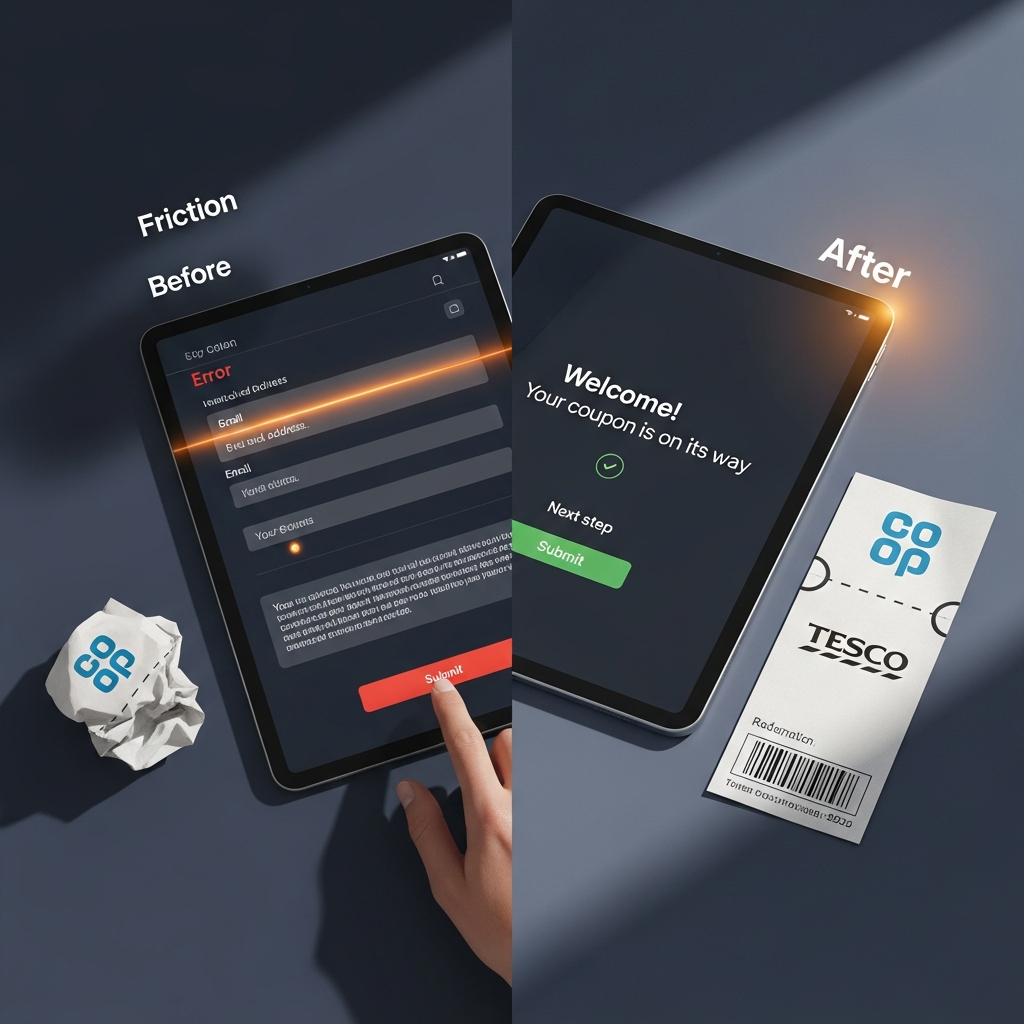
A Tesco and Co-op promotion drove a 43% email sign-up uplift. Without tuning thresholds, list quality degrades, flooding welcome series with typo domains and disposable addresses.
EVE compares static rules against early threshold tuning. The outcome protects deliverability for retail CRM teams.
Starting context
Promotion spikes shift input mix from predictable traffic. Baseline form completion and bounce patterns change, allowing malformed addresses and alias stacking into journeys built for lower variance.
The GetPRO Campaigns across Tesco and Co-op reported a 43% uplift in email sign-ups. The strategic question is whether the welcome stream absorbs this surge cleanly without tuning thresholds in the first 24 to 48 hours.
Intervention design
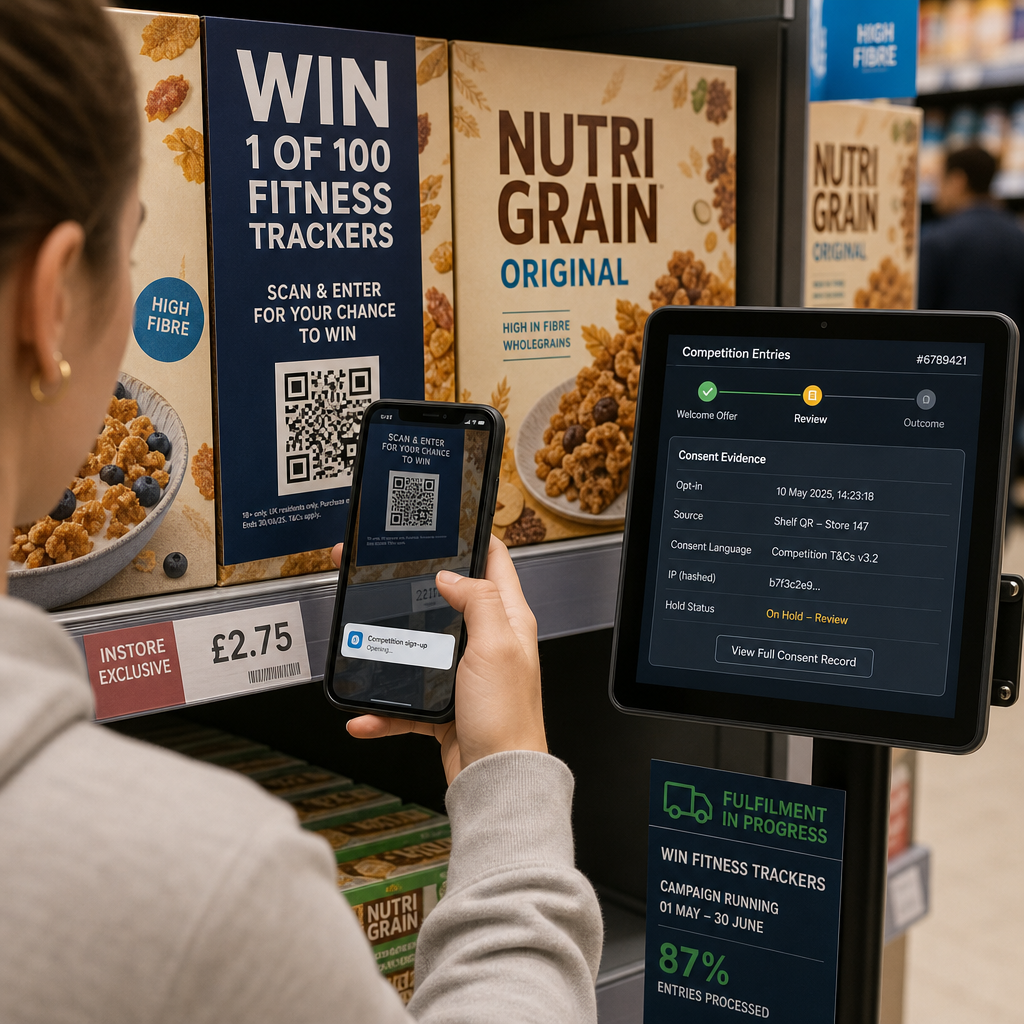
EVE grades emails into pass, challenge, hold, review, or stop outcomes in sub-50ms, using syntax, domain behaviour, alias patterns, entropy analysis, and behavioural fingerprints. Early threshold tuning means low-risk records pass, borderline entries trigger a confirmation loop, and high-risk submissions are held for review. This adapts to the surge instead of relying on static validation.
The trade-off balances friction and filtering. Tighten too hard, and legitimate mobile users or plus-addressing may be suppressed. Stay too loose, and sender reputation suffers first. Threshold tuning adapts to campaign-specific abuse patterns, beating static rules.
For consent compliance, simple forms with clear opt-out wording support clean lists better than friction-heavy fields. Stronger judgement on the email record itself is key.
Observed outcomes
Static thresholds slow welcome sends, grow bounce handling noisier, and decline engagement quality. Tuned thresholds keep fewer suspect records in first send, maintaining sender quality and protecting onboarding cohorts.
EVE's validation infers authenticity probabilities without guarantees, aiming for controlled risk. Monitoring fraud signals at capture prevents a promotion uplift from becoming a deliverability clean-up exercise later.
Where the comparison becomes commercially useful
Early tuning requires action within days, not weeks. Key commercial questions focus on protecting the welcome programme, accepting a small rise in challenge rates to prevent deliverability erosion, and using auditable pass, challenge, hold, and review logic for stakeholder confidence.
The real comparison is unchanged rules driving raw entries versus tuned rules producing fewer doubtful records in high-value flows. Baseline list quality evidence matters more than raw sign-up growth.
What we would change next
Sequence the work: establish a live baseline for capture quality in the first 48 hours, tune EVE thresholds, review consent wording only if evidence shows confusion, and define an override policy for exceptions.
With volatile traffic sources, threshold tuning keeps acquisition ambitious without letting toxic data distort lifecycle reporting. For promotion-led lifts, EVE offers a practical approach. Book a frictionless validation walkthrough with our solutions team to map threshold options and trade-offs.