Full article
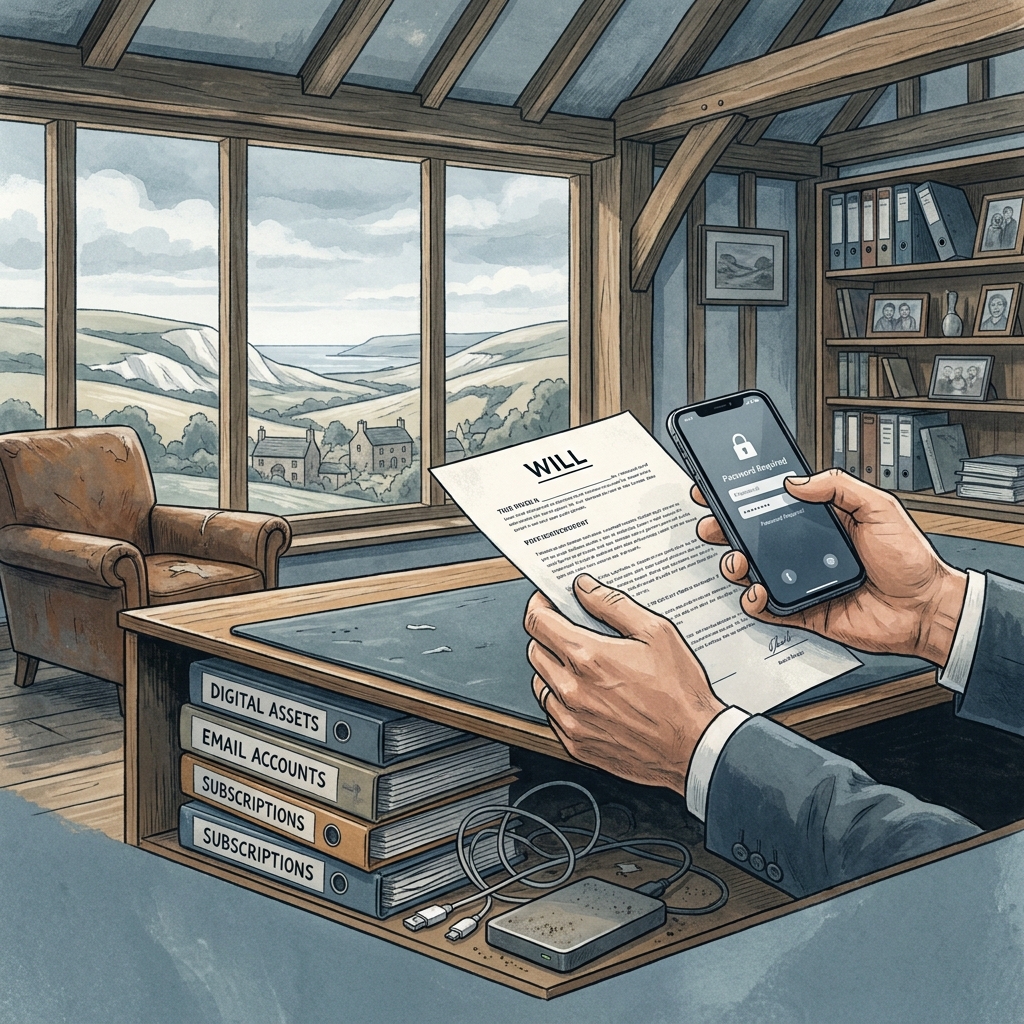
Most estates now include a digital layer: email accounts, streaming services, cloud storage, shopping profiles and app subscriptions. If those accounts are left without clear instructions, executors can face avoidable delays, ongoing charges and unnecessary security risks while they try to work out what exists and what should happen next.
The practical fix is usually straightforward. Your will can give legal authority, while a separate digital asset inventory can give the step-by-step instructions. As it stands, that split is the sensible option because it keeps sensitive access details out of a document that may become public during probate, while still giving your executors something they can actually use. A strategy that cannot survive contact with operations is not strategy, it is branding copy.
What you are solving
For many people, the first problem is visibility. Families often know about the house, the bank accounts and the ISA, but not the three streaming subscriptions, the dormant PayPal account or the main email inbox that receives password resets and billing alerts. That email account matters because it often acts as the control point for the rest of a person’s online life.
The risk is practical rather than dramatic. If executors do not know which accounts exist, subscriptions may continue to collect monthly payments, important notices may be missed and accounts can remain open far longer than intended. This is where email risk monitoring in the UK fits naturally. Not as a glued-on keyword, but as a real task: keeping an eye on the main inbox for final bills, account closure emails, security alerts and evidence of ongoing subscriptions. It is worth a closer look, because closing an inbox too early can make the rest of the clean-up harder, not easier.
There is also a legal constraint. Most platforms do not simply allow relatives to log in because they know the password. Terms of service, privacy rules and account recovery controls can limit what an executor can do. So the aim is not to leave an informal note with usernames and hope for the best; it is to create a lawful, usable process.
A practical method for securing your online accounts
The strongest setup is a two-part arrangement: first, a will that gives your executors authority to deal with digital assets; second, a separate letter of wishes or digital asset inventory that explains what exists, where it sits and what should happen to it.
Part one: the will
Your solicitor can draft a clause that makes clear your executors are authorised to deal with digital accounts and online services. That matters when they need to contact a provider, request closure, or explain why access to certain records is necessary for administration. To be fair, this does not override every platform rule, but it gives your executors a firmer footing than a family member trying to improvise after the event.
Part two: the digital asset inventory
This is where the operation becomes workable. Keep it separate from the will, because wills may become accessible during probate and you do not want live account details sitting in the wrong place. A secure home safe, solicitor-held file or encrypted digital vault are all sensible options, provided your executors know where to find it.
Your inventory should record the account, what it is used for, what action to take and any dependency that could affect timing. In a strategy call this week, we tested two paths and dropped one after the first hard metric came in. The same logic applies here: if one account controls access to five others, you do not shut it first just because it looks tidy on paper.
| Account or service | Where it sits | Instruction for executor | Dependency or note |
|---|---|---|---|
| Main email account | Gmail, Outlook or similar | Monitor for final bills, resets and closure confirmations for a set period, then delete if appropriate. | Often linked to banking alerts, shopping profiles and subscriptions. |
| Online banking or savings app | Bank website or app | Contact the provider using the formal bereavement process; do not rely on direct login. | Executor may need death certificate and probate documents. |
| Social media profile | Facebook, Instagram, LinkedIn and similar | State whether to close, memorialise or download content. | Platform rules vary, so name the preferred outcome clearly. |
| Paid subscriptions | Netflix, Spotify, software licences, membership renewals | Cancel promptly unless there is a short-term reason to keep one active. | Record the payment card or bank account used. |
Decision points for your executor
Once the inventory exists, the next question is what outcome you actually want. This is where most people benefit from a simple option set rather than a vague instruction to “sort out my online accounts”.
The first trade-off is preserve versus close. Family photos in cloud storage may be worth downloading and passing on. A professional LinkedIn profile may be better closed once it no longer serves a purpose. A Facebook account might be memorialised if that suits the family. Streaming services and retail accounts are usually the opposite: close them quickly and stop the spend.
The second trade-off is speed versus sequencing. A plan can look strong on paper, then one dependency moves, so you re-order the sequence and regain momentum. The obvious example is email. If it is the reset route for other services, shutting it immediately can delay everything else. In practice, a time-limited monitoring period is often the more sensible instruction.
The third trade-off is privacy versus access. You want executors to have what they need, but not to expose sensitive information more widely than necessary. That is why storing current passwords inside the will is usually the weaker option. Better to keep instructions, account references and access routes in a secure inventory and update it regularly.
Common failure modes and how to avoid them
The most common failure is omission. No list, no authority, no plan. Executors then spend weeks reconstructing a digital footprint from bank statements and old emails. That costs time and can create friction at exactly the point when families have little spare capacity for admin.
The second failure is the “password list in a drawer” approach. It feels practical, but it is brittle. Passwords change, two-factor authentication gets in the way, and the list rarely explains what should be kept or what needs to happen first. Growth claims without baseline evidence should be parked until the data catches up; the same scepticism is useful here. If a digital plan has never been tested against how accounts actually work, it is not a plan yet.
The third failure is poor maintenance. An inventory created in 2023 and never reviewed may miss the pension portal opened in 2024 or the email account changed in 2026. One annual review is often enough to keep it usable.
Your action checklist
- Check your will: ask a solicitor whether it gives your executors clear authority to deal with digital assets and online services.
- List the key accounts: include email, banking portals, subscriptions, shopping accounts, cloud storage and social profiles.
- Mark the control points: identify which email address or mobile number is used for password resets and security alerts.
- Write an instruction for each account: keep, archive, memorialise, transfer, close or monitor for a fixed period.
- Store the inventory securely: keep it separate from the will and tell your executors how it can be found.
- Review it every year: a dated annual check is usually enough to keep the record reliable.
If you want your executors to have a manageable job rather than a digital scavenger hunt, this is a useful place to tighten the plan. East Sussex Wills can help you review the wording in your will, sense-check the account inventory and spot the gaps that tend to cause delay. If you would like a clear view of the risks and the next move, you are welcome to book a same-day EVE risk walkthrough and talk it through with us properly.