Full article
Last Thursday, in the stockroom of a premium London department store, I watched a floor manager cross-check a printed spreadsheet against a tablet while cold air slipped in through the service door. Her breath was visible; the glass screen kept fogging at the edges. That’s when the obvious thing clicked: retail teams are rarely anxious about automation itself. They’re anxious about systems that make decisions, slow the shift down, and can’t explain themselves in plain English.
That matters because many of the strongest experiential marketing trends in the UK are no longer about spectacle for its own sake. They’re about making live activations easier to run, easier to measure, and easier for store teams to trust. The trade-off is blunt: you can chase impressive tech theatre, or you can build store-ready experiences that staff will actually use. In my experience, the second option wins more often than the first. Cheers to reality.
Situation: The trust problem on the shop floor
Across retail, the pattern is familiar. There’s plenty of data, plenty of dashboards, and not much clarity on what the person on the shop floor is meant to do next. In one project with a mid-market fashion chain, store staff were spending roughly 40% of a shift on admin-heavy tasks such as loyalty sign-ups, redemption logs and workarounds for patchy check-in flows. That is not automation. It is admin with better branding.
The trust problem showed up fast in a Manchester pop-up last November. Staff-assisted completions sat at 12% because the team didn’t trust the QR-led journey to behave consistently under pressure. A few scans failed, a few redirects lagged, and that was enough. Once a system looks unreliable during a busy trading window, people revert to whatever feels safer. Sensible, really. If a platform cannot explain its decisions, it does not deserve your budget.
Public signals point the same way. The Office for National Statistics quarterly personal well-being series and local authority well-being estimates both track how people report life satisfaction. That data is not a retail performance dashboard, and pretending otherwise would be over complicated nonsense. Still, it is useful context: when audiences and frontline staff are already carrying fatigue, clunky activation mechanics feel worse, not neutral. The implication is practical. Remove friction first. Add novelty second.
Approach: Building with a fallback plan
We treated the store as an operating environment, not a presentation deck. For one week, we shadowed teams across peak and off-peak periods, logging where technology created delay rather than support. Between 10 am and 2 pm on a Tuesday, I used the client’s existing check-in flow myself and watched it crash twice during the busiest period. Small failure, plain lesson. We fixed the immediate problem with a simple fallback: a paper log that staff could complete in seconds, then sync later through a tablet.
I still don’t fully understand why that fallback worked so well psychologically, but here’s what I’ve observed: when teams know there is a safe manual route, they use the digital route with more confidence. The trade-off is obvious. You accept a little operational untidiness in exchange for smoother customer handling and less frontline hesitation. I’ll take that deal every time over a pristine system nobody trusts.
From there, we rebuilt the activation flow around light-touch automation. Low-data participation routes reduced form fatigue. API-fed reporting pulled engagement signals into a stripped-back staff dashboard. Not a bloated command centre. Just three visible measures the team could act on: join rate, redemption rate and satisfaction score. The first version was too clever by half, and the store team told us so. Fair enough. Their scepticism improved the design.
Outcomes: Measurable uplift with real-world caveats
The baseline before the change was not flattering. In-store activation participation averaged 18%. Over a 12-week pilot in Q1 2026, that rose to 47%. The improvement was strongest where staff confidence improved fastest, which is a more believable result than pretending the technology did all the work by itself.
There were caveats. Results were not uniform across locations. In Surrey, during a March cold snap with lower footfall, the increase was closer to 32% than 47%. Physical retail still answers to weather, staffing patterns and local context, however tidy the dashboard looks. That is precisely why I’m wary of grand automation claims. Automation without measurable uplift is theatre, not strategy.
We also saw a 22% rise in repeat visits among loyalty members during the pilot period. That does not prove every part of the activation caused repeat behaviour on its own, and I’m not going to pretend causality where we only have a strong operational signal. What we can say is this: reducing friction at sign-up and redemption made participation easier, and higher participation correlated with better repeat engagement over the same 12 weeks. That is useful enough to act on.
Lessons for others: Spend on readiness, not just tech
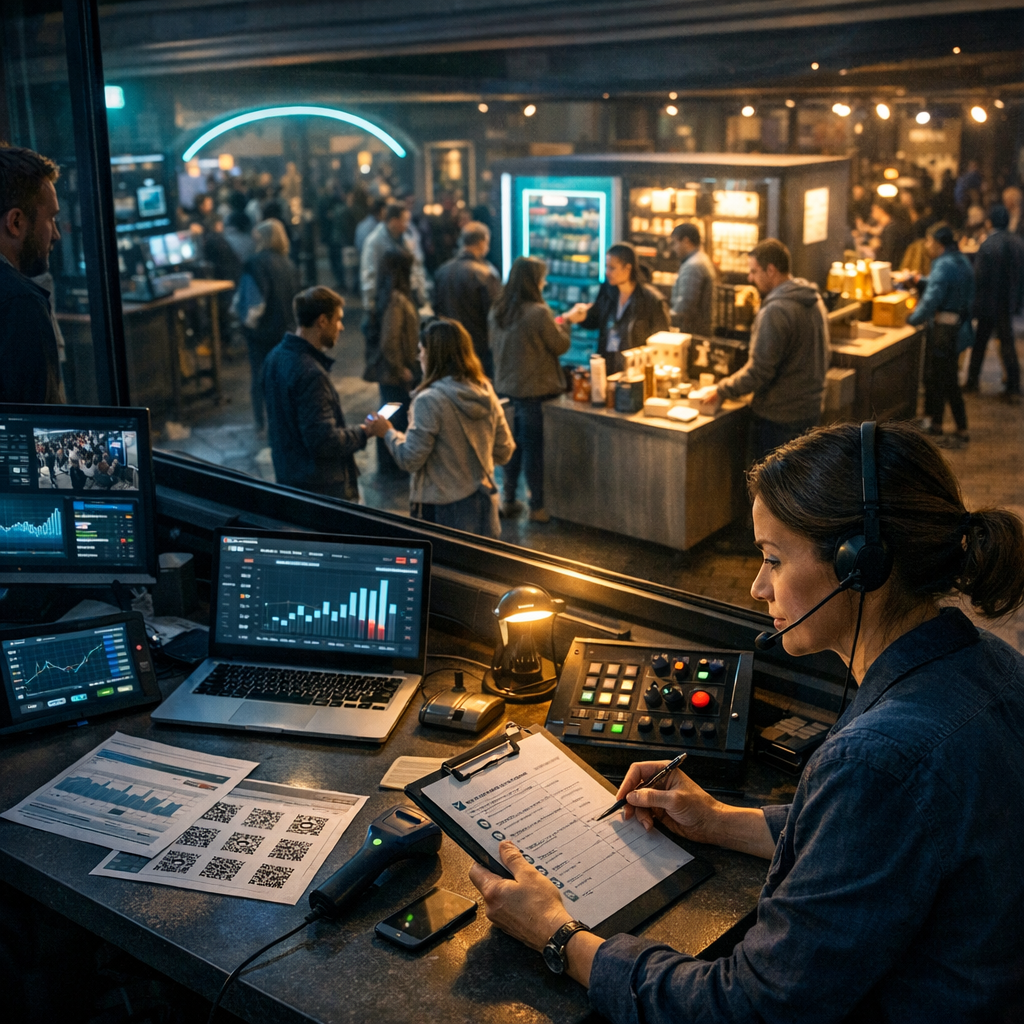
If you’re planning immersive retail experiences, spend on staff readiness before you spend on hardware. In this project, around 30% of the working budget went into hands-on training and live troubleshooting support. That meant fewer flashy devices on the floor. It also meant the activation kept moving when the day got messy, which is what audiences actually notice.
Borrow from martech only where the queue breaks. Automate registration, reward validation and reporting if those steps are slowing the experience down. Leave room for human judgement where context matters, especially in premium retail or loyalty-led environments. We deliberately did not fully automate follow-up for the highest-value interactions. Staff still reviewed the top 10% manually before outreach. Slower? Yes. Better brand judgement? Also yes.
Use public data sensibly too. ONS well-being estimates are useful as context for local mood, not as a magic instruction set for creative. Pair broad signals like those with your own observed operational data: footfall by daypart, assisted completion rates, redemption lag, repeat visit intervals. Baseline first, then outcome. Anything else is story time.
The interesting shift is not from human to machine. It is from hidden process to visible support. When retail teams can see what a system is doing, and when they’ve got a practical fallback for the moments it wobbles, confidence goes up and activations get better. Surprisingly, the smartest build is often the one that looks a bit less futuristic and works a lot harder.
If you’re weighing up your next retail activation and want a straight conversation about what should be automated, what should stay human, and how to measure the trade-offs properly, have a chemistry session with the Holograph studio. We’ll get into the mechanics with you, not just the mood board, and help shape something your teams can run confidently on the shop floor and defend in the performance wrap.
Book a chemistry session with the Holograph studio team.