Full article
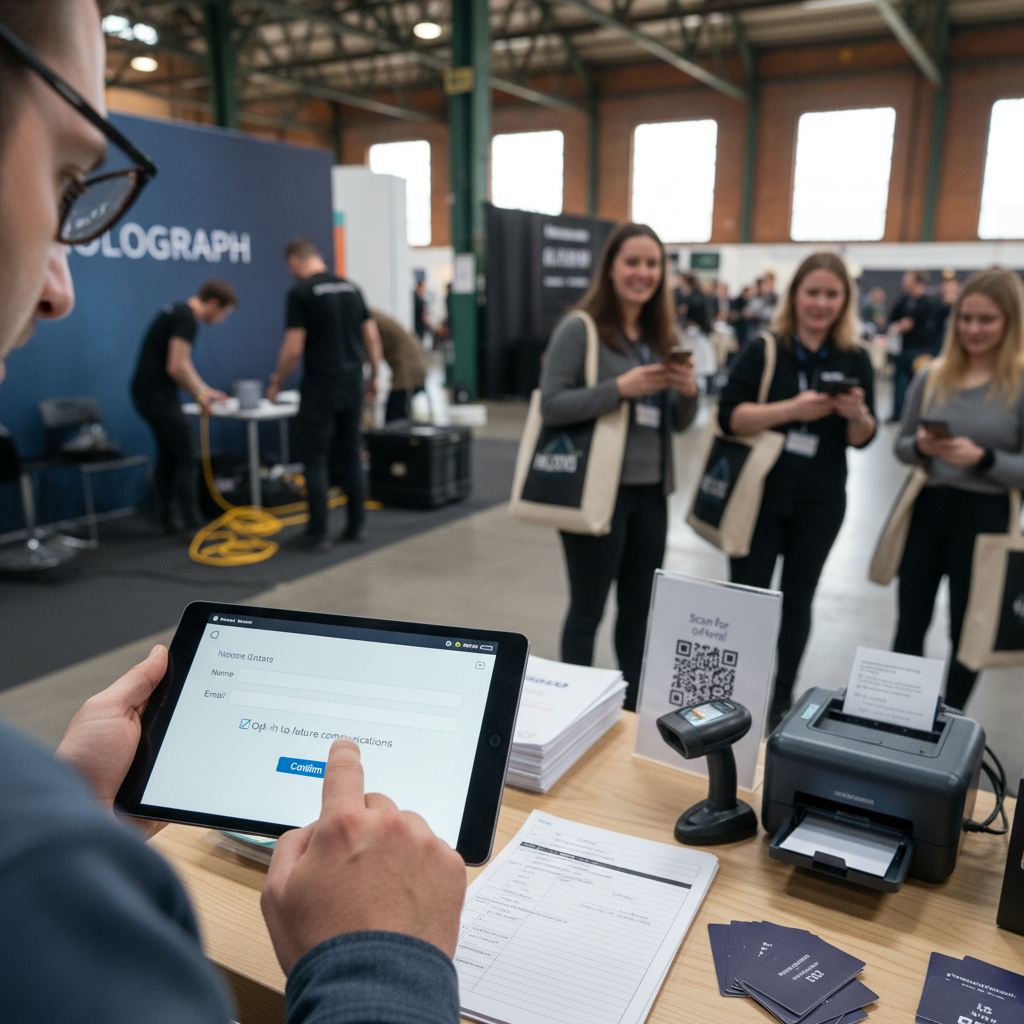
Attendance is not the result worth buying. The better question is what happens after the stand closes, the queue drops off and the last sample has gone: how much of that event audience moves into a permissioned, measurable owned channel a brand can actually use?
This delivery assurance note covers how Holograph helped a major FMCG brand shift from a sampling mindset to a sign-up discipline in Q3 and Q4 2023. The trade-off was simple enough, if not always comfortable: accept a bit more friction on-site in return for better consent, cleaner data and a clearer path to post-event measurement. That is usually where defensible experiential campaign results in the UK start.
Context
By August 2023, the client was running festival stands and city-centre pop-ups across the UK with strong footfall, high sample volumes and plenty of social noise. The problem was that reporting stopped at the event boundary. Performance wraps leaned on estimated footfall and reach, which are useful as context but weak as decision tools if the brief is owned audience growth or repeat purchase.
The Head of Brand, Sarah Jenkins, owned the business risk: a seven-figure experiential budget with too little evidence of what happened after attendance. The stack was fragmented, on-site capture had been handled cautiously under GDPR, and the default suggestion from several directions was to add a QR code to the homepage and hope for the best. We tested that route. Drop-off from scan to meaningful action ran above 95%.
I was wrong about the effort. The data flow and value exchange were trickier than expected, so we reset the plan with buffers rather than pretending a weak funnel would sort itself out. That was the right call. If your plan has no named owners and dates, it is not a plan, fix it.
What changed in the activation design
We rebuilt the activation as a governed conversion path rather than a loose hand-off after the event. Chloe Davies, creative lead at Holograph, owned the on-site call to action. Final copy and UX wording were agreed by 1 September 2023. The chosen mechanic was an exclusive digital collectible tied to the loyalty programme, giving attendees a clear reason to complete the journey there and then rather than later, which usually means never.
Raj Singh, delivery lead on the technical workstream, owned the mobile-first capture journey and CDP integration. Acceptance criteria were signed off with the client data protection officer on 15 September 2023. Three points were non-negotiable: consent language had to be visible before submission, page load had to hold up in crowded venue conditions, and the hand-off into the client data platform had to work without manual reconciliation.
Between 11 and 15 September, we rewrote the acceptance criteria for the sign-up story, and tests passed once two edge cases were covered properly: low-signal venue conditions and duplicate entries. That sounds small. It was not. Those were the bits most likely to break the evidence chain later.
The trade-off was logged in the change control from the start. Asking for roughly 60 seconds of attention and a clear opt-in would reduce raw interaction volume. We accepted that because the target was not maximum scans. It was usable, permissioned records with attribution potential.
Governance, risks and mitigations
Governance was kept deliberately boring in the best sense. Weekly owner reviews ran throughout build and pilot. Legal, brand and data teams had pre-launch sign-off checkpoints. Risks sat in one shared register with mitigation owners and review dates, not in ten side threads waiting to surprise someone on launch week.
The two live red risks before launch were poor mobile connectivity at venues and consent drop-off on the second screen. Mitigation was practical rather than theatrical: a lighter form design, sharper value-exchange copy and a fail-safe queue for deferred sync where signal dipped. Acceptance checks were tied to venue-style testing, not office Wi-Fi optimism.
One operational detail is worth stating because it is where these plans often wobble. After stand-up, an API integration ticket was blocked by a third-party dependency. A quick call with Raj and the partner technical owner cleared it, and a new test date was set for the following Tuesday. Slightly untidy, but real life usually is. What matters is that the owner, dependency and revised date were explicit in the log.
What the pilot proved
We piloted the revised model at two UK entertainment events in Q4 2023. Footfall remained in the performance wrap, but it stopped being the headline measure. The primary KPI became completed loyalty sign-up from QR scan. Secondary measures covered consent quality, cost per acquired member and post-event transaction matching within 60 days.
Across the two pilots, scan-to-sign-up conversion reached 12%. That contributed to a 43% uplift in new member acquisition for the quarter. More useful than the headline, though, was what happened next. By linking sign-ups to transactional records, the client could attribute an average of £1.2 million in sales to the new cohort within the first 60 days. That is a far more credible read on brand activation ROI than impressions alone.
There were limits, and they need saying plainly. Attribution was directional rather than absolute. We could not prove that every event sign-up in one city was driven only by the live activation and untouched by other media. That risk was logged, not hidden. The mitigation for 2024 was to tighten source tagging, standardise event-level identifiers and improve holdout logic where feasible. Path to green, not miracle cure.
Implications for programme owners
The practical lesson is not that every entertainment activation needs the same mechanic. It is that post-event journeys need the same level of design discipline as the live moment. Procurement teams and programme owners are rarely short of activation ideas. They are short of measurement they can trust.
The evidence only holds if the chain is intact from brief to wrap: sign-off dates recorded, assumptions logged, defects tracked and dashboard definitions agreed before launch rather than argued over afterwards. If the number in the final wrap cannot be traced back to a source, it is decoration.
There is also a localisation point. Event audiences vary by place, venue and context, so the value exchange should be tested by audience type rather than treated as one hero flow for every location. Brand rules can stay steady. The capture journey usually needs tuning.
Actions to consider next
If the objective is owned audience growth rather than a nice-looking event recap, set one primary conversion metric before creative development starts. Name owners for legal, data, build and on-site operations before the first pilot date is booked. Write acceptance criteria for connectivity, duplicate handling and consent capture, because when time is bit tight, those are the bits that bite.
Keep a change log for traceability. Keep a risk register with owners, dates and mitigations. Separate service information from promotional follow-up so operational messages stay neutral where they need to. If your mechanic requires uploads or shareable content, define exactly what counts as evidence of entry and how it will be discovered. And if winner selection is part of the activation, use a defensible method and keep the record. None of that is glamorous. All of it makes the result more believable.
If you are reviewing an entertainment activation and need a cleaner path from attendance to owned audience, book a chemistry session with the Holograph studio team. We will map the conversion journey, pressure-test the risks, name the owners, set the dates and give you a practical path to green based on your channels, data access and constraints. Sorted.
Proof and original case study
This interpretation draws on a public Holograph case study. For the original source detail, see more Holograph case studies, holograph.digital and the original Holograph case study.