Full article
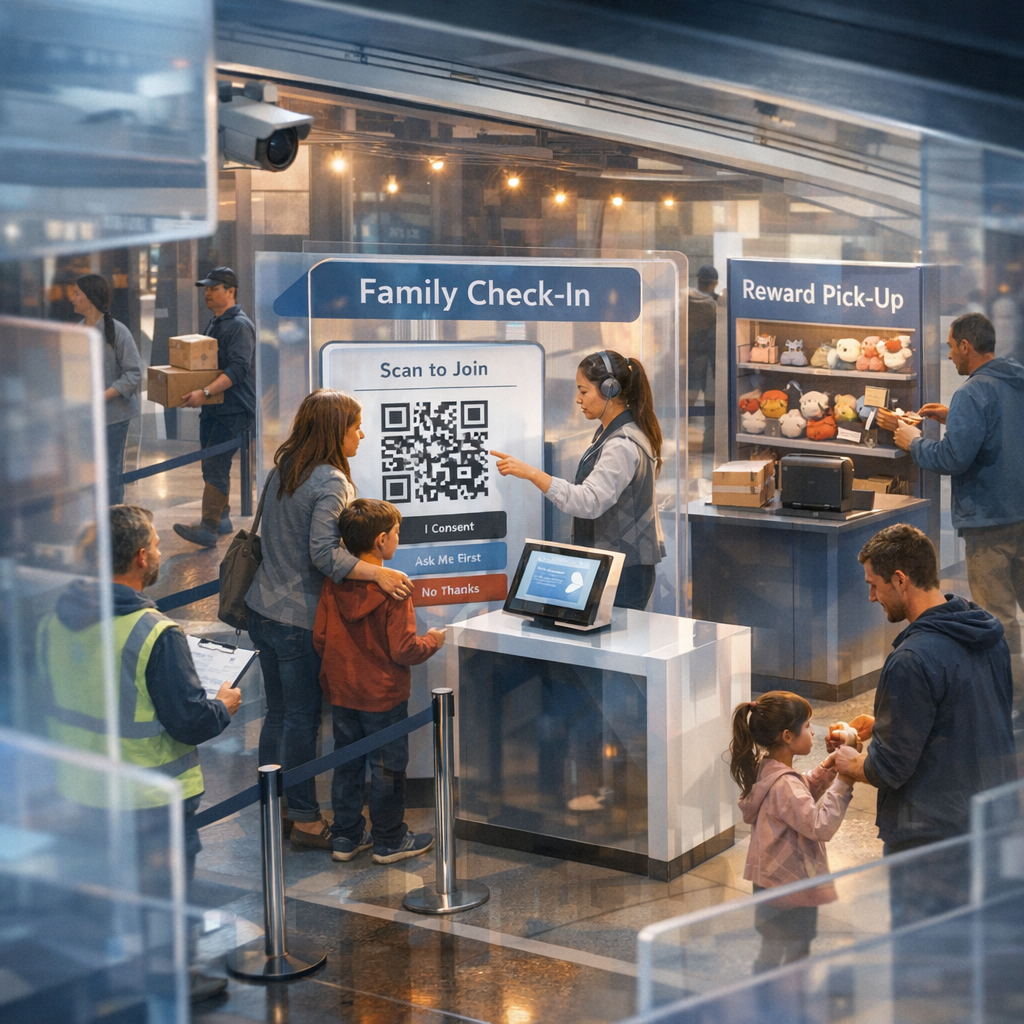
Last Thursday, in a pop-up on Carnaby Street, a cold draft from the propped-open door kept catching the back of my neck while parents hovered near an AI drawing game for children. The mechanic was decent. The explanation was not. Data terms sat behind a QR code nobody was going to scan while juggling coats, bags and a seven-year-old asking for another turn. That was the useful signal.
For anyone tracking experiential marketing trends in the UK, the brief has changed. Family audiences will still engage with imaginative technology, but only when the value exchange is obvious and the boundaries are plain English clear. That pushes AI out of the limelight and into a more sensible role: supporting the experience rather than demanding trust it has not earned.
Context
The consent backlash is not only a legal problem. It is a design problem with an emotional cost. Office for National Statistics quarterly personal well-being data shows a mixed picture: life satisfaction and happiness have recovered in parts of the UK, yet anxiety remains stubborn enough that brands should assume a lower tolerance for ambiguity, especially in family settings. If your activation asks for personal data before it has explained why, people do not experience that as innovation. They experience it as hassle with a glossy skin on top.
I learnt that the expensive way in 2024 on a toy-sector activation. We tested facial analysis to adjust game difficulty. Technically neat, operationally over complicated, and far too hard to explain in the few seconds families were willing to give us. Footfall fell 15% after week one. The issue was not AI in the abstract. It was that we had put automation ahead of comprehension.
Here is the judgement that tends to split the room: if a platform cannot explain its decisions, it does not deserve your budget. That is not anti-tech. It is basic procurement hygiene. Automation without measurable uplift is theatre, not strategy. The trade-off is plain enough: the more personal and opaque the system becomes, the more explanation, staffing and consent design you must fund around it.
What is changing
The shift I am seeing in early 2026 is away from novelty-led AI and towards bounded, useful assistance. The strongest builds now use AI for queue handling, reward redemption, content moderation or recommendation logic, then leave the core moment to staff, physical design and simple mechanics. In other words, less robot magician, more quiet stagehand.
That matters because family-safe activations live or die on how quickly they can be understood. Between 10:00 and 13:00 on a recent Saturday review, I tested a few entry flows and watched one fail for the same old reason: too much hidden logic before the first reward appeared. We fixed it with a simple hack, a single consent prompt with a short verbal script from staff and a visible choice to continue without personalisation. Completion improved because people knew what they were agreeing to, and what they were declining.
I have also seen brands get better results from preference-led journeys than from passive tracking. A travel client last month used a short entry survey to shape family activity suggestions instead of trying to infer behaviour in real time. Repeat-visit intent rose by 40% in post-experience surveys. The trade-off was reduced granularity. We knew less about each individual micro-behaviour, but we gained cleaner consent and more reliable participation.
Why consent now shapes the creative
CAP guidance on promotional marketing and ICO guidance on direct marketing both point in the same direction: be clear about the mechanic, be clear about the data use, and keep marketing capture distinct from service information. That is not a bureaucratic side quest. It changes the creative architecture of the activation.
If there is a prize draw, say it is a prize draw and explain how the winner is chosen before or at entry. If you are collecting email addresses, explain what they are for, offer an opt-out and avoid bundling future marketing into a family participation flow as though nobody will notice. People do notice. Parents notice first.
The creative upside is surprisingly practical. Constraints force sharper decisions. A family activation that says, in effect, “Here’s the game, here’s what we collect, here’s what happens if you skip that bit, and here’s how to leave†tends to feel calmer and more premium than one wrapped in vague cleverness. The trade-off is that you lose some of the frictionless fantasy. Good. Frictionless is often just another word for under-explained.
Implications for build and measurement
I still do not fully understand why some low-tech family activations outperform flashier AI builds, but here is what I have observed. Environment matters more than pitch decks admit. In the Carnaby Street pop-up, the cold air, the queue pressure and the noise around the entrance made any extra cognitive step feel heavier than it looked on the journey map. A consent flow that seemed trivial in workshop conditions became a blockage in the real world.
Compare that with a quieter retail setting in East Sussex, where a book-led activation used a short quiz to recommend titles, displayed a clear data-deletion notice onsite and kept every interaction under two minutes. Sales lifted 25% during the activation window. Not because the AI was smarter, but because the system around it was. Physical comfort, visible rules and quick staff intervention beat technical flourish.
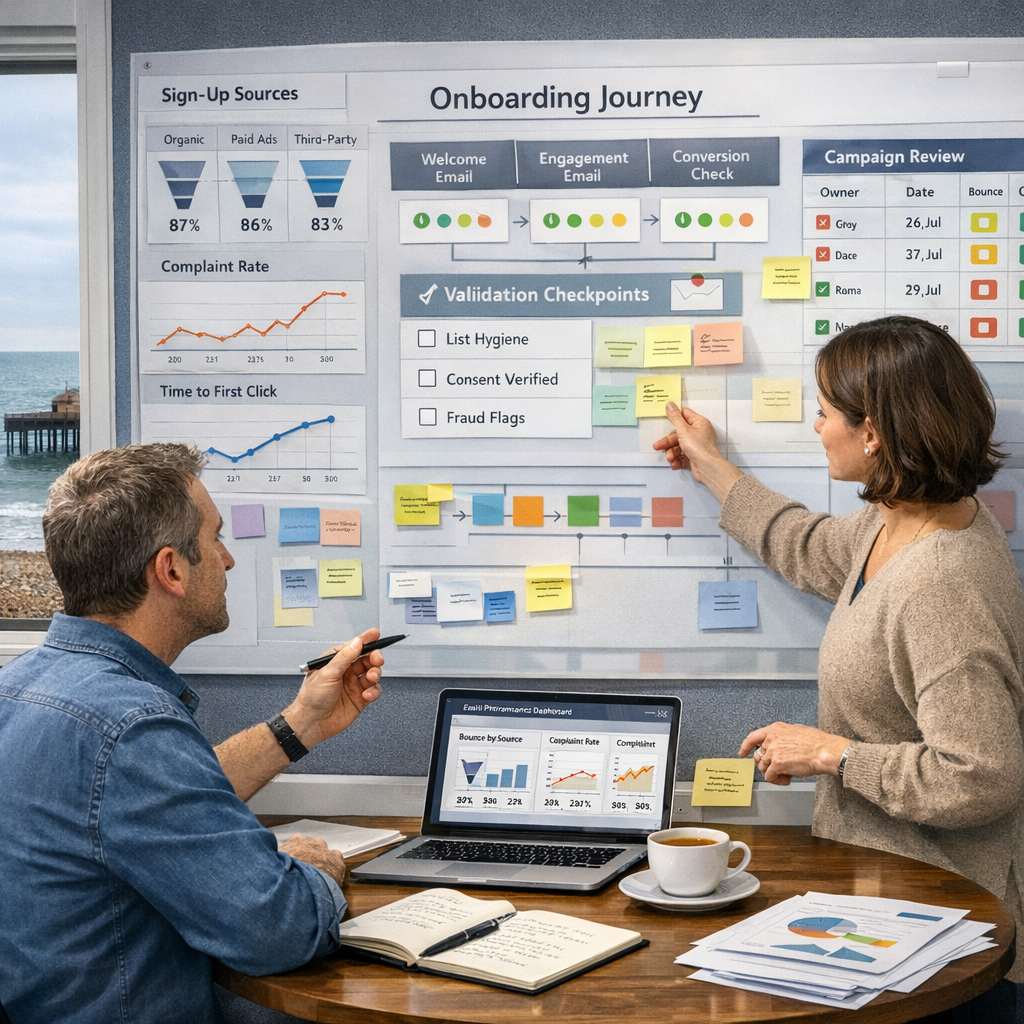
So measurement needs to mature. Footfall and dwell still matter, but they are not enough. Track assisted versus self-service completion, opt-in rate, drop-off at each consent step, reward redemption, repeat-visit intent and a simple comfort score gathered at exit. ONS local authority well-being datasets are useful here as directional context, not prophecy. They can help teams sense where audiences may be more receptive to experiences that feel worthwhile and controlled, but they should not be used as an excuse for lazy assumptions about individual behaviour.
Actions to consider
Start by mapping the data journey before you design the spectacle. Identify every point where a child’s data, a parent’s contact details or behavioural information could be captured, inferred, stored or shared. Then strip out anything you cannot justify in one sentence onsite. If the explanation takes longer than the interaction, the interaction is too data-hungry.
Keep consent moments visible and human-readable. Tactile buttons, short staff scripts and clear branching choices work better than hidden legalese behind QR codes. QR can still help, but use it for expanded explanation rather than as the sole explanation. On one recent project, linking to a short onsite explainer video lifted opt-in rates by 30%. The trade-off was more production discipline up front, though it saved a lot of confusion on the floor.
Use AI where the queue breaks. Registration, reward validation, basic moderation and recommendation are all sensible candidates. Leave emotionally sensitive interactions, exceptions and family reassurance to trained people. This is where a lot of retail experience technology goes wrong: teams automate the bit that most needs empathy because it looks efficient on a slide.
Build performance wraps around measurable outcomes, not applause lines. Set KPIs for completion rate, assisted completion, consent acceptance, redemption, repeat intent and staff intervention time. If the uplift is not clear after the pilot, cut or redesign the mechanic. A platform that cannot explain itself, and cannot prove impact, should be out of the build.
What this means for brand leaders now
The sensible response to the consent backlash is not to bin AI. It is to design with narrower intent and better manners. Family-safe activations work when audiences can see the bargain clearly: what they get, what you collect, what happens next, and how to say no without being punished for it. That is a better standard for experiential marketing in the UK, and frankly an overdue one.
If you are planning an activation where trust, loyalty and live experience have to work in the same room, Holograph can help you pressure-test the mechanics before they meet the public. Bring your brief to a chemistry session with the Holograph studio and we will work through the trade-offs properly, from consent design to measurement and floor execution. Cheers, it is far cheaper to fix the logic in workshop than in front of a queue of unimpressed parents.