Full article

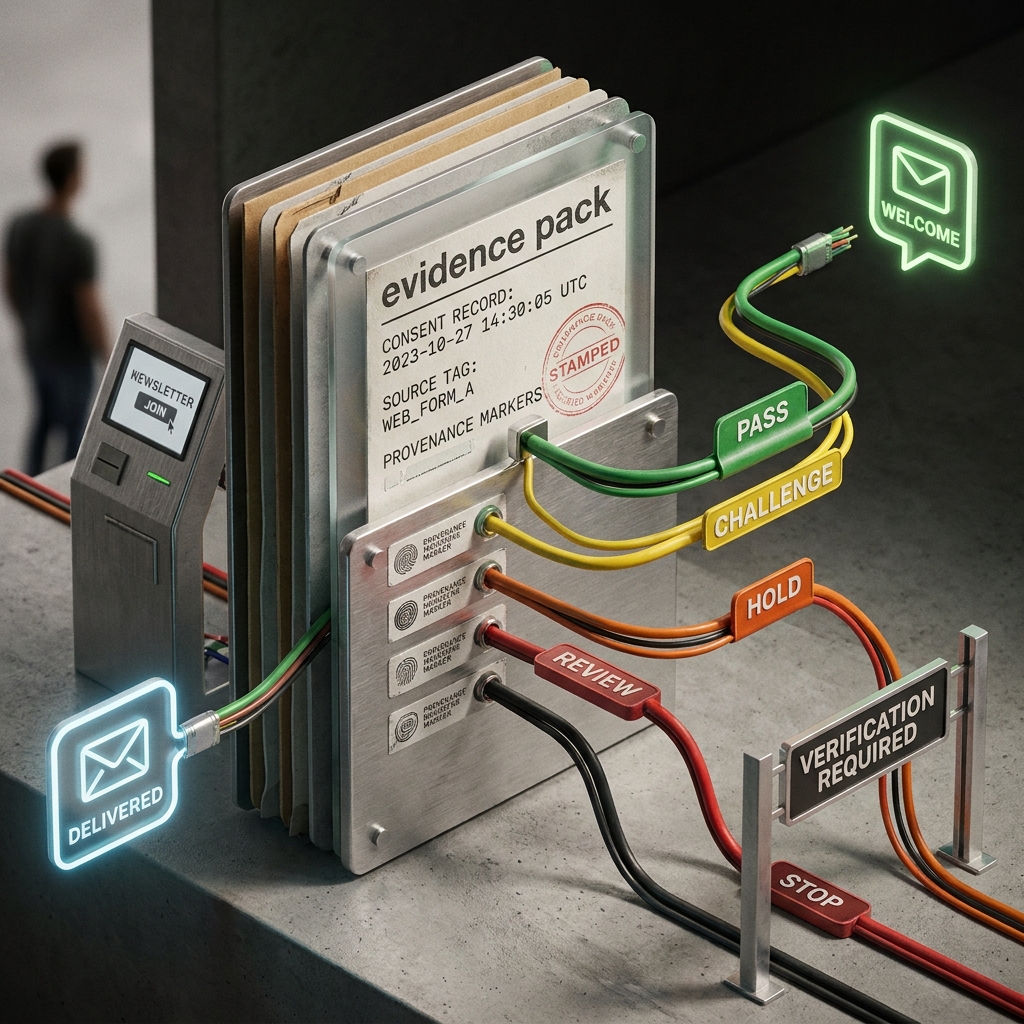
The first thing to understand about EVE is simple. It does not treat every doubtful sign-up as a yes or no decision. It assigns a route state, pass, challenge, hold, review, or stop, and keeps the reason visible. That matters because a stricter front door can cut obvious bad entries, while a silent reject wipes out the evidence needed to tell a risky sign-up from a false block.
So the real comparison is not strict versus lenient. It is silent rejection versus recorded route states. EVE applies email judgement in real time, grades the sign-up, and leaves a usable trail for the team. The operational shift is straightforward: less blunt blocking, more managed follow-up.
The live decision
A hard invalid check will catch obvious failures. The harder question is what happens next when a sign-up does not pass. Can the team see why it was slowed or stopped, decide who owns the next move, and put a date against the first review to check whether the rule still holds up? If not, the flow is being run without enough proof.
That is the practical split. A silent reject leaves marketing, fraud, and data teams staring at lower numbers and very little else. EVE grades sign-ups into pass, challenge, hold, review, or stop, records the reason, and makes the next action explicit. That is what turns a blocked record into something a team can inspect.
The first checkpoint is simple and testable:
- Owner for exception handling named
- Date for first threshold review set
- Acceptance criteria agreed for pass, challenge, hold, and stop
If those three items are missing, it is not a plan, fix it.
Why silent rejects fail under pressure
The problem with a silent reject is not that it blocks. Sometimes stopping a sign-up is exactly the right move. The problem is that the route and the reason vanish with it. Teams are then left guessing whether the trigger was a bad address, a disposable pattern, a timeout, or a rule set too tightly.
That weakens reporting almost immediately. You cannot track override frequency, hold volume, false positive patterns, or audit trail completeness if the flow drops the record and moves on. Early on, two measures do most of the work:
- How many sign-ups are being held or stopped by rule
- How many of those decisions are later overridden
Silent rejects hide both. Explainable decisioning keeps the event, the reason, and the route. CRM, fraud, and data quality teams then work from one record of the decision instead of patching together competing explanations.
What changes if you wait
Waiting for complaint rates or inbox placement to move is a poor operating model. By that stage, the effect may already be showing up in suppression, sender reputation, and acquisition reporting. Being a bit tight on time is not a reason to leave a weak rule in place.
This trade-off is usually framed the wrong way. It is not speed versus control. It is a blunt valid or invalid check against managed thresholds with clear route states and consequences. With explainable routeing, clearly good records can pass automatically, suspicious records can be challenged or held, and genuinely risky ones can be stopped with a recorded reason.
That is where an email judgement engine earns its place. It does not pretend to certainty. It gives teams a controlled way to run automated email risk routing, tune thresholds against observed outcomes, and keep a change log that can be reviewed by owner and date. Sorted.
What each route protects or exposes
The trade-off is real. Tight thresholds help protect deliverability controls, but they can raise false blocks. Loose thresholds help protect conversion, but they can let poorer quality records through. The answer is not a softer binary check. It is governed routeing with evidence and consequences attached.
| Routeing method | What it protects | What it exposes | Useful checkpoint |
|---|---|---|---|
| Silent reject | Short-term form hygiene | False blocks, no audit trail, weak diagnosis | Usually none beyond rejection count |
| Pass, challenge, hold, stop with recorded reasons | Deliverability, review discipline, clearer accountability | Needs threshold tuning and queue ownership | Hold volume, override rate, decision reason by rule |
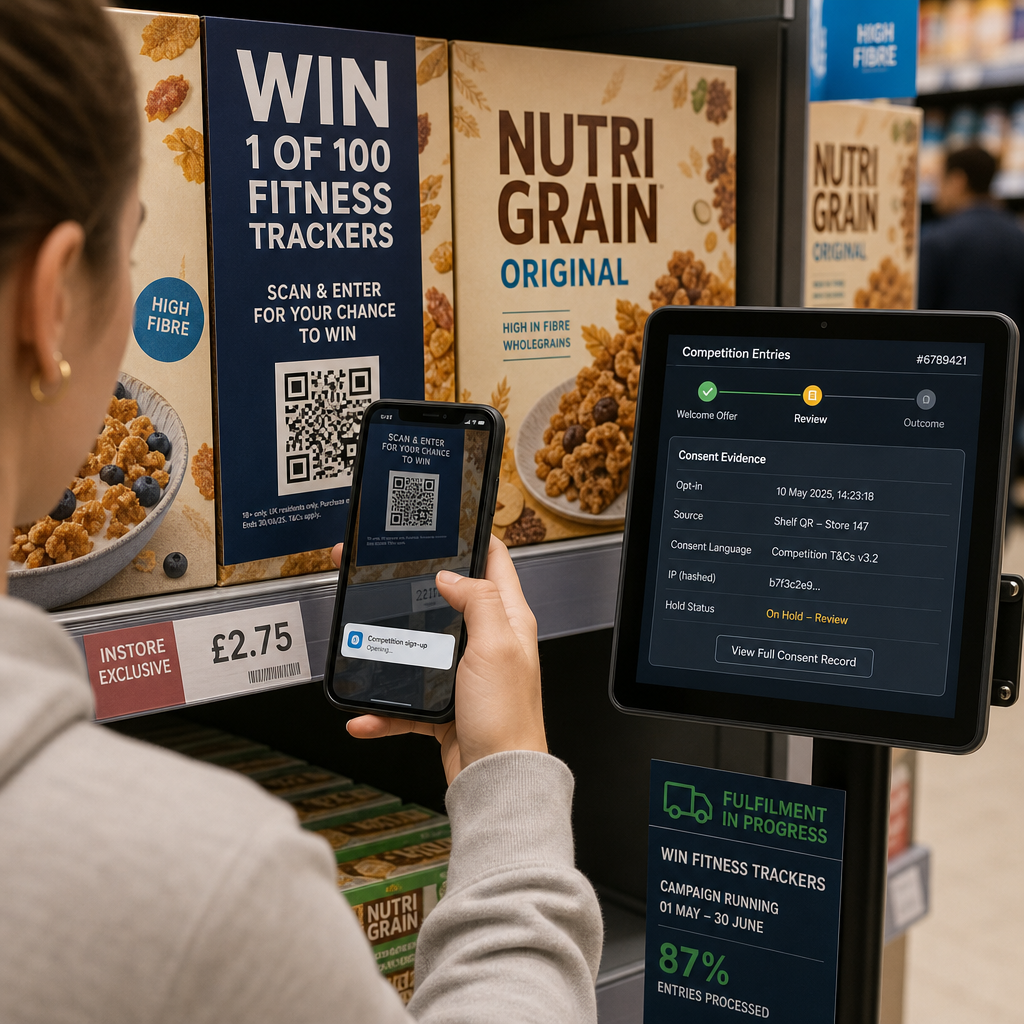
The stronger route is usually the one that keeps the evidence. If a record is challenged because of a disposable domain pattern, say so. If it is held because a risk rule fired on a shared network signal, log it. If an operator releases it, record who did it and why. That is how deliverability controls become accountable rather than decorative.
A practical acceptance check for this section is whether your team can answer three questions by the end of the week:
- Which rules generate the highest hold volume
- Which rules are most often overridden
- Which queue has an owner and review SLA
If not, the flow may be live, but it is not under control.
A defensible next move
The next step does not need to be a rebuild. Run a controlled comparison. Keep the current acquisition journey, replace silent rejects with explainable decisions at the highest-risk points, and review the outputs on a fixed date. Start narrowly. Challenge or hold only the patterns you can justify, then adjust once the evidence comes back.
Owners should be explicit:
- CRM owner, reviews hold and release outcomes
- Fraud or risk owner, reviews stop rules and exception policy
- Data or implementation owner, checks logging, consent capture, and rule changes
Dates should be explicit too:
- Day 0, enable recorded decision reasons
- Day 7, review hold volume and override rate
- Day 14, adjust thresholds with documented acceptance criteria
The main risk is predictable. Teams often set hold thresholds too cautiously and flood the queue. The mitigation is just as clear: keep the initial challenge band narrow, monitor queue volume, and change one rule at a time so the result is attributable. Less glamorous than a transformation slide, yes, but more useful.
If you are comparing silent rejects with explainable decisions, the safer option is usually the one that leaves a trail. EVE gives teams that structure, pass, challenge, hold, review, stop, with visible reasons and clearer ownership. If you want to pressure test your current flow, contact EVE and bring the live rules, the current owner list, and the next review date. That is enough for a useful conversation and a cleaner path to green.
A side-by-side trial is often enough to show whether EVE is reducing friction or merely renaming it.