Full article
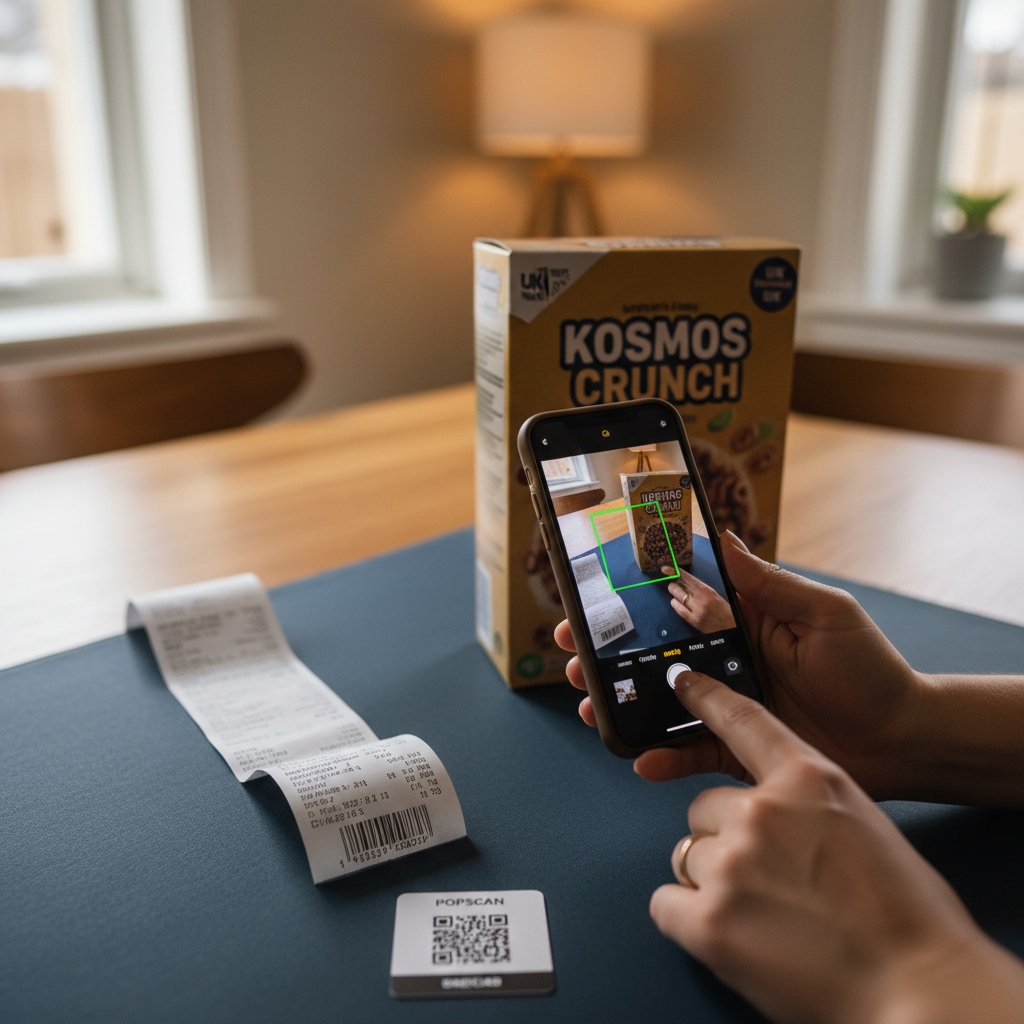
What should a UK team understand first about POPSCAN? It works with a joined-up proof set, not isolated uploads. Voucher disputes reach support when earlier steps—defining proof, checking timelines, logging entitlement—go vague. An incomplete trail leaves support interpreting, not resolving.
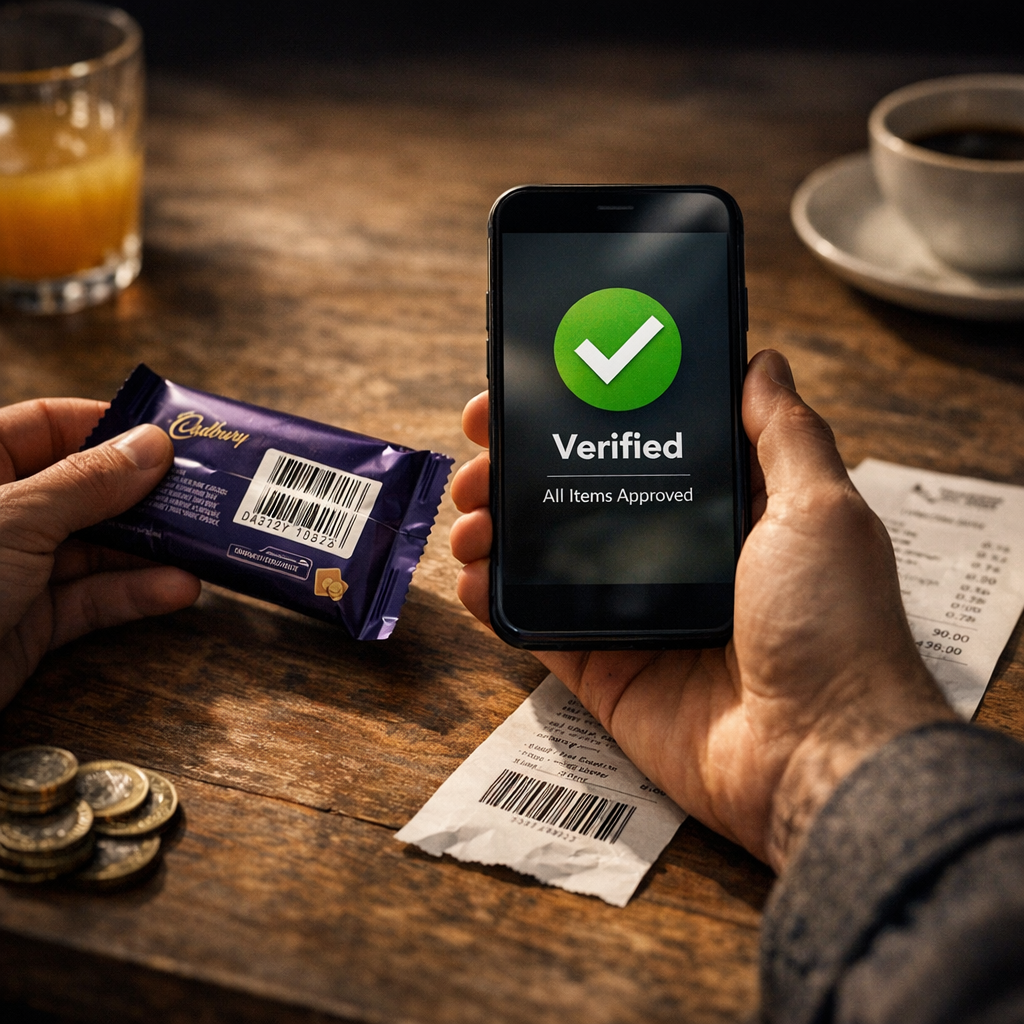
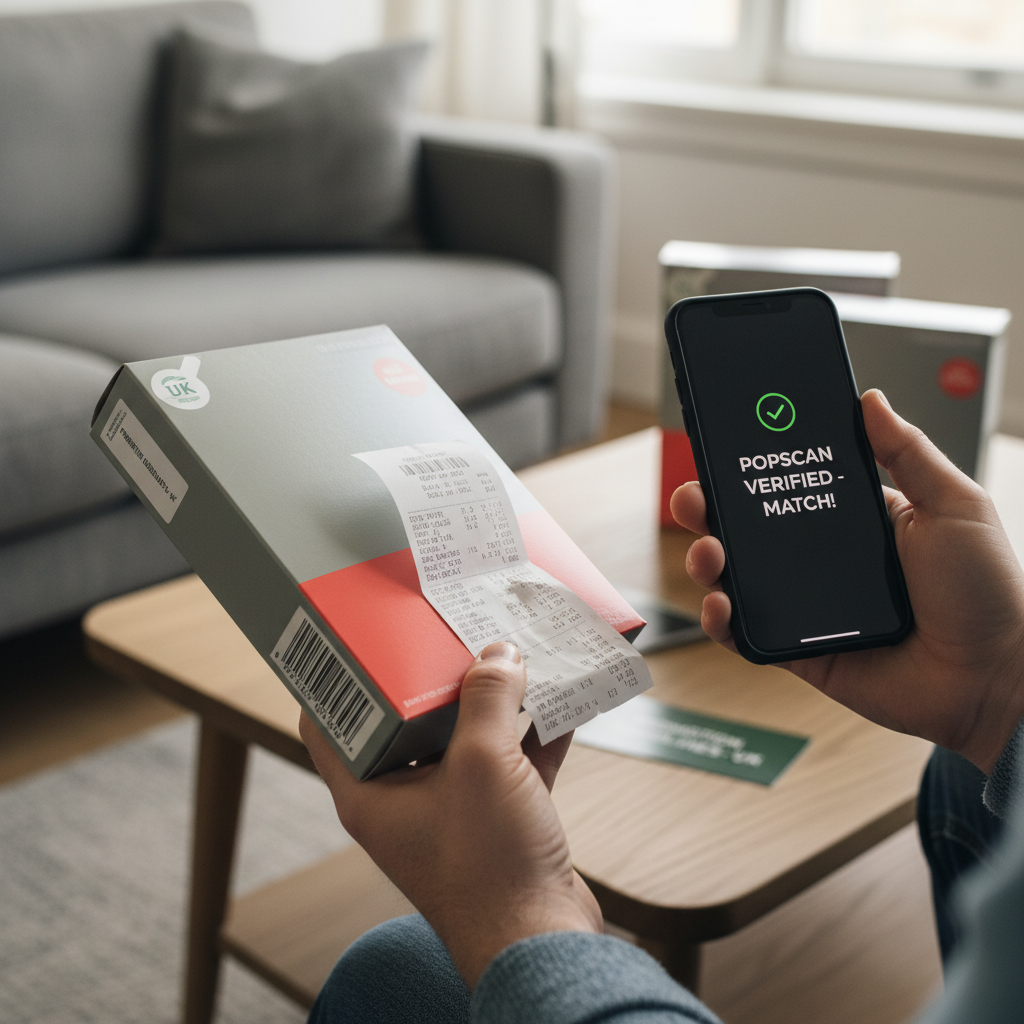
A stronger proof of purchase workflow isn't housekeeping; it ensures consistent claim assessment, faster dispute closure, and early detection of weak patterns. POPSCAN validates receipt, pack, and barcode as one purchase-proof set to counter single-signal abuse.
The short answer
Compare evidence-led proof of purchase with manual adjudication after the fact. One route captures artefacts at claim entry and applies clear rules early. The other waits for support to piece cases together from blurry images, repeated email addresses, and confident claimants.
Aim for stronger digital voucher security without turning entry into a chore. The better trade-off is clear proof requirements up front, machine-applied checks where possible, and a record showing why a voucher was issued, rejected, or escalated. Fast consumer flow still matters. Weak evidence controls don't.
POPSCAN fits this model by assessing claims against a fuller proof set, with receipt, pack, and barcode treated as related evidence.
Which proof step settles the question fastest
Settle most disputes by asking what evidence would have answered this at entry. Teams often contrast light-touch claim mechanics with structured validation. The practical gap is sharper. A single-signal check feels quick but pushes uncertainty downstream. An evidence-led route makes more decisions earlier, when proof is intact.
Start at claim entry. Define minimum artefacts to connect purchase to entitlement: receipt image, purchase time, participating product indicator, claimant identifier. If the mechanic depends on barcode matching, capture the barcode as part of the proof set, not optional decoration. The consumer path should make the route from purchase to claim clear, with no hidden condition appearing only in disputes.
Move to early validation. Distinguish between checks that reject or flag weak claims immediately and issues needing human review. Typical checks include:
- receipt image quality thresholds flagging unreadable uploads straight away
- duplicate claim detection across email, mobile, device, or transaction pattern
- SKU or barcode matching against participating products
- submission timing rules, including claim windows after purchase
- voucher issue logs linked back to the originating proof set
Log entitlement properly. An approval tick alone does little once support is involved. The record must show what proof was supplied, which rules were applied, what outcome followed, and whether anyone overrode that outcome. That makes a disputed claim answerable, not arguable.
| Stage | What to capture | Why it matters |
|---|---|---|
| Claim entry | Receipt, product proof, claimant identifier, timestamp | Creates the base record for validation |
| Automated review | Image quality, duplicate signals, eligibility rules | Removes obvious failures before support load rises |
| Decision point | Approve, reject, or escalate with reason code | Improves consistency and auditability |
| Voucher issue | Code status, send log, redemption state | Links entitlement to delivery and use |
| Dispute handling | Full claim history and override notes | Lets support resolve cases without guesswork |
The commercial effect is plain. Better evidence upstream means less manual handling later, fewer avoidable reissues, and a cleaner view of where fraud or error enters the promotion.
Where POPSCAN fits best
POPSCAN suits promotions needing easy entry but not thin verification. Its value isn't making every claim stricter. It validates receipt, pack, and barcode together as one purchase-proof set, a stronger basis for approval than any one signal alone.
This matters most in the awkward middle ground where support teams struggle: legitimate shoppers with incomplete uploads, borderline duplicates, and claims plausible until explained consistently. Single-signal checks let too much through or block too much without clear explanation. Joined-up proof gives a firmer basis for a fair decision.
For organisations running adjacent mechanics, related products such as ONECARD, DNA, or MAIA may matter operationally. Still, the evidence question centres on POPSCAN: can the team show how receipt, pack, and barcode support the entitlement decision?
Pitfalls to avoid
First, don't treat disputed claims as isolated service events. Repeated disputes usually point to a weak stage in the workflow. If support keeps opening receipts by hand to interpret the same rule, the issue isn't support capacity; the rule needed definition and logging earlier.
Second, avoid false precision. A control can sound careful on paper but be impossible to explain to a claimant or support agent. Claim mechanics should feel auditable. Consumers should understand, in plain terms, what proof is required and how the claim will be judged. Edge cases exist, especially with retailer receipt variation, but defined exception handling differs from making it up case by case.
Third, don't leave visibility until too late. If a team cannot state its first-pass validation rate, duplicate submission rate, blocked claim rate, or time-to-validation, it's hard to tell whether a dispute problem starts with campaign design, weak uploads, or repeated abuse. Growth claims without baseline evidence should be parked until the data catches up.
For promotion fraud prevention, weak spots are usually ordinary: repeated household patterns, reused receipts, barcode mismatch, or manual overrides becoming routine.
Checklist you can reuse
What should exist before a voucher dispute lands with support? This checklist ties each item to the question it settles fastest.
- Clear eligibility logic: participating products, purchase dates, claim windows and claimant limits in plain UK English. Question settled: was the claimant ever eligible?
- Required proof fields: receipt image, transaction time, product identifier and claimant contact details captured consistently. Question settled: is there enough evidence to assess the claim at all?
- Proof-set validation: receipt, pack, and barcode checked as related evidence where the mechanic requires it. Question settled: does the proof belong to one plausible purchase?
- Automated validation rules: image quality checks, duplicate detection, product match checks and exception routing. Question settled: should this claim pass, fail, or be reviewed?
- Decision logging: each approval, rejection or escalation recorded with a reason code, not free text. Question settled: why was this outcome reached?
- Entitlement linkage: every issued voucher linked back to the validated claim record. Question settled: did this voucher come from an approved claim?
- Override controls: manual decisions logged with operator note, timestamp and trigger reason. Question settled: was an exception made, and on what basis?
- Dispute view for support: one screen or report showing proof received, validation outcome, voucher status and prior contact. Question settled: can support answer the case without reconstructing it?
- Monitoring metrics: first-pass validation rate, duplicate submission rate, blocked claim rate, time-to-validation and reissue volume. Question settled: is the workflow improving, or just shifting work around?
Use two tests before launch or the next volume burst. Can support explain any claim outcome in under two minutes using the record alone? Can the promotions team identify where disputed claims are coming from by source, retailer, or product? If not, the evidence trail still has gaps.
Closing guidance
The decision isn't whether to add control, but where it belongs. A light-touch front end backed by heavy manual support can look efficient until claim volume rises or disputes cluster around weak proof. An evidence-led workflow demands more discipline earlier, but it gives support a better case record and the promotions team a clearer view of actual events.
That's where POPSCAN earns its place: not by adding process theatre, but by helping teams prove what happened through a joined-up purchase-proof set. If claim handling still depends on inbox searches or agent memory, map the evidence trail before the next campaign goes live. To tighten it without making the promotion harder to enter, contact the team behind POPSCAN and walk through how it works.
If this is on your roadmap, POPSCAN can help you run a controlled pilot, measure the outcome, and scale only when the evidence is clear.