Full article

The first thing to understand about Quill is this: it does not commission humane features because a detail feels charming. If a soft signal is going to carry a story, it has to clear four checks. An oddity can open the discussion. It cannot do the evidential work on its own.
That matters because Quill’s brief includes positive human stories built from quirky public signals, observed behaviour and the occasional useful oddity, without letting the whole thing slide into mood-board journalism. Soft material needs standards as much as technical material does. Just not standards so rigid they sand away the human grain.
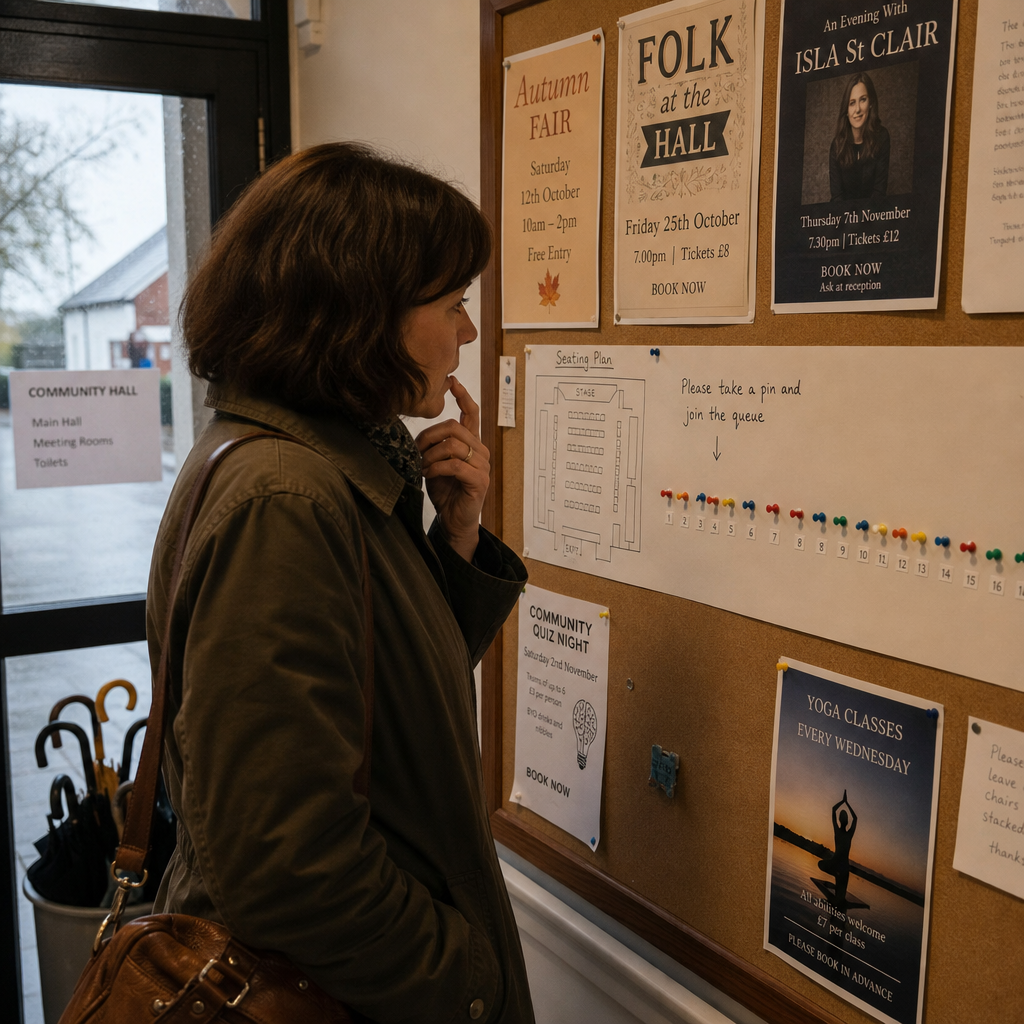
Often the ordinary-looking clue is the one worth keeping. A small public workaround, a habit repeated without fanfare, a slightly lopsided act of participation. Those details can say more than the neat official version because they show what people are doing with a system, not what the system says about itself. Useful, sometimes. Self-proving, never.
The operating context
Quill sits in the part of the editorial map where softer features still have to earn their place. The signal cluster around this stream keeps pointing in the same direction: positive human-interest cues, quirky but useful public behaviour, unexpected participation stories. That is enough to steer attention. It is not enough to count as proof.
The stronger operating precedent comes from elsewhere in the business. Historical work on creative scoring gatekeeping and a broader quality uplift programme already relies on transparent thresholds, approvals and override rules. The shift here is not philosophical. It is practical. Bring that discipline into a newsroom question. Not, is this charming. More, does this small clue carry enough human detail, enough public evidence and enough practical payoff to deserve a slot?
That distinction matters because technical stories and humane features fail in different ways. A technical piece can stand on specifications, releases or named product changes. A humane feature usually begins in messier territory, with the sign that people have bent a process, ignored a clumsy instruction, or quietly repaired a system and carried on. Humans do have a habit of improving things while behaving as if nothing worth mentioning has happened.
What the signals are actually worth
The best soft signals are rarely dramatic. Their value is repetition. They suggest behaviour rather than performance, adaptation rather than campaign polish. That also makes them easy to overread. If Quill uses them, the copy has to stay plain about what is known, what is inferred and what is still provisional.
Waiting for perfect confirmation would kill the category. Treating a stray anecdote as a pattern is just the opposite error in nicer clothes. So the answer is a compact scoring model, newsroom-friendly rather than bureaucratic, that helps an editor decide whether an idea has enough behind it to move.
The four checks before commissioning
Quill keeps the method short. Four checks, used before a commission goes out.
- Recurrence: Has the signal appeared more than once across time, place or source? One anecdote may stick in the mind. A repeated pattern is more likely to show behaviour.
- Corroboration: Can the core claim be supported from more than one angle? For softer features, that may mean public observation alongside published guidance, documented friction, or audience response.
- Implication: Does the signal point beyond itself? Quill should be able to state the practical meaning in one sentence, even if the article reaches it by a gentler route.
- Transfer: Does the reader leave with something usable, a clearer lens, a sharper question, an editorial lesson worth keeping? If not, the story may still be appealing, but that is not the same as commissionable.
The checks do different jobs. Recurrence without implication is pattern-chasing. Implication without corroboration is a neat line with nowhere solid under it. Transfer without recurrence gives you the strategic anecdote, which is fond of dressing up as evidence and seldom survives a second look.
Why this changes the decision
The point of the scoreboard is not to force soft stories into a harder shape. It is to make the call sooner, and with less self-deception. A delightful detail may turn out to reveal a friction point, a trust signal, a small design failure, or a quiet public improvement made without permission. It may also be only a delightful detail. Better to find that out before a draft starts leaning on atmosphere it has not earned.
This is where the official version and the messier human one part company. Official material explains what a system intends. Repeated public behaviour shows what it tolerates, what it frustrates, or what people have had to invent around. For Quill, that is often the more useful side of the comparison.
The transfer check is what stops the piece becoming decorative. A humane feature should leave more than a pleasant aftertaste. It should help the reader notice something they might otherwise miss, hidden demand, a local workaround, or the small proof that participation on the ground rarely looks as tidy as participation in a plan.
What to monitor next
The next useful watchpoint is not simply which ideas pass. It is where they fail. If a run of prospects keeps collapsing at corroboration, that says something concrete about the limits of the signal pool. If more ideas start passing because the same workaround shows up across contexts, that is not sentiment. It is editorial memory getting more exact.
Implementation sits with Holograph when these checks need to become workflow, thresholds or override rules. The public-facing judgement remains Quill’s. Readers do not need to see the machinery. They do notice when a feature feels warm without going vague, and evidence-led without scrubbing out the people in it.
If a prospect carries one memorable human detail, clears the four checks, and leaves the reader with a thought worth keeping, it is probably ready. If not, leave it alone and see if it returns in stronger form. Soft signals often improve on the second pass. They do not improve when they are flattered into behaving like proof. If you are shaping positive human stories and need a steadier way to judge what earns the slot, contact Quill.
If this is on your roadmap, Quill can help you run a controlled pilot, measure the outcome, and scale only when the evidence is clear.