Full article
Overview
Retail teams are under pressure to make activations work harder: prove value, capture useful first-party data and still give people an experience worth bothering with. The trouble is that too many builds add layers of tech where a simpler fix would do. You do not need more spectacle if the audience is still stuck waiting, scanning or squinting at a form on a phone.
The better approach is more practical and, frankly, less flashy. Borrow from martech where it removes friction, not where it creates a new bit of theatre. Across current experiential marketing trends UK brands are testing, the sensible pattern is the same: use systems to unblock flow, measure the lift and leave the magic for the parts people actually came for.
Signal baseline: when 'immersive' means more faff
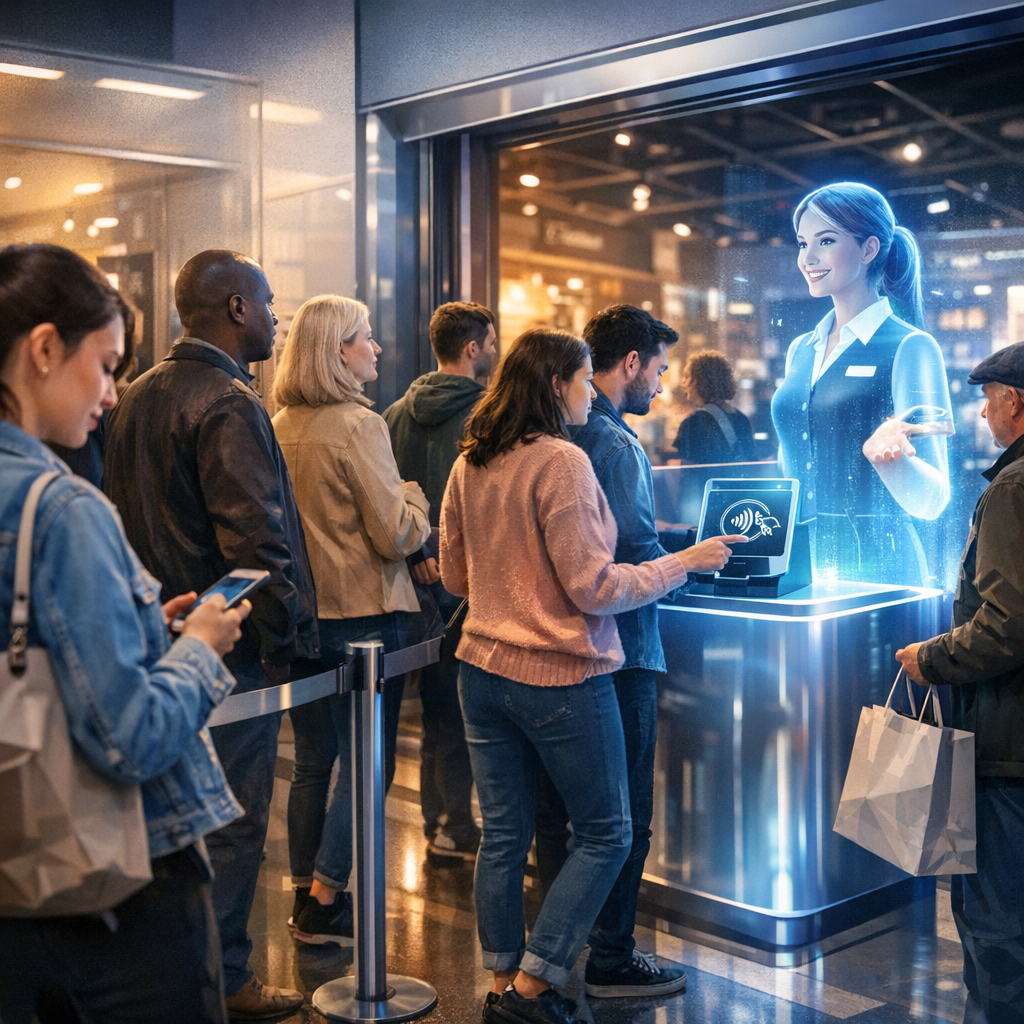
Last Thursday, in Shoreditch, I watched someone try to get a sample from a drinks pop-up. First came a QR scan. Then a form on a clunky mobile site. Then a confirmation screen for staff to verify. It took roughly three minutes. By then, a queue had formed and the person behind them had already started sighing. The smell of citrus from the stand was lovely; the process was a bit of a faff. That is when the problem became obvious: the activation had mistaken data capture for the experience.
That baseline turns up more often than it should in immersive retail builds. A touchscreen here, an AR layer there, a registration step bolted on because somebody wants a lead number for Monday’s deck. The trade-off is straightforward: you may collect more top-line records, but you also slow the interaction and make staff play tech support. If the audience remembers the form more vividly than the product, the system has got the priorities backwards. Automation without measurable uplift is theatre, not strategy.
What is shifting towards quiet, useful systems
The shift is not towards less technology altogether. It is towards technology used with restraint. TechBullion’s 9 March 2026 piece on martech through 2030 points to more seamless and personalised journeys as the direction of travel. Fair enough, with one caveat: “seamless” in a shop or live environment means the audience should barely notice the machinery. If they have to stop what they are doing to serve the stack, the stack is in the way.
You can see the same pattern in adjacent sectors. FutuNN reported on 10 March 2026 that Zhipu AutoClaw was positioned around zero-threshold deployment and one-click activation. We only have the lite listing rather than the full text, so treat the detail carefully, but the signal is useful: adoption stories are being framed around lowering operational effort, not adding novelty for its own sake. The interesting question is not whether martech can be used in-store. Of course it can. The question is whether it fixes a break in the journey: waiting, uncertainty, payment friction, stock discovery, sign-up fatigue. If not, leave it out and put the budget somewhere useful.
Who feels the friction
Audiences feel it first. They have come for a sample, a launch, or simply a pleasant five minutes in a busy day. If the activation asks them to do unpaid admin before anything enjoyable happens, goodwill drops. Not because people hate technology, but because they can tell when the process serves the brand more than it serves them.
Operators feel it next. Staff who should be hosting and selling end up resetting tablets or explaining browser permissions. Between 11:00 and 14:00 on a busy shop floor, I have seen this happen repeatedly: the queue becomes a support desk, and the product conversation disappears. The trade-off is brutal. You gain a layer of digital process control, yet lose the human interaction that actually shifts consideration and basket value.
Brand and loyalty teams get the final sting. The data produced by high-friction journeys is often thin and context-poor. A cleaner design gives you better evidence. If a skip-the-queue collection point shows that one product line is selected 38% more often than the fixture average during a pilot weekend, that is useful. If an NFC tap-to-save mechanic produces a measurable return visit rate over 14 days, better still. Measurable outcomes beat vanity metrics every time.
How to borrow from martech without the nonsense
Start with flow, not features. Walk the site before anybody mentions AR or CRM integration. Where do people stop? Where do they ask for help? Where does the queue bunch up? Find the break first. Then pick one intervention that earns its place. SMS queueing can free people to keep browsing. NFC can save a product to a wish list without forcing a full sign-up. A staff-facing dashboard can show live stock or redemption status in one place. None of that is glamorous, and that is the point. Quiet systems often outperform flashy ones because they reduce effort for both sides.
Run pilots as if you mean it. Choose one site, one friction point and one success metric, like average wait time or staff interaction minutes recovered per hour. Give the test a fixed window, ideally two to four weeks, and compare it against a clean baseline. If queue time drops but basket value also drops, you have improved flow at the expense of commercial quality. That is a real trade-off and worth knowing early.
Keep the privacy model sensible as well. Default to GDPR-safe, first-party data capture with clear consent. If a platform cannot explain its decisions, it does not deserve your budget. And if it cannot show measurable uplift after a pilot, it should not make it into the wider roll-out either.
The strongest retail activations do not borrow from martech because it sounds modern. They borrow from it because some parts of customer flow are measurable, fixable and worth improving. Used properly, technology becomes the quiet plumbing: queue management, preference capture, redemption, continuity into loyalty. Used badly, it becomes a shiny detour between the audience and the thing they came for.
That is the founder’s view after a fair few live builds, a few avoidable mistakes and more than one cup of tea with teams cleaning up after over-engineered launches. Keep the human moment human. Put the system where the queue breaks. If you want to map where your activation is creating friction and where a simpler build would do a better job, have a word with the Holograph studio. We can sit down for a chemistry session, look at the journey with fresh eyes and work out what is worth building, what is not, and how to ship something that actually earns its keep.
Book a chemistry session with the Holograph studio team.