Full article
Created by Marc Woodhead · Edited by Marc Woodhead · Reviewed by Marc Woodhead
Beyond the Pop-Up: The Experiential Marketing Trends UK Brands Need to Master in 2026Key Takeaways
- In 2026, the strongest activations trade one-off spectacle for experiences people genuinely feel were worth their time.
- Immersive retail works best when digital and physical are designed as one joined-up journey, not bolted together with a QR code.
- Loyalty innovation is shifting from points and perks to access, community, and “money-can’t-buy” moments that build advocacy.
- Measurement has to be planned in from day one, so you can connect participation to outcomes (not just a spike in posts).
That Awkward Silence After the “Wow”
Last Tuesday, I was in a queue for a coffee in Cockermouth, of all places. Mist rolling in – proper Cumbrian stuff – and the barista was doing that calm, efficient dance behind the machine. The person in front of me was showing their mate a video of a wildly expensive London pop-up: drones, projections, the full works. Their mate watched, nodded, and said, “Cool. But what was it for?”
That’s the question that haunts nine out of ten activations. The spectacle lands, but the substance never shows up. We’ve got very good at manufacturing shareable moments; we’re less consistent at building experiences that are felt, remembered, and – crucially – measurably useful to the business. The sugar rush of a viral clip fades fast. What’s left is often a sizeable invoice and a performance wrap full of “great vibes”. Bit of a faff, if we’re honest.
The Mood of the Nation: Why “Joy” Is a Terrible KPI
For years, the unwritten brief for experiential has been to “create joy” or “spark delight”. Lovely sentiments. Commercially slippery. If you’re still measuring success in 2026 with a hashtag counter and a vague awareness goal, you’re not just wasting time – you’re buying vanity at full price.
We need sturdier signals. The Office for National Statistics publishes quarterly personal well-being estimates, including measures such as life satisfaction, happiness, anxiety, and whether people feel the things they do in life are worthwhile. That “worthwhile” measure is the one I keep coming back to: it’s closer to perceived value than a momentary grin for a selfie.
So rather than chasing “joy” as a standalone outcome, design for worth it: an experience that saves time, teaches something, reduces hassle, or builds a real sense of connection. Those are things people will actually credit you for – and they’re far easier to link to behaviour afterwards.
From Spectacle to Substance: The New Rules of Engagement
The biggest shift I’m seeing across experiential marketing trends in the UK is a pivot from empty spectacle to tangible value. Not because creativity has died (it hasn’t), but because audiences have become ruthlessly efficient at filtering noise.
A flash mob can be fun. But a workshop that teaches a skill, a product trial that removes uncertainty, or a community format that helps people meet like-minded humans tends to earn attention rather than borrow it. And once you treat your audience like intelligent adults with limited time, the work gets better.
Practically, that means your activation should answer at least one of these questions:
- What problem are we solving? (Speed, confidence, access, understanding.)
- What are we giving that can’t be faked online? (Hands-on trial, real humans, sensory proof, belonging.)
- What will someone do differently afterwards? (Try, buy, recommend, return, opt in.)
That’s the difference between “big” and “effective”.
Weaving Digital and Physical (Without Making It Weird)
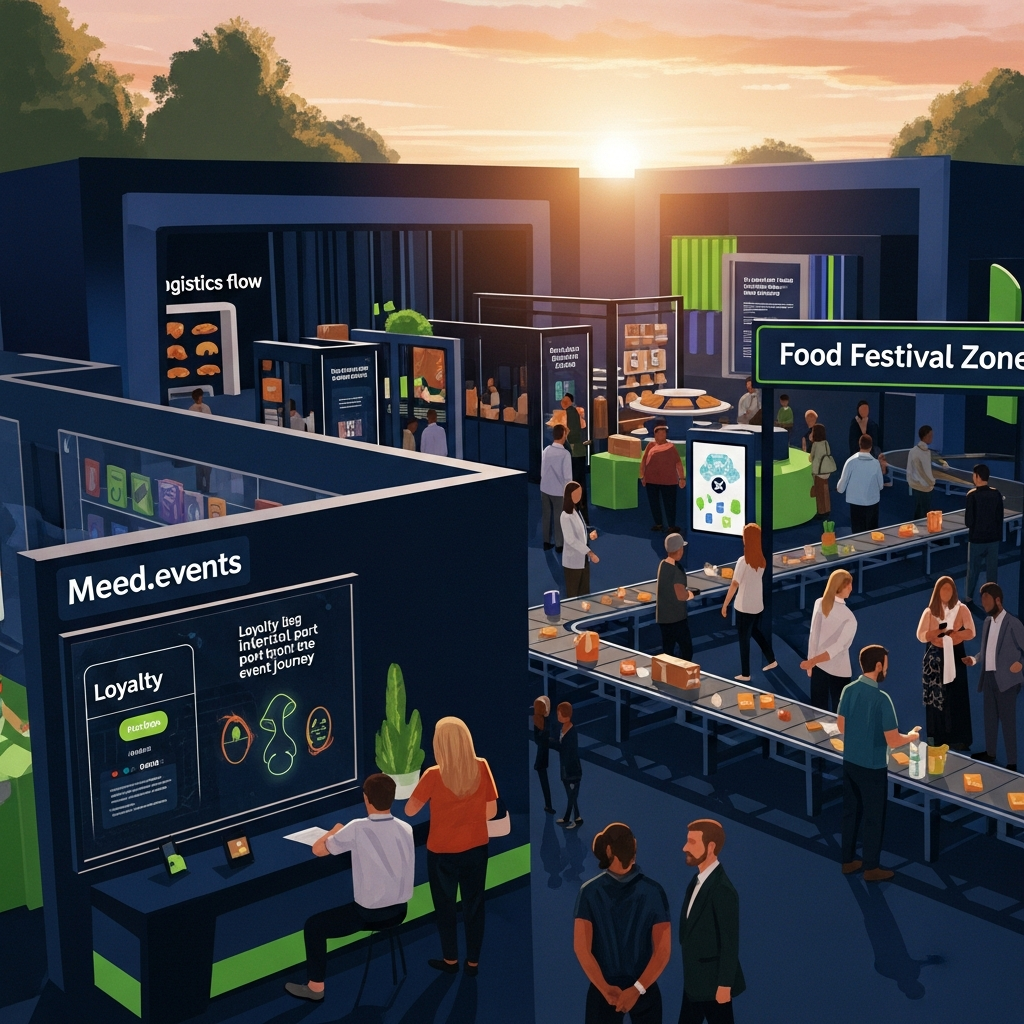
The line between the high street and the homepage has dissolved. Building strong immersive retail experiences means accepting that reality and designing for it – end to end – rather than sprinkling tech on top and hoping it looks modern.
This is where a unified brand activation strategy earns its keep. You’re not designing a single room; you’re designing a journey: invitation, arrival, interaction, follow-through. If those parts don’t connect, measurement becomes guesswork and the experience feels disjointed.
Here’s the practical checklist I use when we’re scoping an integrated experience:
- The invitation (pre-activation): Use personalised comms to set expectations. If slots matter, let people book. If preferences matter, capture them early – so the on-site moment feels smooth, not like another form-filling exercise.
- The welcome (arrival): Make check-in quick. Recognise returning audiences where appropriate. If there’s an app or AR layer, it should start cleanly and add utility – not friction.
- The interaction (during): Capture first-party data only where it improves the experience right now (for example: product preferences that shape what they see next). Be explicit about consent and keep the value exchange obvious.
- The follow-through (post-activation): Avoid the generic “thanks for coming”. Reference what they actually did. If they tried a product, remind them how it matched their preferences. If they attended a session, offer the next step. That’s how the activation becomes a relationship, not a one-night stand.
Loyalty Innovation: The Experience Becomes the Reward
If your loyalty programme is still a glorified discount card, you’re leaving value on the table. Loyalty innovation is moving towards access and belonging – experiences that people can’t get by simply refreshing a voucher page.
Use activations as the reward itself: early access, limited-capacity tastings, behind-the-scenes tours, maker sessions, or a seat at a table with the people building the product. Not because it’s “premium”, but because it creates a social bond and a story your best customers actually want to retell.
And yes, points still have a place. But if points are the whole plot, you’ll be stuck in a discount arms race. Experiences get you out of that spiral.
Measurement Without the Theatre (Plan It or You Won’t Get It)
We can all make a report look impressive. The hard part is making it true – and useful. Measurement needs to be designed into the activation, not stapled on at the end when someone asks what we got for the money.
At minimum, choose metrics that map to a clear causal chain: who showed up → what they did → what happened next. That often looks like:
- Participation: footfall, dwell time, session attendance, repeat visits.
- Quality signals: product trials completed, preferences captured (with consent), qualified lead rate, bookings made.
- Commercial outcomes: sales uplift where measurable, conversion after the event, retention/repurchase trends for those who engaged.
The trick is joining those dots responsibly. Keep it privacy-preserving, keep it GDPR-aligned, and be honest about what you can attribute versus what you can only correlate. That’s not pessimism – it’s how you avoid telling yourself fairy tales.
FAQ
What’s the biggest mistake brands make with experiential marketing?
Doing the “fun bit” first. If the only objective is “generate buzz”, you’ll end up with a lovely-looking activation that can’t justify its own existence. Start with a measurable outcome (trial, leads, bookings, data capture with consent, retention uplift), then design the experience to deliver it. Strategy before spectacle – otherwise you’re basically throwing a party and calling it a plan.
How do you measure the ROI of an immersive retail experience?
Use a blended model that connects on-site behaviour to what happens afterwards. On-site metrics like footfall, dwell time, session completion, and assisted sales are your baseline. Then add digital signals such as opt-in rate, profile completion, follow-up conversions, repeat visits, and – where you have the data – longer-term customer value for participants versus non-participants.
The key is agreeing the attribution approach up front. If you can track directly (for example, via bookings, unique offers, or consented identifiers), do that. Where you can’t, be explicit that you’re looking at directional impact and learning.
Are these activations only realistic for brands with huge budgets?
No. Budget changes the production value, not the fundamentals. A smaller brand can still deliver “worth it” experiences: workshops, guided tastings, drop-in repairs, local creator collaborations, or simple appointment-based trials that remove friction.
Big budgets let you build bigger sets. But if the journey is clunky and the value exchange is unclear, a bigger set just gives you a bigger problem to explain in the post-campaign meeting.
How does GDPR affect data capture at live events?
Exactly the same way it does online: be transparent, be specific, and don’t over-collect. Tell people what you’re collecting, why you need it, how long you’ll keep it, and how they can withdraw consent. Make the consent mechanism unambiguous (no pre-ticked boxes, no “consent by osmosis”).
Also: design the experience so it still works if someone says “no thanks”. Opt-in data should enhance the experience, not be the entry fee.
What counts as “loyalty innovation” in 2026?
Anything that meaningfully increases belonging and reduces churn without defaulting to deeper discounts. That might be tiered access to experiences, community formats, partner benefits that genuinely match your audience, or using preferences (captured with consent) to make rewards feel personal and timely.
If it’s just points for purchases, you’re not innovating – you’re tallying.
Conclusion
The experiential marketing trends UK brands should lean into for 2026 aren’t about being louder; they’re about building activations people deem worthwhile, then measuring what changed because you showed up. If you want to pressure-test an idea and leave with a plan you can actually ship – creative, operational, and measurable – let’s book a chemistry session with the Holograph studio over a cup of tea. I’ll bring the scepticism; you bring the ambition, and we’ll see what’s possible once we strip away the faff.