Full article
Created by Marc Woodhead · Edited by Marc Woodhead · Reviewed by Marc Woodhead
Key Takeaways
- Experiential marketing in the UK is moving from one-off stunts to joined-up activations that support data, loyalty and long-term audience relationships.
- The best immersive retail experiences make “phygital” feel effortless: digital layers that remove friction and add useful context, not noisy gimmicks.
- Loyalty innovation is shifting from points-for-purchase to rewards for participation, learning and community – because belonging beats discounts.
- If you can’t measure it end-to-end (with consent), you can’t defend the spend – build the measurement plan before you build the set.
That bitter wind in Bexhill
Last Tuesday morning, I was walking along the seafront in Bexhill and the wind coming off the Channel had that “why did I not bring a better hat?” bite. It was one of those properly cold snaps we’re getting more of, with the sea a churning grey and the air feeling thin and sharp. The sort of overcast, 2°C weather that makes you walk faster and think slower. And it landed an oddly useful reminder: when life feels abstract and screen-heavy, people gravitate towards what’s tangible, warm and real.
That’s the thread behind the most important experiential marketing trends UK teams should be paying attention to for 2026. Not bigger props. Not louder stunts. Just better designed moments that respect people’s time, earn attention honestly, and give you something measurable to learn from afterwards.
Beyond the pop-up: the new rules of engagement
For a long time, “experiential” was shorthand for a pop-up, a sampling stand, or a branded tent at a festival. Often fun. Sometimes even brilliant. But too many of them were isolated – planned in a silo, reported as footfall, then quietly filed away as a nice anecdote.
Now, a solid activation should do three jobs at once: deliver a great experience, create an owned relationship (where appropriate), and feed learning back into the business. That’s what a grown-up brand activation strategy looks like: an activation as a working part of your customer journey, not a side quest.
Sharp opinion: if you’re still shipping experiential in 2026 without agreeing success measures up front, you’re wasting time – and you’re making it impossible for anyone to defend the budget next quarter.
Phygital futures: crafting immersive retail experiences that don’t feel like a faff
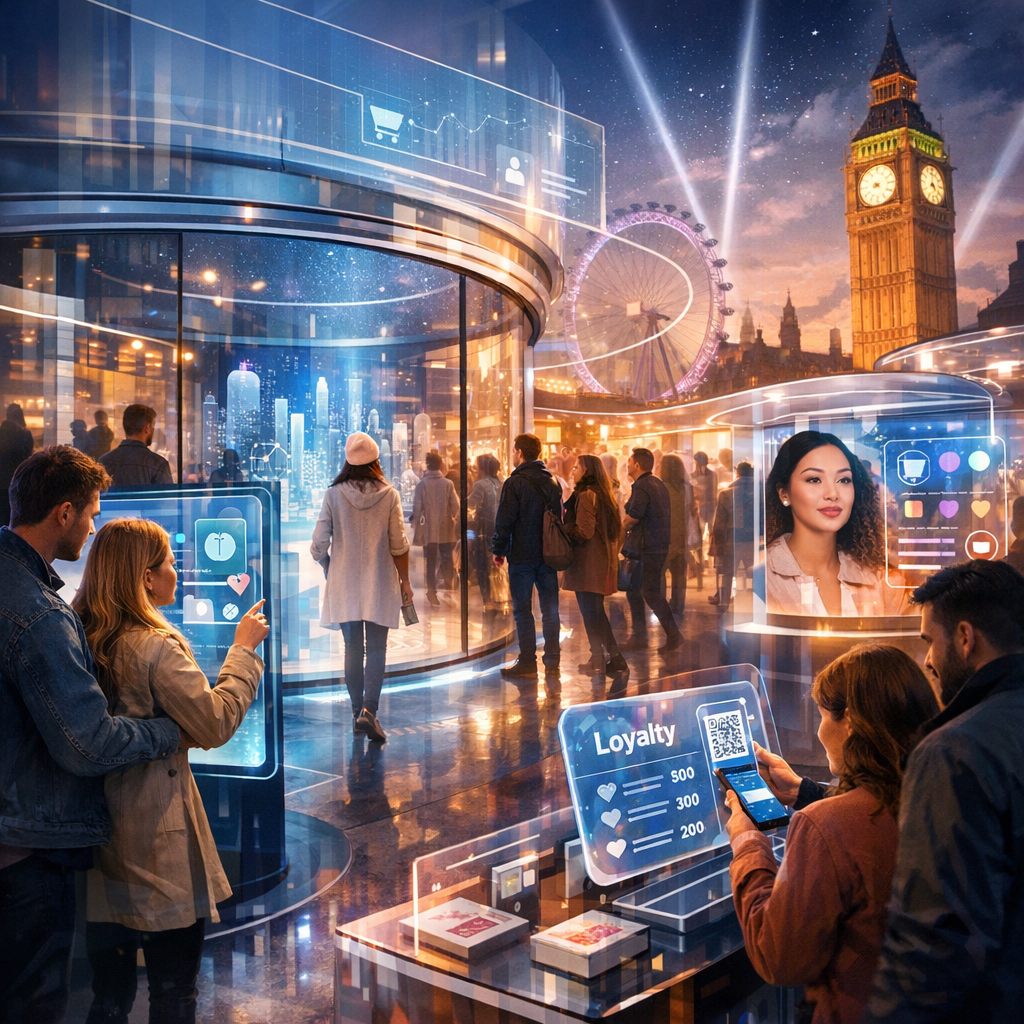
Retail is where “phygital” either becomes genuinely helpful… or a bit of a faff with tablets glued to walls. The difference is intent. The best immersive retail experiences use digital layers to remove friction, add context, or personalise the journey – quietly.
Think NFC tags that reveal product provenance, care instructions, or styling options. Think AR that helps you visualise a product in place, or quick, accessible guidance that makes a complex range easier to choose from. None of that works if the tech becomes the headline. The experience should feel natural: the story first, the interface second.
From points to participation: the evolution of loyalty
Traditional loyalty – spend money, get points, repeat – still has a role, but it’s not the whole answer. Discounts are transactional; loyalty is behavioural and emotional. This is where loyalty innovation gets interesting: rewarding participation, curiosity and contribution rather than just spend.
Practical examples that don’t require a moonshot budget: early access for workshop attendees, member-only product testing, community challenges, or content unlocked through engagement rather than purchase. The aim is simple: make people feel like they’re part of something worth showing up for.
There’s a broader, human context here too. The Office for National Statistics tracks personal well-being measures including life satisfaction and the sense that the things we do are worthwhile. You don’t need to turn your activation into group therapy, but you do need to recognise the direction of travel: audiences are more selective with attention, and they reward experiences that feel useful, respectful and purposeful.
A practical framework for measurable activations (so you can prove it worked)
The biggest blocker to experiential investment is rarely creativity – it’s accountability. “It was busy” isn’t a performance wrap. If you want experiential to sit credibly alongside media, CRM and loyalty budgets, measurement can’t be bolted on at the end.
Here’s the five-step approach we use to keep activations defensible:
- Define the outcome before the idea: pick 2 – 3 primary KPIs tied to business reality (for example: qualified data capture rate, consideration uplift from a post-experience survey, or sales attributed via unique codes).
- Design consent-based capture into the journey: QR, NFC, app check-ins, or short forms – only where it improves the experience, and always with clear, informed consent.
- Set up a comparison: where you can, use a control group or regional split to show what changed because of the activation, not just what happened during it.
- Connect the data pipeline to your CRM: if data sits in a spreadsheet purgatory, it’s not an asset. Map fields, set governance, and keep it GDPR-compliant.
- Ship a proper performance wrap: tell the story against the agreed KPIs, include learnings and next tests, and be honest about what you couldn’t measure (yet).
Privacy, consent and trust: build it in, don’t bolt it on
GDPR isn’t the enemy of good activations; sloppy thinking is. If your experience relies on personal data, the deal must be clear: what you’re collecting, why you’re collecting it, how long you’ll keep it, and what the audience gets in return.
In practice, that means preference-led sign-ups, minimal data collection, and privacy-preserving architectures by default. You can still personalise without hoovering up everything in sight. And if you’re working with multiple partners (event tech, venue, sampling, loyalty platform), assign data ownership and responsibilities in writing before you go live. Otherwise you’ll spend launch week untangling legal threads instead of improving the experience. Cheers for that.
FAQ
What is the difference between experiential marketing and a simple event?
A simple event is often a one-off moment: people attend, something happens, everyone goes home. Experiential marketing is the strategic approach behind it – designing a multi-sensory interaction that supports a wider journey (awareness, trial, loyalty), with a clear role in how you learn and what you do next. In other words: an event can be a tactic. Experiential is the discipline that makes the tactic purposeful, measurable and repeatable.
How do you measure the ROI of an immersive retail experience?
You measure it like any other investment: agree the outcome, then track leading and lagging indicators. Short-term measures often include dwell time by zone, conversion rate on featured ranges, and basket mix. Longer-term measures look at repeat purchase and customer lifetime value versus a comparable group who didn’t experience the activation. The trick is to plan the instrumentation early – unique codes, tagged journeys, and a clean CRM connection – so the story doesn’t rely on guesswork.
Are experiential marketing trends in the UK only relevant to big brands with big budgets?
No. Budget changes the production values; it shouldn’t change the thinking. A small brand can still run a participation-led loyalty mechanic, a workshop series, or a “try before you buy” moment that captures consent-based data and feeds a follow-up journey. If anything, smaller teams often move faster: fewer approvals, more testing, less theatre. Build, ship, test – repeat.
How does GDPR affect data capture at live activations?
GDPR requires that personal data is collected lawfully, transparently and for a specific purpose. For live activations, that means clear consent language, no pre-ticked boxes, and a sensible data minimisation approach (collect what you need, not what you fancy having). Operationally, you’ll want a straightforward consent flow and a plan for how data moves between partners. If you can’t explain it simply, you probably can’t defend it.
What’s the first step in developing a brand activation strategy?
Start with two truths: what the business needs to move, and what the audience actually values. Define a specific objective (for example, trial among a target segment, or reactivation of lapsed members), then map the audience journey around that objective. Only then do you pick channels, creative and tech. Strategy first, shiny stuff second.
Let's build something that works
The strongest experiential marketing trends in the UK for 2026 all point the same way: experiences that are joined-up, participation-led, and measured properly – without turning data capture into a tax on enjoyment. If you want to build an activation that your audience actually thanks you for (and your stakeholders can justify), we should have a quick chemistry session with the Holograph studio. Bring the brief and the awkward questions; I’ll bring the scepticism – and we’ll see what’s worth shipping next.