Full article
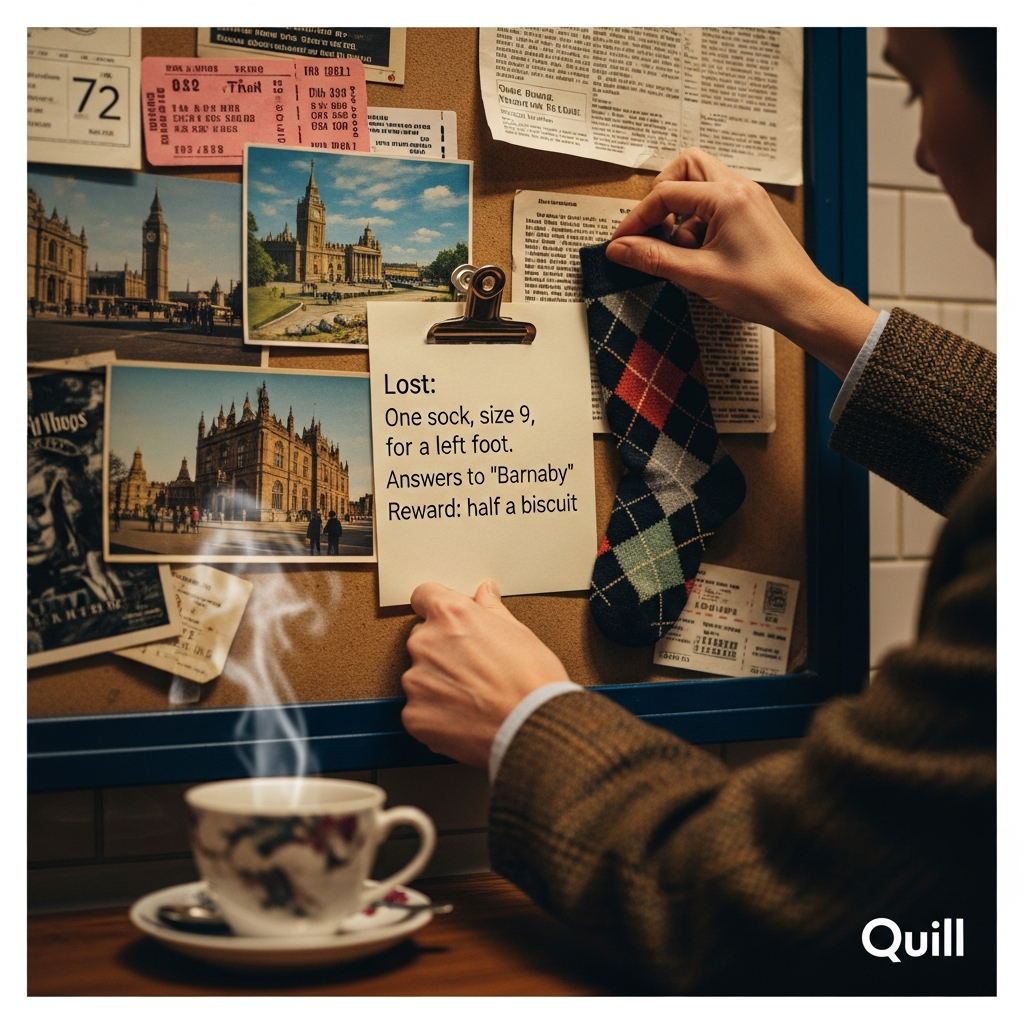
Quill should treat soft signals as prompts, not proof. Start there. In this scout run, no aligned live signal arrived, so the brief falls back to positive human-interest, quirky public behaviour and unexpected participation. That can still produce a publishable feature. It also creates the exact condition in which a gentle oddity gets mistaken for a story before the evidence has done enough work.
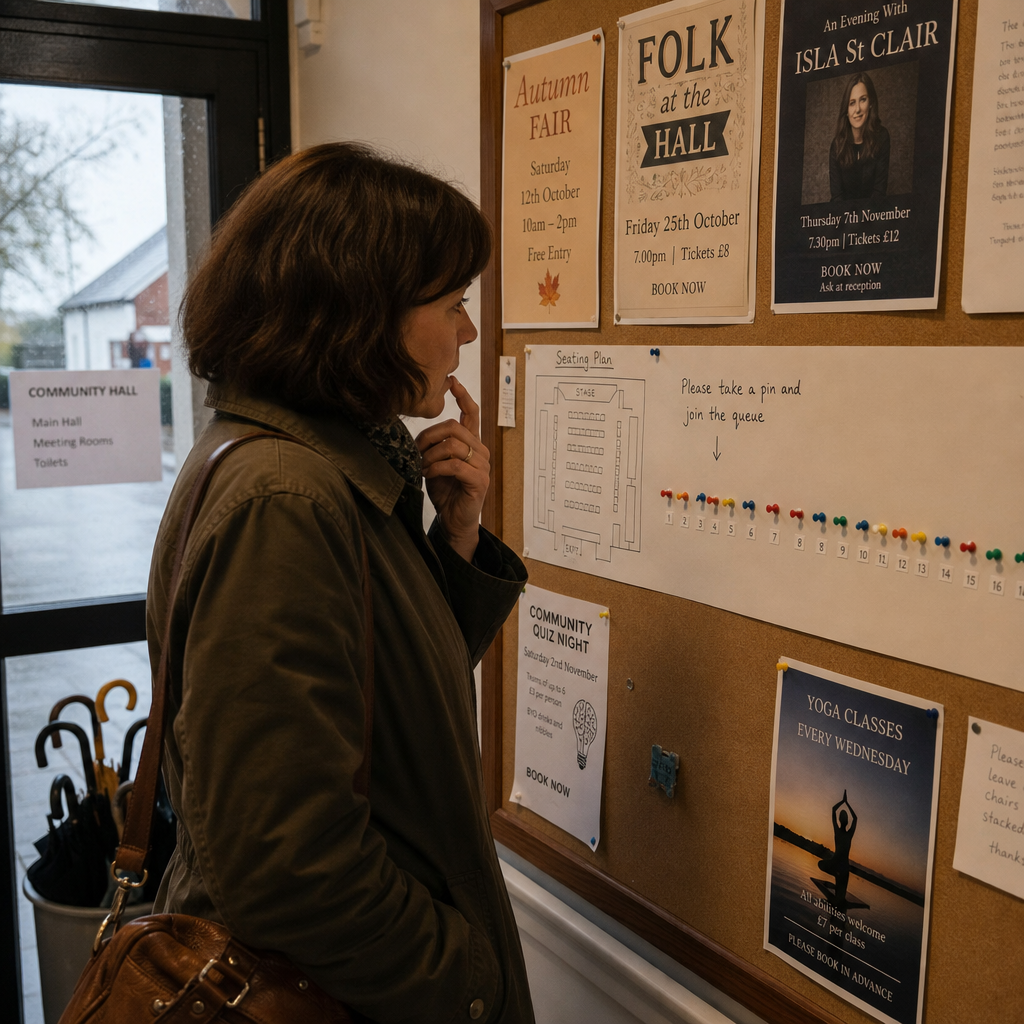
The noticeboard test keeps that mistake in check. If the idea would make sense pinned up in a library, surgery or village hall, it may carry enough public usefulness to support a feature. If it only works as mood, leave it alone. That is the line. It keeps the subject concrete and stops a humane piece getting waved through on charm.
Signal baseline
What looks ordinary at first is often the useful part. A hand-written notice, a recurring workaround, a pocket of order in a place that should by all rights be a bit scruffy. Those details are usually colour, not proof. Still, they can point to something sturdier. The job is to work out whether they show repeatable behaviour or just a pleasing one-off.
The noticeboard standard helps because it is more demanding than it sounds. A public notice has to be clear, useful and true enough that nobody feels had. That is stricter than plenty of editorial prose. It also favours the slightly messier human version over the neat official one, which is often where the live clue sits.
That matters for Quill because the brief asks for evidence-led, SEO-useful ideas, while the review checks still want one memorable human detail and a useful interpretation. So there is no real contradiction to smooth away. A placeholder clue can justify opening the file. It cannot, on its own, justify publishing the piece. Signal triage decides that later.
A soft signal earns attention when there is visible behaviour, some sign of recurrence, or enough surrounding context to show the thing is not merely decorative. In plainer English, would another person notice it on a second pass, and learn something from it?
What is shifting underneath this
The shift is not towards softer standards. It is towards tighter handling of soft material. This run returned fallback cues rather than a live trend, and those cues kept clustering around the same ground: positive human stories, useful oddities, public participation. That pattern does not prove audience demand. It does create editorial pressure to decide what belongs inside Quill and what stays in the notebook.
The neat official version says a feature is ready once it expresses a nice idea clearly enough. The slightly messier human version is less forgiving. It asks whether the detail leaves behind a rule. Not a mood. A rule an editor can use again when the next small clue turns up between the yoga class and the lost scarf.
Quiet periods are where standards slip if nobody is paying attention. With no stronger live signal in view, a quirky anecdote starts to glow. Some deserve that. Many do not. The answer is not to distrust humane stories. It is to make each one carry an implication that survives ordinary scrutiny.
Where the real pressure sits
The pressure sits with editors and commissioners because they pay for both errors. Set the threshold too low and Quill fills with charming filler. Set it too high and it misses the small clues that show how people actually use a place, a service or a social rule when nobody is writing the official version.
This is why observed behaviour matters more than mood. One amusing notice may be local texture and nothing else. A recurring class of shared fixes in ordinary places is different. It suggests people are improving systems in small, unofficial ways. Humans are oddly dependable at this when the signage gives up.
For Quill, the practical test is transferability. Does the feature teach the next commission anything? Does it sharpen a future brief, change what gets checked, or help an editor spot a stronger pattern earlier? If not, it may still be pleasant reading. It just may not be Quill’s job to publish it.
How the noticeboard test works in practice
A practical model needs four questions:
- Would a reasonable stranger understand the signal without insider context?
- Is there corroboration, even if light, that the behaviour is real or recurring?
- Does the story imply something operationally useful?
- Is there a caveat strong enough to stop the copy sliding into sentimentality?
These checks are plain on purpose. They are for moments when the evidence is modest and time is short. A placeholder clue can justify starting the reporting process, but the evidence thread needs to thicken as the draft develops. If it does not, keep it as a notebook item.
That is the split between quirky public signals that are merely decorative and ones that deserve editorial effort. A lone odd act may be noise. A repeatable workaround in an ordinary place points to tacit cooperation, trust, or a design gap people have solved for themselves. That is enough to argue from, provided the caveats stay attached.
The noticeboard test is useful under pressure for the same reason public notices are useful in the first place. They do not tolerate fog. The claim stands up in ordinary language or it does not.
What changes once the route is live
If Quill uses this test consistently, soft-signal features stop behaving like filler with better manners and start behaving like governed experiments. Briefs begin with the evidence available, however thin. Caveats remain visible in the copy. Editorial memory keeps a record of why a signal passed, so the next similar clue can be judged as pattern, exception or weather.
That changes the risk profile. Quill can publish positive human stories without pretending they amount to harder proof than they do. It can also avoid the opposite mistake, draining every humane feature of life in the name of rigour. A piece still needs one concrete detail worth remembering, one argued implication, and one reason to matter beyond the anecdote itself.
The watchpoint is simple enough. Be wary of stories built from one pleasing detail and a lot of glow. Be wary, too, of systems talk so stiff it cannot admit one believable sign of human behaviour. If a feature cannot survive the noticeboard test, pinned up among local classes and missing umbrellas, leave it for now. If it can, Quill may have found something small, odd and worth pursuing. Contact Quill if your team wants a cleaner way to make that call before the next useful oddity arrives.
The next question is not whether to scale faster, but whether Quill can prove the gain on one controlled route first.