Full article
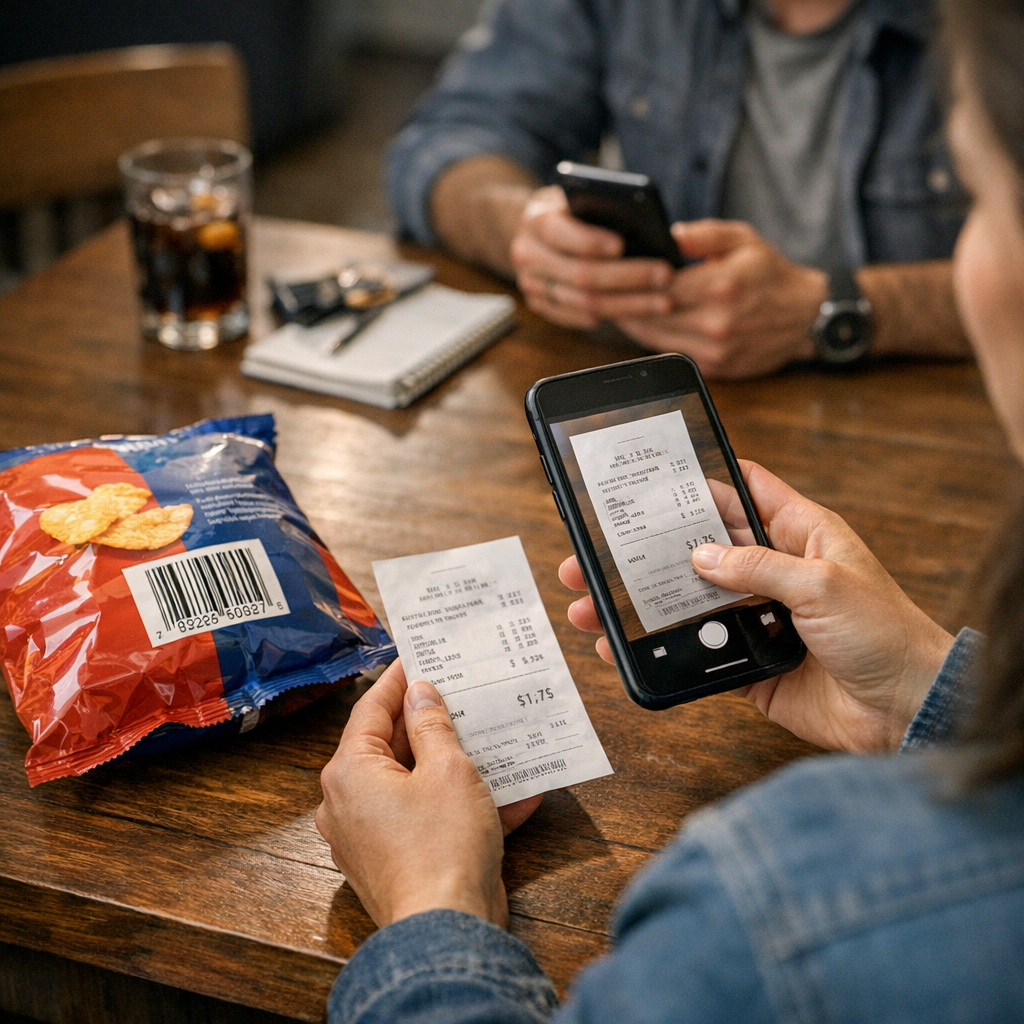
Text-to-win promotions look simple, and that is exactly where they often go wrong. The low-friction entry route that lifts response can also pull in weak claims, duplicate submissions and customer service rework. A mechanic designed to broaden reach can quietly reduce promotion participation quality if purchase evidence is treated as an afterthought.
The better answer is not to pile on friction for everyone. It is to design proportionate proof of purchase verification from the start, so the campaign keeps moving while low-confidence claims are filtered before they become an operational mess. For teams running FMCG, retail and prize promotions this year, the decision is less about whether to verify and more about which evidence combination gives the cleanest result at the right speed.
Decision context
The market has shifted in an awkward but useful way. Consumers are comfortable with quick mobile entry, yet promotions teams face higher scrutiny on whether each claim was genuine, fairly processed and auditable. That tension matters because a text keyword alone proves intent, not purchase. If the offer has any meaningful value attached to it, that gap becomes expensive.
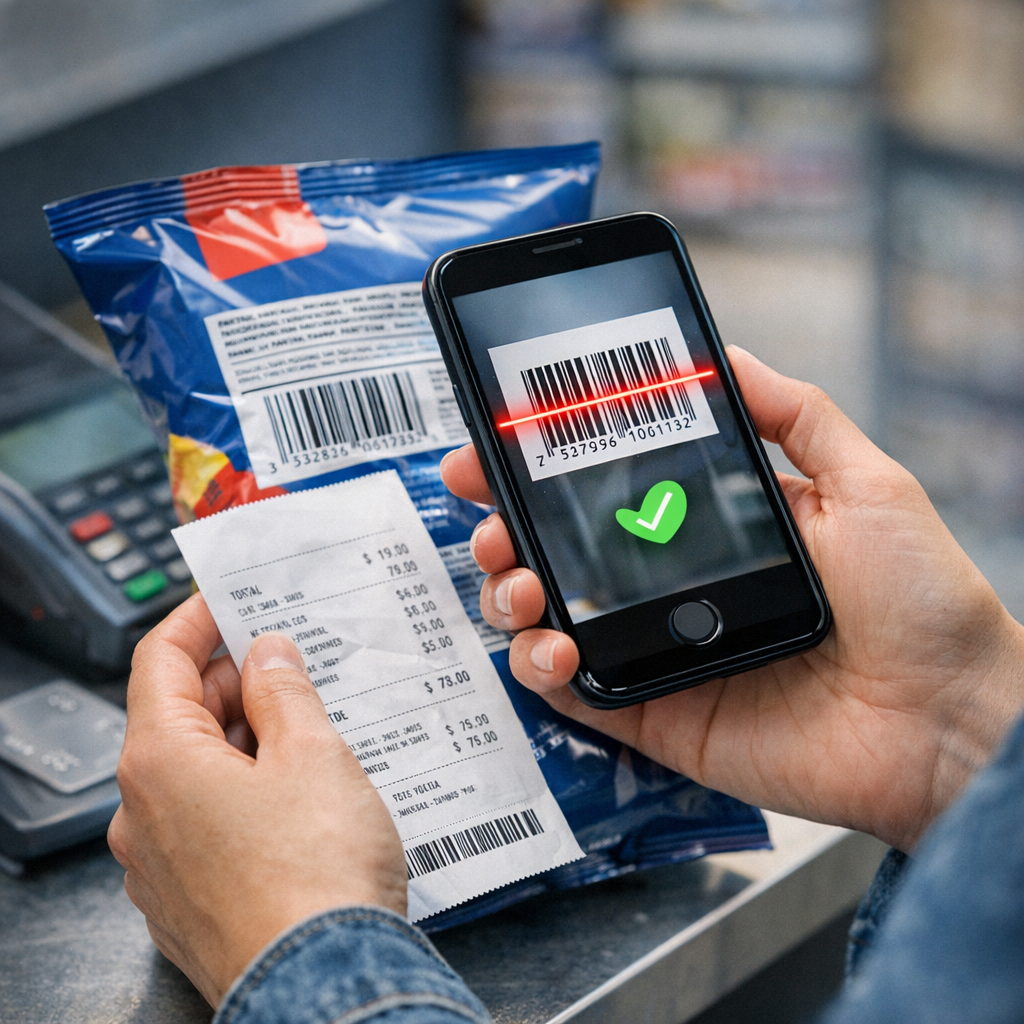
As it stands, most teams are choosing between three broad models. First, pure text-to-win, which maximises ease but gives very little confidence. Second, text plus receipt upload, which raises confidence but can increase drop-off if badly sequenced. Third, text plus a structured evidence workflow combining receipt, pack and product signals, often including barcode checks. That third route is usually the most resilient because it matches the claim to a real retail event, rather than asking operations to infer authenticity after the fact.
There is a contradiction worth stating plainly. Simpler entry mechanics often produce more entries, yet not always more usable entries. Growth claims without baseline evidence should be parked until the data catches up. If volume rises while disputed claims, duplicate patterns or manual reviews rise faster, the campaign has grown noise, not quality.
Options and trade-offs
Requiring proof of purchase does not just block weak participation. It changes the economics of review. Instead of forcing a customer support team to judge free-text messages and goodwill explanations, it gives the workflow a document with time, retailer and basket signals that can be checked consistently. Add product and barcode evidence and the quality of that decision improves again.
Testing lighter routes often shows acquisition numbers moving faster initially. But operational passes reveal thickened review queues, multiplied edge cases, and a lack of proof for disputed entries. Evidence typically favours more structured paths once the numbers land.
The choice for your next campaign sits on a trade-off map. Option one: keep text entry largely open and review suspect claims later. Tempting when deadlines are tight, but costs arrive in manual adjudication and complaint handling. A strategy that cannot survive contact with operations is not strategy, it is branding copy. Option two: require receipt proof for every entrant. Improves consistency, but can cause drop-off if the upload is clumsy. Option three: use POPSCAN to combine text-to-win with structured evidence checks based on receipt, barcode and product logic. This keeps the public mechanic familiar while moving complexity into the workflow. To be fair, it needs calibration for retailer formats or pack changes.
| Entry model | Consumer friction | Confidence in genuine purchase | Operational load | Best fit |
|---|---|---|---|---|
| Text only | Low | Low | High after entry | Very low-risk promotions with limited value |
| Text plus receipt | Moderate | Moderate to high | Lower than text only if rules are clear | Retail-led campaigns where receipt detail is reliable |
| Text plus receipt, product and barcode checks | Moderate | High | Lowest where automation is well designed | Higher-volume or higher-risk campaigns needing auditability |
A useful tangent here: some teams worry that any receipt step will suppress participation too sharply. Sometimes it does. More often, the issue is sequencing. Plans can look strong on paper, but dependencies often shift. Re-ordering the sequence can regain momentum when participation drops.
Risk and mitigation
The obvious risk is customer drop-off. The less obvious one is inconsistency. If one entrant is approved on a partial receipt and another is rejected for a similar issue, the campaign can look arbitrary. That is why campaign integrity design matters as much as the checking technology itself. The rules need to be visible in the consumer journey and repeatable in the operations queue.
A second friction point is fabricated or manipulated evidence. With cheap generative tools becoming more accessible, promotions teams should assume some rise in synthetic images or altered receipts, especially where prize values are high or claims can be made at scale. That does not mean every campaign needs forensic-level checks. It means the controls should be proportionate: timestamp logic, duplicate pattern checks, valid product set matching and retailer plausibility rules often catch a lot before a manual reviewer needs to step in.
There is also a more ordinary operational risk: receipt variability. Fast-growing retail estates, convenience channels and mixed-format tills can produce receipts that differ in layout, abbreviations and product naming. That is one reason single-signal verification tends to fail under pressure. Receipt-only logic can struggle when line items are inconsistent. Barcode-only logic can miss whether a purchase happened in-window. Product-only evidence can be shared too easily. Paired evidence is less elegant on a slide, but much tougher in the wild.
Recommended path
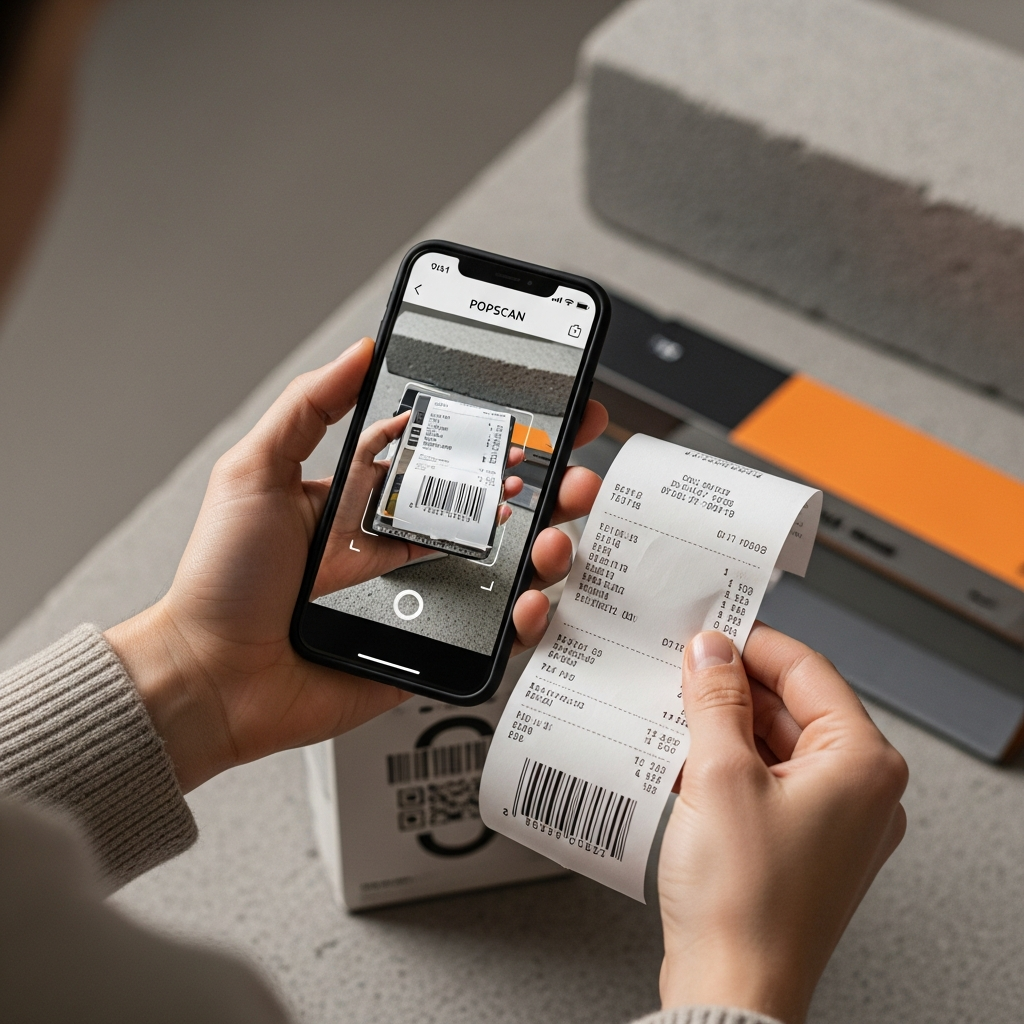
The recommended route is a staged text-to-win model with POPSCAN at the centre of the evidence workflow. Let the consumer begin with the simple behaviour they expect, a text entry, then move them quickly into a clear proof step that explains the requirement and shows the claim path without hidden stages. Use receipt, product and barcode evidence in combination, with decision rules mapped to the promotion’s actual risk profile.
Practically, that means four things. First, define the valid product set and barcode universe before media goes live. Second, decide which receipt fields matter most, usually retailer, timestamp and line-item relevance. Third, design duplicate and exception handling before the first weekend spike, because that is when the queue tells the truth. Fourth, keep the language plain. Consumers should understand why proof is requested and what happens next.
This approach gives an early commercial advantage in two directions. It improves claim quality now, reducing manual rework and dispute handling during the campaign window. It also leaves a stronger audit trail after the promotion closes, which matters if a retailer, legal team or compliance stakeholder asks how claim decisions were made. Worth a closer look, that second benefit often saves more organisational time than the visible front-end uplift.
If your current text-to-win mechanic measures success mainly by entry count, it is probably undercounting the real cost. The stronger strategic move is to measure usable participation, review effort and evidential confidence together. To map the right receipt, product and barcode controls with POPSCAN before your next launch, contact our strategy team for a walkthrough.
If this is on your roadmap, POPSCAN can help you run a controlled pilot, measure the outcome, and scale only when the evidence is clear.