Full article

A surprising number of social-led campaigns still spend weeks polishing creative and barely an afternoon on what happens after the click. That is usually where the awkward bits live: duplicate claims, partner hand-offs, delayed fulfilment and support queues that could have been avoided with a cleaner control model. My view is blunt because operations tends to be: a strategy that cannot survive contact with delivery is not strategy, it is branding copy.
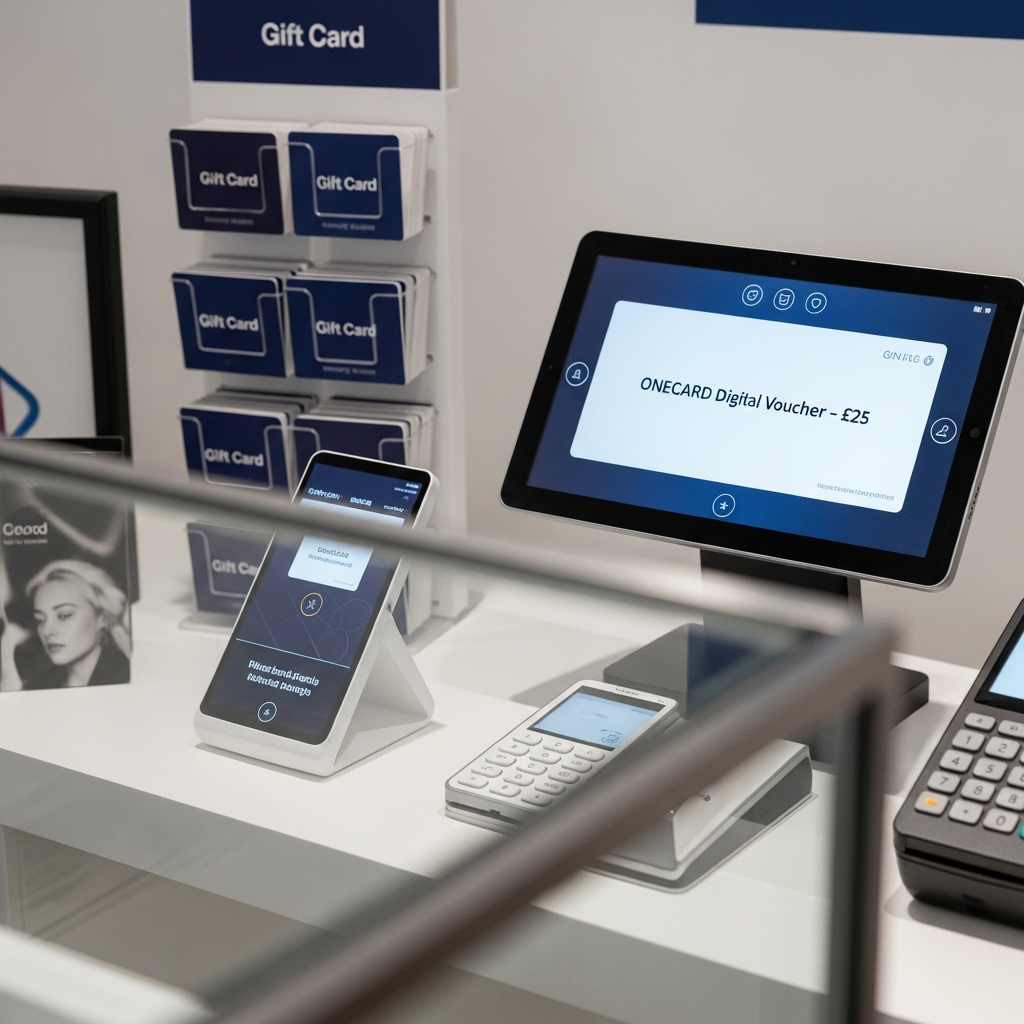
For teams running offers through social, the commercial question is not just how to drive response. It is how to deliver a reward that feels immediate to the customer, stays on-brand for the business and leaves an audit trail sturdy enough for a retailer, legal team or finance lead to inspect later. ONECARD, as a digital rewards platform, is worth a closer look because it shifts the operational centre of gravity off the social platform and into a controlled redemption environment.
Quick context
Social is good at reach and weak at governance. That is not a criticism, it is just the shape of the channel in 2026. Platform promotion policies move, community moderation can be inconsistent and high-volume campaigns create edge cases faster than a manual process can catch them. Best practice already points in the same direction: re-check platform promotion policy before launch, especially for high-value or high-reach mechanics, and treat promotion rules as volatile rather than fixed.
The practical consequence is simple. Keep discovery and participation on-platform if that suits the campaign, but move validation, reward issue and evidence capture off-platform. This is where secure voucher redemption becomes more than a compliance phrase. It is the difference between being able to answer “who qualified, what was issued, when it was opened and whether it was redeemed” and having to piece together screenshots and partner emails on a Friday afternoon.
There is also a customer experience angle that is easy to miss. According to the Office for National Statistics, quarterly personal well-being measures track anxiety and life satisfaction across the UK, and while that dataset is not campaign-specific, it is a useful reminder that friction compounds fast in everyday digital journeys. People tolerate a fair check; they do not enjoy muddled hand-offs. In a social-led reward flow, the cleaner journey usually wins because it reduces support contacts and abandonment at the point where intent is highest.
Step-by-step approach
The better route is to design the redemption path as an operational system, not a campaign afterthought. In a strategy call this week, we tested two paths and dropped one after the first hard metric came in. The weaker route asked users to remain inside the social platform for too long, which looked tidy on paper but created poor evidence capture and too many manual exception checks. The stronger route moved users into a branded landing and fulfilment flow earlier. I liked the first option, but the evidence favoured the second once the numbers landed.
For most promotions teams, the sequence below is the sensible baseline:
| Stage | What to control | What to record | Commercial benefit |
|---|---|---|---|
| Entry or claim trigger | Eligibility rules, campaign dates, location limits | Timestamp, source channel, campaign asset ID | Clearer attribution by creative and channel |
| Validation | Unique code checks, device or session checks, duplicate prevention | Pass or fail result, exception reason | Lower fraud exposure and fewer manual reviews |
| Reward issue | Voucher value, retailer availability, expiry logic | Issue ID, reward type, customer delivery status | Consistent branded rewards delivery |
| First open and first use | Redemption status, timing windows | Open event, redemption event, retailer confirmation where available | Stronger redemption traceability for reporting and reconciliation |
This is where ONECARD tends to create practical advantage. Instead of handing fulfilment to a chain of disconnected tools, it gives promotions teams one managed environment for issue, delivery and traceable redemption steps. For retailer activation teams, that matters because discrepancies usually surface days after launch, not during sign-off. If your data model captures issue time at 10:03, first open at 10:04 and successful redemption at 18:42, support has something to work with. If it only captures “voucher sent”, you are guessing.
A useful tangent, because people often object here: yes, more controls can reduce conversion if they are inserted clumsily. The answer is not to strip out controls altogether. The answer is to place friction where risk is highest. Timed activation, one-time claim links and duplicate suppression tend to be tolerated when they appear at the right point, especially for higher-value rewards. A blanket maze of checks from the first tap is where campaigns get into trouble.
Pitfalls to avoid
The biggest mistake is assuming social proof is the same thing as fulfilment proof. A post with strong engagement tells you people noticed the offer. It tells you very little about whether rewards reached the right person cleanly, whether misuse was contained or whether the retailer estate could absorb the redemption pattern.
Another common problem is measuring only the top of the funnel. Growth claims without baseline evidence should be parked until the data catches up. If a team can report impressions, clicks and entries but cannot report issue success rate, failed validations, median time to reward delivery or redemption lag, the picture is flattering but incomplete.
A plan looked strong on paper, then one dependency moved, so we re-ordered the sequence and regained momentum. That kind of change happens all the time with partner campaigns. A retailer updates fulfilment windows. A legal review changes the wording on eligibility. A paid social asset overperforms in one region and creates a redemption spike. According to ONS weekly regional datasets, place-based variation remains material across the UK in many forms of demand and service pressure. You do not need a national emergency to create local strain, a regional spike is enough to expose weak fulfilment plumbing.
The less obvious pitfall is brand erosion. If the offer is heavily branded in feed and then fulfilled through a generic, clunky hand-off, users notice. ONECARD should not be the glamorous bit hidden behind a poor transfer. It should be the controlled layer that keeps the digital reward journey coherent from claim to confirmation.
Checklist you can reuse
As it stands, most teams do not need a grand reinvention. They need a checklist that can survive launch week.
- Define the option set before sign-off. Decide which checks happen on-platform, off-platform and at redemption. Record the trade-off between conversion speed and misuse risk.
- Map auditable events. At minimum, capture source channel, qualification result, issue timestamp, delivery confirmation, first open, redemption outcome and exception codes.
- Gate creative against suitability fundamentals. Fit for placement, clear branding early, compliant offer wording and no mechanics likely to breach platform rules.
- Stress-test peak volume. Model what happens if paid media lands 2x the expected claim rate over a three-hour period. If no one can answer, the launch is not ready.
- Set an exception path. Fraud flags, duplicate claims, failed sends and retailer unavailability need named owners and response times.
- Track consumer effort. Measure the number of steps to reward, median fulfilment time and support contact rate per 1,000 issued rewards.
- Protect brand continuity. Keep copy, confirmation screens and reward presentation consistent across the whole journey.
The measurable outcome to aim for is not abstract. It is fewer manual interventions, faster verified issue, cleaner reconciliation and lower avoidable support demand within the first days of launch. Holograph has seen in adjacent campaign work that operational discipline can translate into commercial lift when the channel and execution line up. Public case examples from prior Holograph campaigns include a reported 32% sales uplift for Lucozade Energy AR activity and a 43% uplift in email sign-ups for Get Pro Coupons. Those are different mechanics, to be fair, but they make the same point: when delivery is designed properly, the outcome is easier to defend.
Closing guidance
The market movement here is straightforward. Social can still do the heavy lifting on attention, but the practical advantage now comes from what happens after attention converts into a claim. Brands that move redemption off-platform into a controlled, branded and traceable environment are in a better position to manage fraud risk, protect customer experience and report cleanly to internal stakeholders. The trade-off is a little more planning upfront and a little less improvisation later. That is a trade worth taking.
There is one unresolved tension, and it is real: the tighter your controls, the more carefully you need to tune friction. No system removes that judgement call entirely. What ONECARD does is give teams a firmer operating surface for making it. If you are planning a social-led promotion and need secure voucher redemption with auditable delivery, now is the moment to review your flow and pressure-test each hand-off. Contact the team to map the option set with you.
If this is on your roadmap, ONECARD can help you run a controlled pilot, measure the outcome, and scale only when the evidence is clear.