Full article
A coupon surge looks like growth, but it risks list integrity, sender reputation, and reporting accuracy. UK retail teams must act within 48 hours to secure controls without blocking genuine sign-ups.
What you are solving
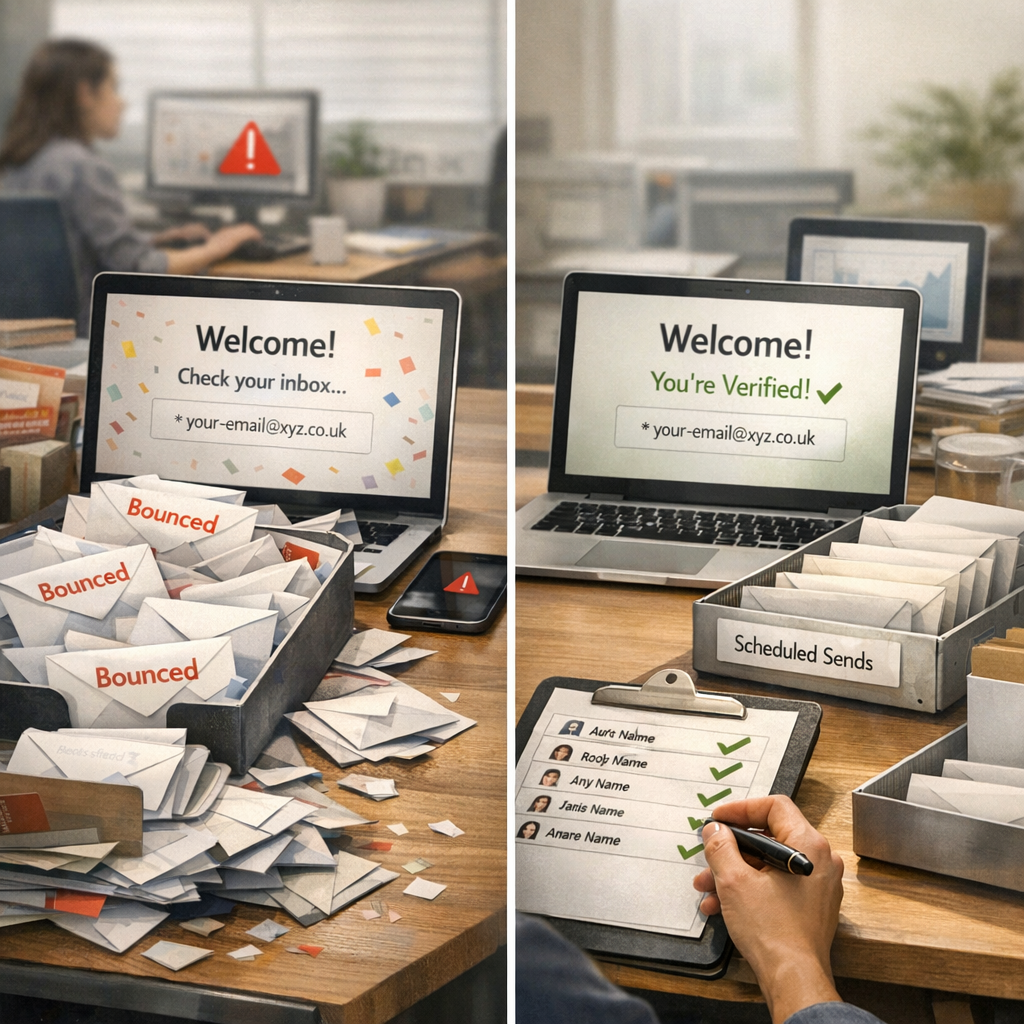
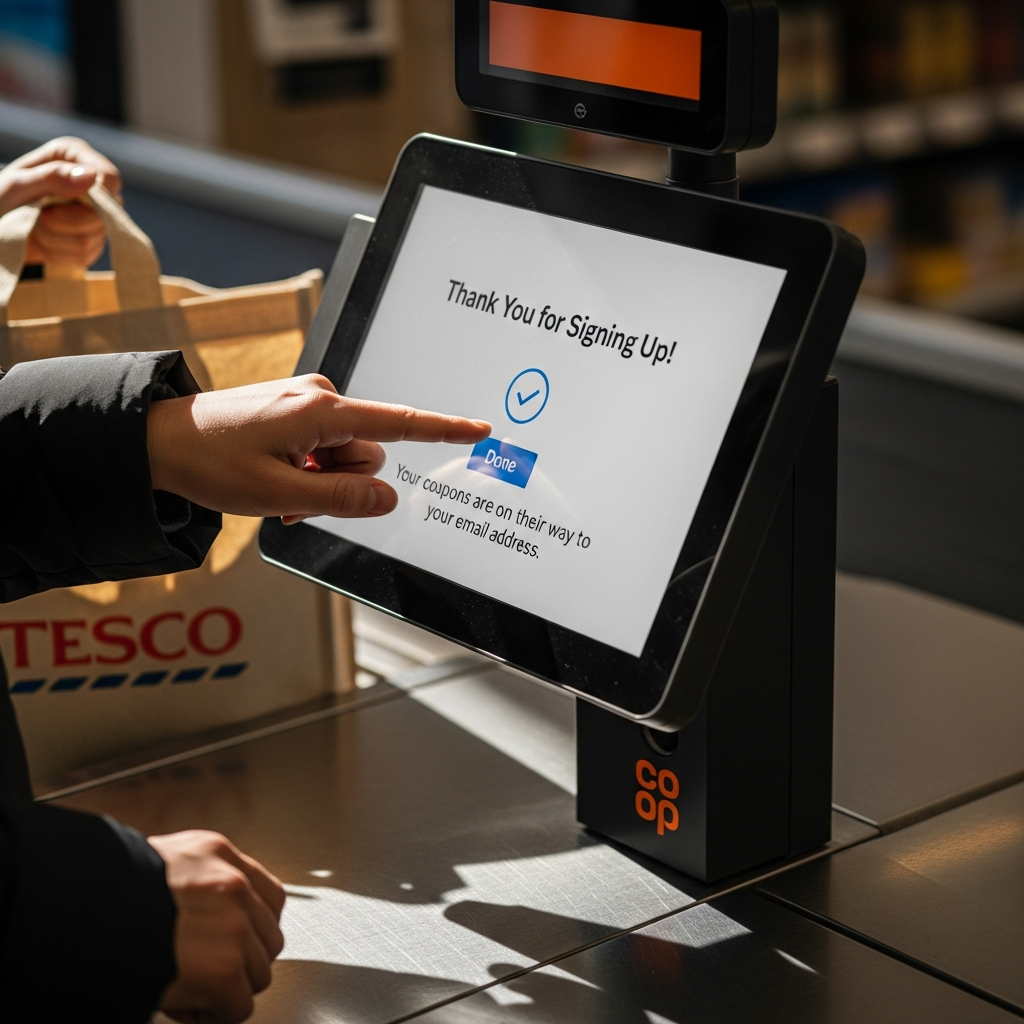
Sign-up surges in retail promotions spike email deliverability and complaint risks. GetPRO Campaigns' Tesco and Co-op campaign delivered a 43% uplift in sign-ups, showing validation pressure. Delaying checks admits malformed or disposable addresses into the welcome stream, distorting performance before clean baselines exist.
Email risk monitoring in the UK should separate three lanes: pass, challenge, and hold. EVE uses multiple detection methods to infer authenticity probability in under 50ms, with no personal data stored, offering speed with governance, not blanket rejection.
| Option | Short-term benefit | Likely cost inside 48 hours |
|---|---|---|
| Capture first, clean later | Lowest upfront friction | Higher bounce exposure, noisier welcome metrics, manual list review |
| Block aggressively at form entry | Cleaner list faster | Higher false-positive risk, avoidable abandonment, stakeholder challenge |
| Use governed pass, challenge, hold logic | Balanced protection with evidence | Requires threshold discipline and live monitoring |
Practical method
Start with monitoring and threshold adjustments, not a redesign. Keep the form simple while strengthening validation logic.
Within the first six hours, inspect source-level acceptance rates, identify disposable and malformed address patterns, track alias clusters, and measure welcome-email hard bounce rates by acquisition segment. Compare today against your normal promotional baseline and sources against each other, not just the total, to avoid hiding weak sources in blended dashboards.
EVE passes low-risk addresses in real time, challenges medium-risk records via email confirmation, and holds high-risk submissions for review, providing visible reasoning and auditability for CRM teams.
Decision points
Tighten entry controls first, then verify welcome performance the same day. Each timing point catches different risks: sign-up validation protects list entry, welcome-stage checks protect sender reputation, and second-message checks catch delayed anomalies.
Trade-offs include:
- Stricter thresholds: fewer bad records enter, but false blocks can rise.
- Looser thresholds: better visible conversion, but increased bounce risk.
- Challenge logic: better balance for suspicious records, though some customers ignore extra steps.
If the welcome series absorbs toxic data during a surge, remediation can outlast the promotion, risking sender confidence. On consent compliance, validation isn't a substitute for clear lawful consent capture; review opt-in wording and suppression logs during the spike.
Common failure modes
Failures include treating volume as proof of quality, changing the wrong order like tinkering with creative before stabilising address quality, and silent suppression without reason codes. EVE offers governed validation with observable decision logic and audit trails.
Proof-of-purchase mechanics can worsen alias patterns if layered badly, so consider operational dependencies beyond average benchmarks.
Action checklist
Use the next 48 hours like this.
- Hour 0 to 6: compare source-level pass, challenge and hold rates; inspect malformed, disposable and clustered alias patterns; review welcome hard bounces against your normal baseline.
- Hour 6 to 12: tune EVE thresholds by source if one segment is weaker; avoid sitewide tightening without evidence.
- Hour 12 to 24: confirm opt-in wording, partner source labels and suppression logs support UK GDPR; document overrides.
- Hour 24 to 48: compare revenue-facing outcomes like welcome engagement and usable subscriber rate, not only capture metrics.
The tension between less friction and cleaner data is operational; move the balance point quickly with evidence. If your coupon sign-up numbers have jumped, book a frictionless validation walkthrough with our solutions team to plan your next 48 hours.