Full article

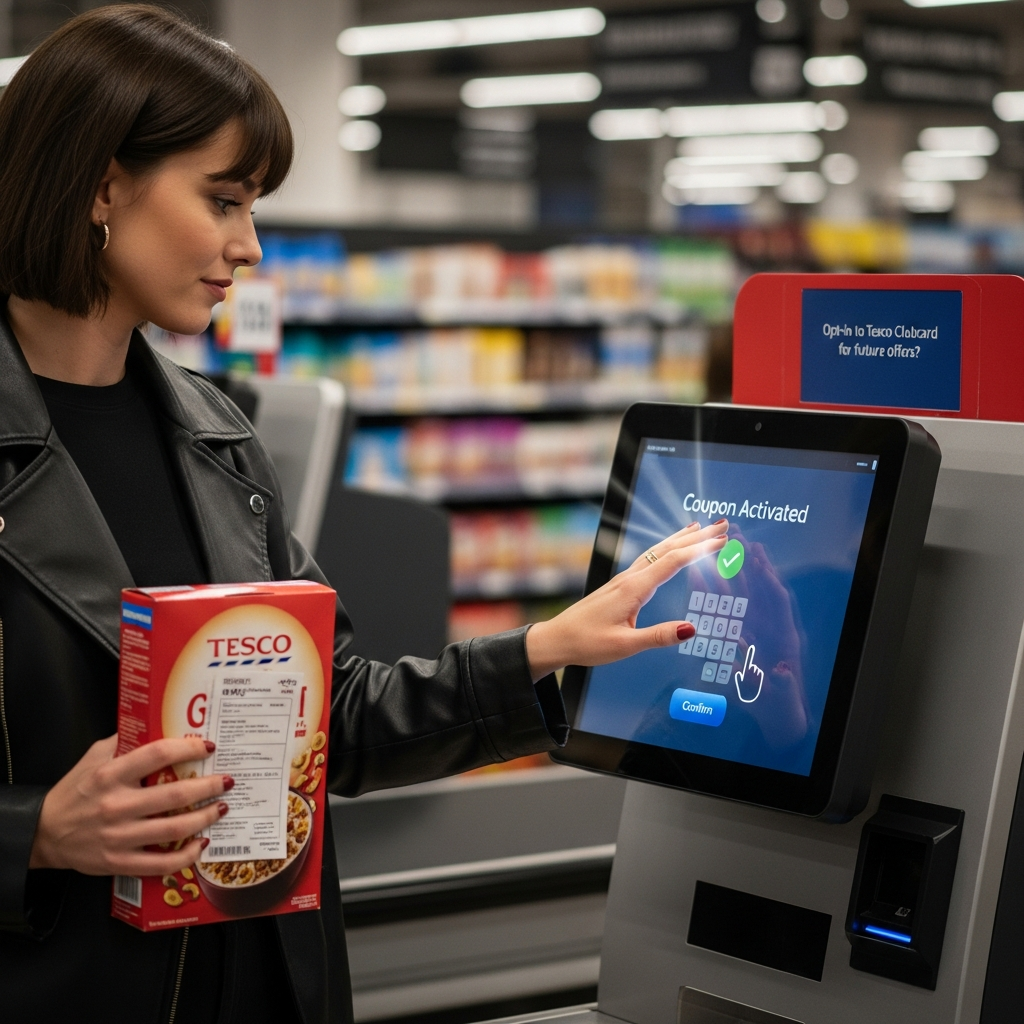
Proof-of-purchase sign-ups drive growth yet pollute CRM with toxic data, strain email deliverability, and increase compliance load. The contradiction: a winning promotion can undermine the welcome journey it's meant to fuel.
The decision isn't about tougher validation everywhere. It's where EVE should pass, challenge, or hold, and at which checkpoint risk can be absorbed without slowing legitimate subscribers. For UK teams using proof-of-purchase capture, advantage comes from grading decisions by risk, not treating every sign-up as clean or fraudulent.
Decision context
Proof-of-purchase forms attract genuine buyers but also duplicates, aliases, mistypes and automated attempts that contaminate CRM fast. Brands chase top-of-funnel conversions, but CRM teams inherit bounce risk, poor sender signals and tougher list hygiene.
This is where email risk monitoring in the UK proves its value. EVE scores sign-ups in real time, using over 30 detection methods like keyboard walks, entropy analysis, alias unmasking and behavioural fingerprinting, with response under 50ms and intelligent caching. Proof-of-purchase journeys leave no room for lag; slow checks get bypassed, blunt checks lose good subscribers.
A hard reject policy can reduce form contamination but increase false positives if the audience is broad, mobile-heavy or promotion-led. The decision must map risk by moment.
Options and trade-offs
| Option | Best use | Main upside | Main constraint |
|---|---|---|---|
| Pass | Low-risk, syntactically sound, behaviourally credible sign-ups | Keeps acquisition friction low and welcome timing intact | Some low-grade bad data still gets through |
| Challenge | Alias-heavy, typo-prone or pattern-ambiguous entries | Recovers genuine users without silent loss | Adds one step, which can trim completion |
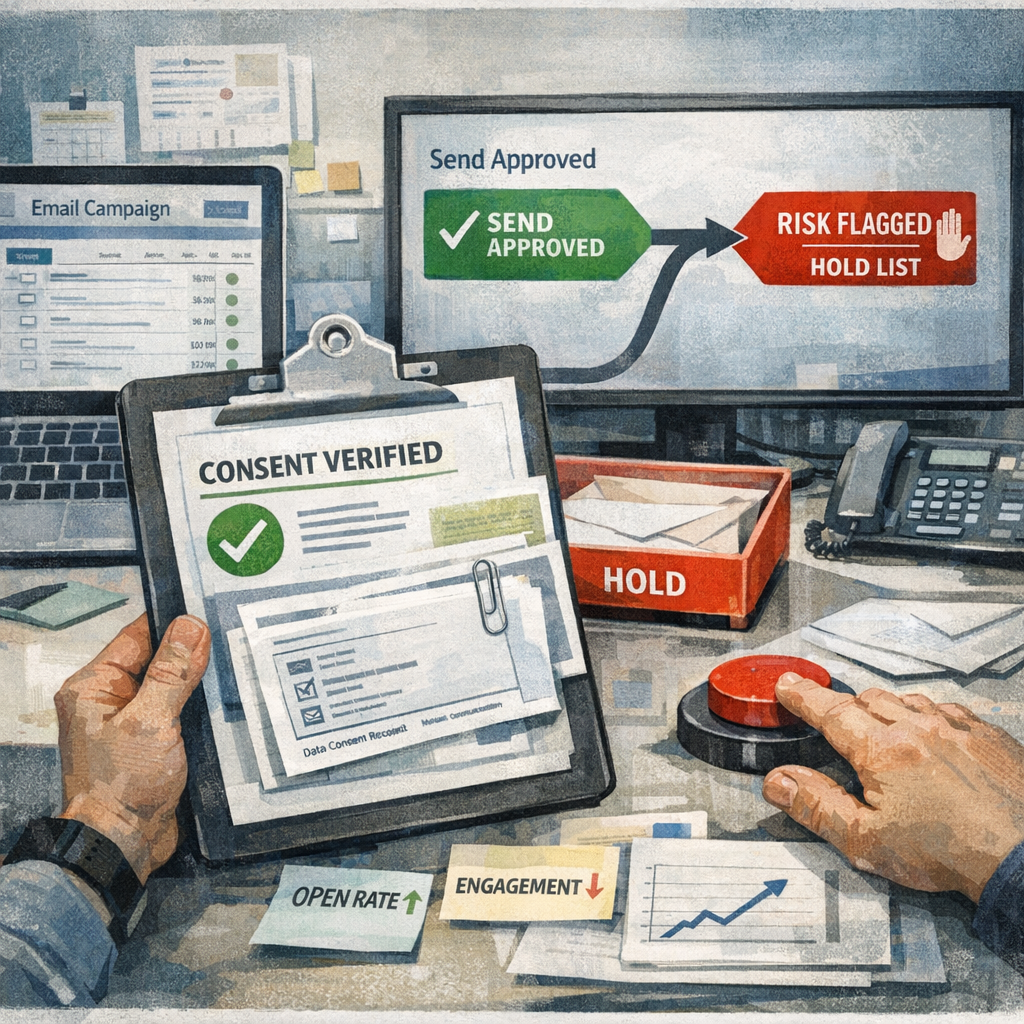
| Hold | High-probability abuse, automation or repeat manipulation | Protects sender reputation and downstream journey quality | Needs clear override rules and operational ownership |
Pass suits low-risk sign-ups where delay costs more than data risk, like time-limited incentives. Challenge recovers genuine users without silent loss. Hold protects sender reputation but needs clear override rules to prevent queue bloat.
Recent guidance pulls in different directions: validate early at sign-up to protect onboarding quality, but keep room to tune within 24 to 48 hours after a retail or coupon spike. These are not opposing positions but different operating moments. Baseline control belongs at sign-up; emergency tightening belongs in the next 24 to 48 hours when mailbox-quality drift appears.
EVE should pass when records are syntactically valid, low-risk on behavioural patterning, with no evidence of alias abuse or automation. Challenge when signals conflict, like a plausible domain with suspicious repetition. Hold when multiple indicators stack up, especially repeat attempts, disposable patterns or manipulated aliases.
Risk and mitigation
The biggest risk is false positives. Blocking legitimate buyers in a promotion flow loses trust and addresses. Weak controls let toxic data into onboarding, lifting bounce exposure and distorting performance.
Mitigate with governed flexibility. EVE exposes reasoning, enforces threshold discipline, and supports an override policy backed by compliance, CRM, and operations. Consent compliance under UK GDPR stays critical at any campaign pace. Keep audit logic for consent, suppressions, and overrides clear, especially during rapid scaling.
EVE supports this with no data retention, full compliance audits and probabilistic decisioning. No validation engine should promise certainty; it should reduce risk fast, explain grading, and preserve room for governed human judgement.
Operational tension remains: protecting sender quality aggressively requires monitoring recovery rates for challenged users. The answer is instrumentation, not ideology.
Recommended path
Implement a two-stage model. At sign-up, EVE screens entries in real time: low-risk passes, ambiguous challenges, high-risk holds. Before the first major send, review thresholds using signals from the past 24 to 48 hours.
Start with sign-up protection to stop contamination entry. Then tighten or relax based on observable performance like bounce movement, override rates and challenge recovery rates.
For teams under pressure, do not use hold as a substitute for analysis, or pass as a shortcut for speed. Use EVE to sort records by practical next move. That protects conversion where confidence is high, preserves recoverability where certainty is low, and keeps dubious traffic away from critical journeys.
If your proof-of-purchase flow drives volume but leaves doubts about data quality, test a graded model. Book a frictionless validation walkthrough with our solutions team to map where EVE should challenge, hold, or pass in your programme.