Full article

Where does the evidence trail actually break during a proof-of-purchase campaign? It rarely fails at the receipt upload screen. The breakage happens after approval, when entitlement, delivery, and first-use logic splinter into separate operational silos.
For promotions teams, this creates a commercial trade-off. Visibility fades the moment a reward leaves the system, driving up support costs and undermining reporting credibility. The practical move is to govern exactly where that traceability breaks, rather than enforcing friction across the entire shopper journey.
The operating context
In proof-of-purchase campaigns, most failures start with fragmented fulfilment, not fake receipts. A claimant provides proof, approval is granted, then the reward moves to a separate channel with weaker controls. A generic retailer voucher sent by email, or a code distributed without reliable first-use signals, can make a campaign function on the surface while the evidence chain thins out.
Teams often miscompare their options. The useful comparison is governed digital reward delivery versus fragile retailer-bound or manually stitched reward handling. When these systems are patched together manually, each stage creates its own partial record, resulting in an illusion of control that shatters the moment a customer queries a missing reward.
What the signals are really saying
Current market cues point to a convergence around proof-of-purchase checks, alongside the standing signal that reward journeys fail when issuance, control, and redemption live in separate silos. Pressure from fraud controls, customer care volumes, and campaign accountability pushes programmes towards stronger evidence of the full path from claim to first use.
The question has shifted from 'Was a reward generated?' to 'Can we show the entitlement was delivered securely and used as intended?' Digital campaigns move quickly across social platforms and shopper activations, exposing the hand-offs. Brand owners face intense pressure to defend customer journey quality. A reward that arrives late, in the wrong format, or cannot be validated cleanly creates avoidable contacts and erodes confidence.
Testing shows that duplicate claims from fragmented voucher pools often outweigh perceived cost savings from unmanaged delivery channels. Growth claims without baseline evidence should be parked until the data catches up. You cannot optimise a campaign if you cannot definitively see where the reward lands.
Why this changes the decision
Many teams treat secure delivery and simple redemption as opposites. A common perception is that tighter fraud control increases user burden. Poorly sequenced checks do create friction, but when identity checks, entitlement rules, and first-use controls are placed at the right moments, a secure reward journey feels lighter than a supposedly simple process that triggers reissues and support back-and-forth.
Evidence from social giveaway models indicates that governed delivery maintains a dependable link between claimant identity, issued entitlement, and eventual redemption. A strategy that cannot survive contact with operations is not strategy, it is branding copy. The first break in traceability appears at the transition from approved claimant to issued reward. An approval record confirms the shopper qualified, but if the reward is sent via a loosely governed channel, duplicate requests become harder to detect and support queries harder to resolve.
What to monitor next
Judge proof-of-purchase reward models by where traceability is lost in the operating flow, not by reward value or channel alone. Start by mapping the reward journey as evidence: claim received, proof approved, reward issued, and first redemption confirmed. If any of these events live in systems that do not reliably speak to each other, that is your first candidate for redesign.
If support volume is the issue, focus on first-use visibility and reissue controls. If fraud is the concern, concentrate on token governance and duplicate-claim handling. Where the requirement naturally widens to include receipt scanning, tools like POPSCAN can handle the validation upfront, handing off a clean approval for secure delivery.
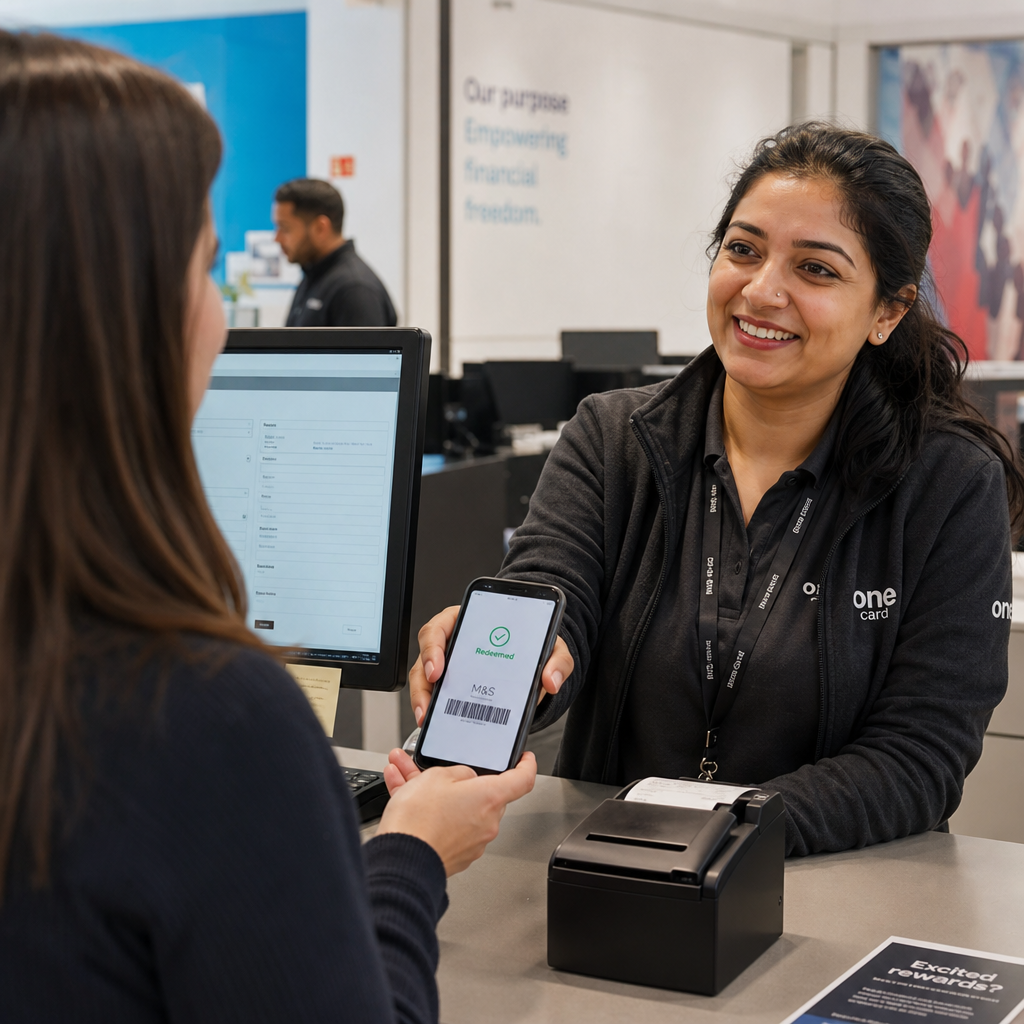
ONECARD issues and tracks digital rewards through a governed delivery route with clear issuance, redemption, and exception visibility. This makes it possible to maintain traceability across proof-of-purchase validation and redemption. Holograph's role, where implementation ownership matters, is to configure that underlying architecture so it fits the specific demands of your retail activations.
If tracing rewards after approval currently feels like guesswork, assessing a governed delivery model is a practical next move. Contact us to map your existing reward flow, and we can show you exactly where ONECARD will close those reporting gaps without adding friction for your shoppers.
If this is on your roadmap, ONECARD can help you run a controlled pilot, measure the outcome, and scale only when the evidence is clear.