Full article

Overview
Executive summary: Secure voucher delivery looks tidy in a campaign deck and rather less tidy in production. For UK promo teams, the real job is not sending a code; it is building digital voucher controls that keep fraud friction low for genuine customers while stopping leakage, duplicate claims and retailer-side disputes. Get that balance wrong and the spend moves from incentive to avoidable loss.
My short version is simple: most delivery failures are systems failures dressed up as customer service issues. A voucher arrives late, lands in spam, is redeemed twice, or cannot be honoured because retailer rules changed quietly in the background. None of that is glamorous. All of it is fixable with better policy, event logging and clearer operational ownership.
Context
Last Tuesday, in a London studio after a client call, one test voucher reached the inbox in 14 seconds and another vanished into junk for nearly an hour. The radiator was clicking, the tea had gone cold, and that was the useful reminder: delivery risk is rarely one thing. It is a chain. Message reputation, identity checks, code issuance, retailer acceptance rules and customer support all interact. If one link is vague, the campaign carries the cost.
That is why voucher security should be treated as an operating model, not a feature. The market signal is broad enough to support that view, even with caveats. Coverage published on 6 and 7 March 2026 by outlets including the New York Post on Sleep Week sales, Ad-Hoc-News.de on Sodexo vouchers in the US, and Wander With Jo on a viral airport-meal workaround all point in the same direction: digital offers and voucher behaviour are getting more visible, more frequent and more shared. These are not technical audits, and several full texts are unavailable in the lite feed, so they should not be stretched beyond the evidence. Still, they corroborate a practical truth: voucher volume is up, which means the attack surface is up as well.
For UK teams, retailer rules are not static. A merchant may accept a barcode in-app but reject a screenshot at till. Another may allow online redemption only, or tie acceptance to a narrow window controlled by store systems. Those retailer constraints are not edge cases. They are part of the product. If campaign terms promise one thing while the point-of-sale estate supports another, the customer blames the brand that sent the reward, not the middleware in the middle.
The trade-off is plain enough. Tighter controls reduce leakage but can increase support contacts and abandonment. Looser controls improve first-time redemption but make abuse cheaper. There is no magical setting that removes that tension, so best to stop pretending otherwise.
What is changing
Three shifts are making delivery controls more consequential in 2026. First, fulfilment is faster and more expected. If a customer completes a promotion at 10:03 and the reward has not shown up by 10:05, trust starts to wobble. Teams then compress review windows, and fraud checks become an afterthought. That is a mistake. Faster fulfilment works only when the issuance pipeline is instrumented well enough to spot anomalies in near real time.
Second, social platforms are normalising redemption workarounds. Wander With Jo published a piece on 6 March 2026 describing a viral TikTok method for free airport meals. Whatever one thinks of the tactic, the operational lesson is obvious: consumers now share loopholes at platform speed. A fragile voucher rule can go from isolated misuse to mainstream exploitation over a weekend. Attackers do not need to break your cryptography if they can exploit your process.
Third, general-purpose workflow tools are creeping into fulfilment operations. UMA Technology published an explainer on 6 March 2026 about claiming vouchers in ServiceNow. It is not proof of best practice, and it should not be mistaken for one. The useful signal is that voucher issuance and claims are increasingly being routed through broad enterprise systems by non-specialists. That can improve auditability. It can also introduce fresh failure modes if approvals, permissions and code release are bolted on in a hurry. Automation without measurable uplift is theatre, not strategy.
There is a subtler change as well. Teams now expect vendors to explain why a code was blocked, delayed or reissued. Good. If a platform cannot explain its decisions, it does not deserve your budget. In delivery-risk terms, explainability means event logs with timestamps, actor IDs, rule outcomes and retailer response codes that operations teams can read without launching a forensic expedition.
Where the real risks sit
The obvious risk is theft of codes in transit, but the nastier losses often come from weak identity and policy mismatches.
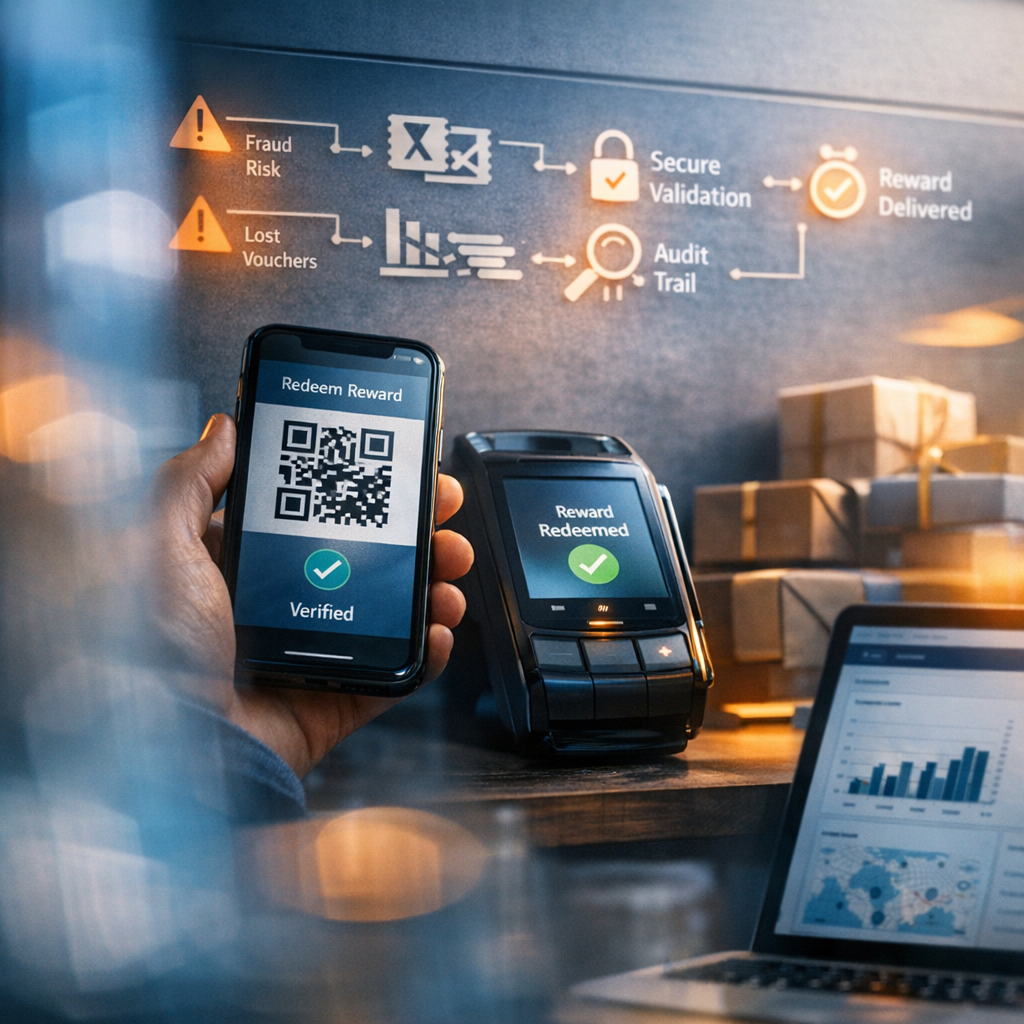
One recurring problem is pre-redemption exposure. If a voucher code is generated too early, stored in too many places, or displayed in plain text before the customer has proved control of the target channel, the attack surface balloons. A safer pattern is to issue a claim token first, hold the live code in a vault, then render it only after channel verification and policy checks pass. Yes, it adds a step. Yes, in product meetings it can feel like a bit of a faff. It also limits damage when inboxes are compromised or support threads are forwarded around carelessly.
Another issue is duplicate fulfilment caused by race conditions. Between 09:00 and 11:00 last month, I tested a claim flow that allowed two browser sessions to submit within the same second. One customer would call that a smooth experience. Two automated sessions would call it lunch. The fix was not exotic: idempotency keys on claim creation, a short reservation lock on inventory and a single source of truth for redemption state. Boring engineering wins again.
A third risk sits with redemption integrity at the retailer edge. Barcode accepted online but not in store. E-gift accepted only after cashier override. Screenshot accepted in one branch, rejected in another. The British Retail Consortium has consistently highlighted the operational strain of balancing modernisation, fraud prevention and convenience across retail estates. That means inconsistency can persist even within one brand. Promo teams need to treat retailer acceptance rules as variable operational data, not fixed copy in campaign terms.
Then there is support-led leakage. A customer says a code was not received. An agent, under pressure to clear the queue, reissues manually. If the original arrives later, both may work. This is less a people problem than a systems problem. The support console should expose delivery status, claim history, resend attempts and retailer redemption state before an agent can release a replacement. Do not ask a contact-centre team to compensate for absent architecture.
The trade-off across all of this is speed versus certainty. The sensible answer is not maximum certainty everywhere. It is graduated control based on reward value, abuse patterns and retailer tolerance.
Implications for UK teams running ONECARD
For UK teams running ONECARD or similar programmes, delivery risk controls should be written as policy first and code second. That sounds dry. It is also how you avoid expensive ambiguity. Start with the proposition: who can claim, through which channel, under what proof standard, with what retry rules, and what happens when retailer systems disagree with your own. If those answers are vague, engineering will fill the gaps with local decisions and support will inherit the mess.
There is a compliance angle too. The Information Commissioner’s Office is clear that organisations should minimise personal data and define retention periods. Voucher fulfilment often drifts the wrong way, storing email addresses, claim evidence, resend notes and codes together for too long because nobody cleaned up the schema. Better architecture separates identity data from code inventory, tokenises where practical and expires operational artefacts once the dispute window closes. Privacy-preserving design is not just tidy governance; it reduces blast radius when something goes wrong.
One practical implication is that email cannot be the only trust anchor. Email is useful, but it is not reliable proof of personhood on its own. For higher-value promotions, add a second verification event before rendering the live code: device binding, a signed account session check, or a one-time confirmation link with a short validity window. The trade-off is a little more friction for a measurable reduction in claims abuse.
Another implication concerns reporting. Board-level summaries tend to count vouchers issued and redeemed. Operations teams need different numbers: median delivery time, bounce rate by domain, resend rate, manual reissue rate, duplicate-claim attempts, retailer rejection codes and time-to-resolution for contested claims. If you cannot see those metrics weekly, you are steering by vibes. Fancy that, the fraudsters prefer it that way.
Actions worth shipping this quarter
If I were shaping one practical policy for a UK ONECARD programme this quarter, I would keep it plain enough to ship and strict enough to audit.
First, separate claim approval from code release. Create the claim record, run eligibility checks, verify the delivery channel, then release a live code just in time. That one architectural choice reduces exposure in logs, support tools and message archives. Pair it with a rule that masks all but the final four characters of any code in operational interfaces.
Second, enforce single-use state with idempotency at every step. A claimant should be able to retry safely; the system should not interpret retries as fresh entitlements. Use unique claim IDs, reservation windows on inventory and immutable event records. If a retailer confirms redemption, write that state back immediately and prevent local overrides except through a controlled exception path.
Third, design support tooling as a control surface, not merely a helpdesk view. Agents should be able to see whether a message was delivered, opened where that is tracked lawfully, clicked, redeemed, refunded or previously replaced. Manual reissue should require reason codes and, for higher-value rewards, a second pair of eyes. Yes, it adds a minute. It can save a lot more than a minute’s worth of campaign budget.
Fourth, maintain a live register of retailer acceptance rules. Include channel, store coverage, screenshot policy, expiry semantics, partial-spend behaviour and known till limitations. Review it monthly with named owners. If a retailer changes a rule on 4 March, campaign copy and support scripts should not still be wrong on 18 March.
Fifth, instrument the awkward bits. Alert on spikes in resend requests, clusters of claims from the same device fingerprint, redemption bursts within seconds of delivery and support-led replacement rates above baseline. Tune thresholds to reward value. A £5 coffee incentive does not need the same scrutiny as a £100 retail reward. That is the trade-off: analytical effort versus loss prevention. Calibrate it. Do not build a spaceship where a decent lock will do.
Closing note from the field
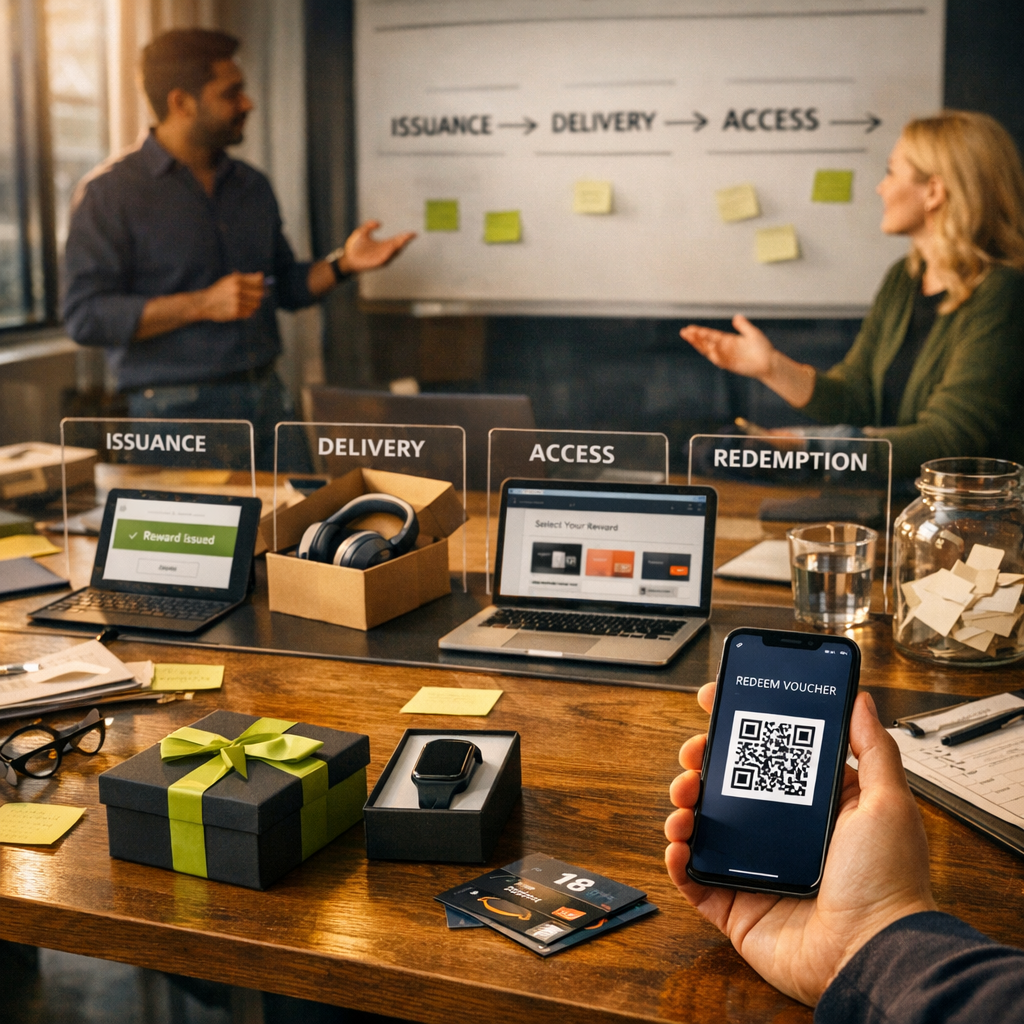
Secure digital fulfilment is not won by piling on gates until everyone is miserable. It is won by placing the right controls at the points where mistakes become losses: issuance, delivery, redemption and reissue. Keep the architecture explainable, keep the data minimised and keep retailer reality closer to hand than campaign fantasy. If your team wants to make this concrete, gather your promo lead, ops owner and support manager for one proper working session and model a single ONECARD redemption policy end to end. Test where friction belongs, what you can measure and what you can explain. That is usually where the useful work starts. Cheers.