Full article
Created by Marc Woodhead · Edited by Marc Woodhead · Reviewed by Marc Woodhead
How UK experiential marketing builds loyalty at live eventsMeed’s launch of meed.events looks, at first glance, like another festival-tech story. Look closer and it reads as something more useful: a practical test of how loyalty can move from points and post-purchase emails into the live moment itself. For teams tracking experiential marketing trends in the UK, that matters because attention at events is expensive, fleeting and surprisingly hard to measure unless the system is built properly from the start.
My read, founder to founder, is fairly simple. If a platform can connect discovery, participation and repeat engagement without turning the guest journey into a bit of a faff, it has a chance. If it cannot explain what changed, for whom, and by how much, it does not deserve your budget. Meed’s move is interesting because it appears aimed at that exact gap.
Context
Last Thursday, in Shoreditch, I was reviewing activation journeys over a cup of tea and one pattern kept showing up: brands still spend heavily to get people into a live environment, then leave with a few photos, a scanned email list and a hopeful LinkedIn post. Food festivals are a perfect example. They are rich in intent, full of sensory detail, and often thin on usable follow-through.
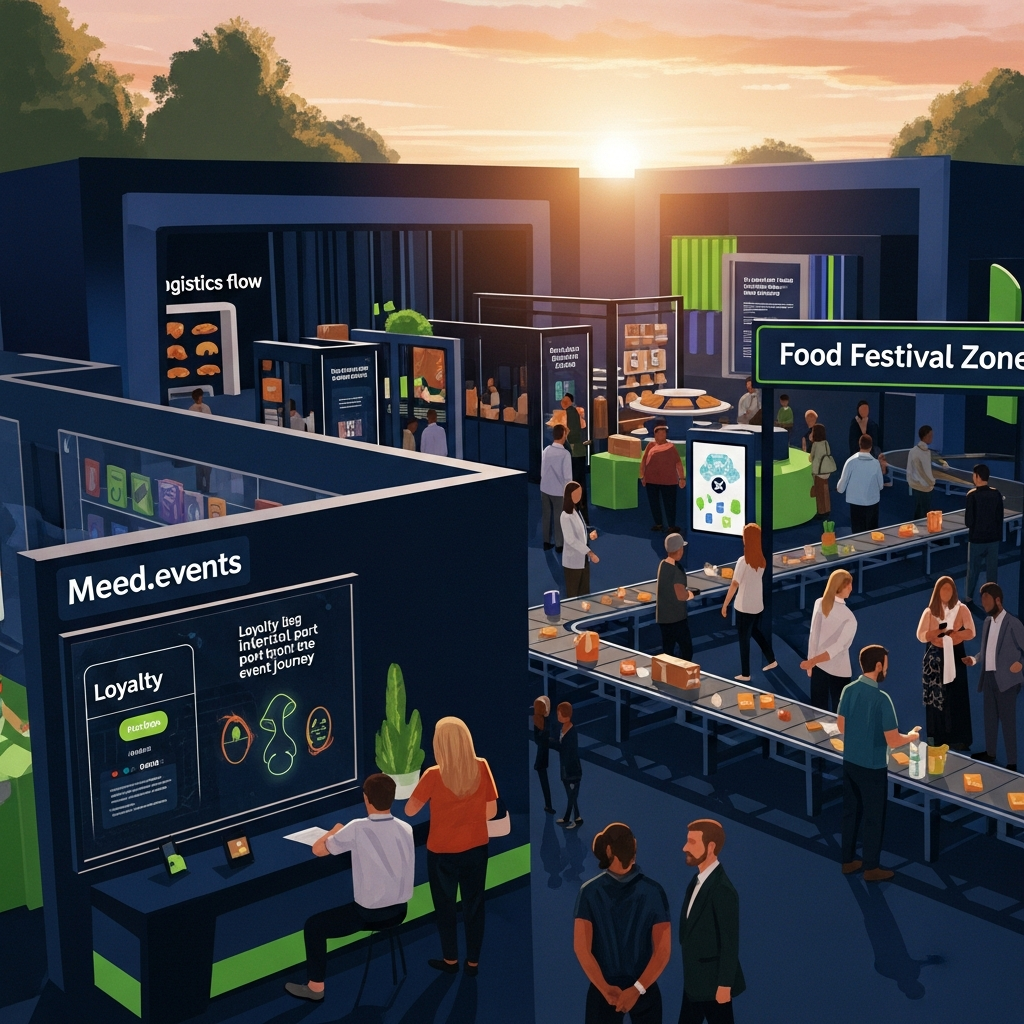
That is the commercial backdrop for meed.events. The proposition, based on the launch framing available, is that loyalty at food festivals can be structured as an ongoing relationship rather than a one-off queue, sample and discount cycle. That lines up with broader market signals. OPENPR reported on 7 March 2026 that the customised travel market is rising, with names such as Intrepid linked to more tailored experiences. Different sector, same expectation: people tend to reward relevance over blanket messaging. Yahoo Finance, citing SNS Insider on 6 March 2026, said the organic personal care market could reach USD 63.63 billion by 2035, again pointing to audiences choosing brands that align with preference and experience, not just price.
The caveat is worth stating plainly. Trade and syndicated market reports are useful directional signals, not gospel. Still, when hospitality, travel and consumer goods all point towards personalisation and experience-led value, it is sensible to pay attention.
What is changing
The notable shift is not simply that a loyalty layer exists at an event. Plenty have tried that. The change is where the loyalty logic sits in the system. With meed.events, the implied model is that the event itself becomes the environment where preference, participation and reward are captured together. That is far more useful than bolting on a prize draw after the fact.
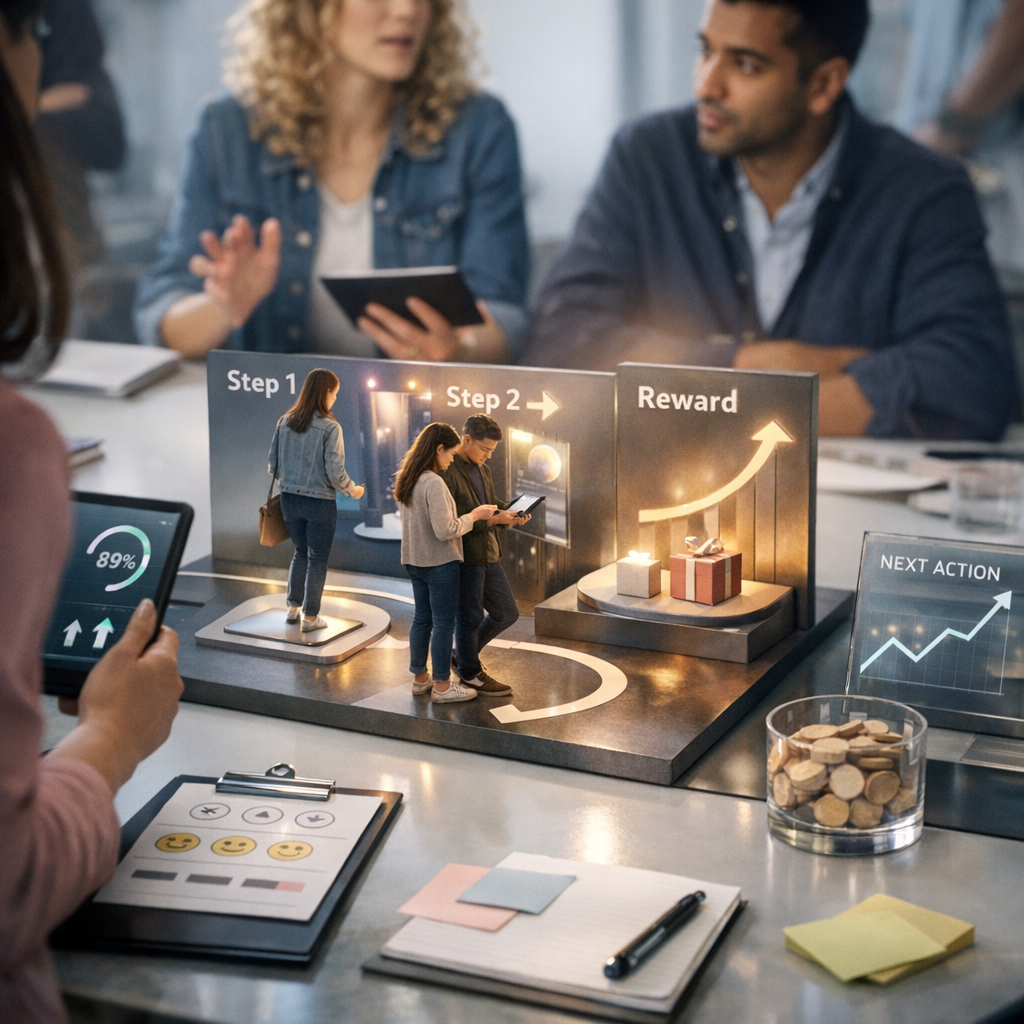
In practice, that means moving from campaign theatre to operational design. A guest might discover a stall, join a challenge, redeem an offer, vote for a favourite dish and receive a relevant follow-up, all within one connected flow. That sort of loyalty innovation can outlast the event day because it builds a first-party signal set instead of a bag of disconnected interactions.
There is a trade-off, though. The richer the experience, the heavier the delivery burden. Consent language, on-site connectivity, staff training, redemption rules and CRM integration all need to hold together. Between 10am and 1pm on a previous festival project, I tried a supposedly simple scan-to-win mechanic and watched it fail under patchy mobile signal. We fixed it with an offline-first capture flow and timed sync. Fancy that: the unglamorous bit did more for conversion than the animation ever did.
That is the practical lesson behind this launch. The live layer is becoming part of the product and data system, not just the shiny front end. If a platform cannot explain its decisions, it does not deserve your budget.
Why food festivals are a useful proving ground
Food festivals compress the full brand journey into a few hours. Audiences arrive curious, distracted, social and often open to trial. That makes them ideal for testing how live participation affects repeat behaviour. They also expose weak thinking very quickly. If registration takes too long, people walk. If rewards feel generic, they ignore them. If staff cannot explain the mechanic in ten seconds, the queue tells you everything.
There is another reason this category matters. Food is inherently multisensory, which gives brands a stronger base for memory formation than many other environments. We can see adjacent evidence in retail and product culture. TrendHunter’s 6 March 2026 coverage of Lush’s limited-edition bath bomb pointed to demand for mood-led, sensorial products. That is not hard science, and trade coverage should be treated with caution, but it does align with what activation teams regularly observe on the ground: tactile, playful and shareable experiences earn attention when they connect to a clear value exchange.
That is where meed.events could prove useful. Done well, it can turn a tasting trail or chef interaction into a measurable participation loop. Done badly, it becomes another wristband-and-QR-code exercise. The difference is whether the technology supports the moment or hijacks it.
Implications for brands and organisers
For organisers, the upside is better evidence of audience behaviour. Which zones drove repeat visits? Which offers actually changed movement across the site? Which partners generated the highest dwell time or redemption? Those are practical questions, not vanity ones. A festival that can answer them with confidence becomes easier to sponsor and easier to improve.
For brands, the bigger implication is that live activation is inching closer to product and CRM discipline. That is healthy. The best immersive retail journeys work because physical and digital are designed as one system, not because someone added a flashy screen at the last minute. Events are moving the same way. Sign Africa reported on 6 March 2026 that suppliers are showcasing new printer and holographic vinyl capabilities, while Business Newswire reported the same day on expanding uses for holographic motorcycle wraps. The surface-level takeaway is visual novelty. The more useful takeaway is that production tools are getting better at creating distinctive physical environments. Yet distinctive is not the same as effective. If the live environment captures no meaningful signal, the spend is still decorative.
I am sceptical of any platform promising frictionless transformation. There is always friction somewhere: procurement, data governance, partner APIs, staffing, compliance. The trick is to choose friction that earns its keep, preferably with a GDPR-safe architecture and a clear measurement plan.
Actions to consider
If you are assessing meed.events, or anything like it, start with the measurement model before you get charmed by the demo. Ask what first-party data is captured, where consent sits, how identity resolves after the event, and what uplift can realistically be attributed to the activation. Activation metrics depend on agreed KPIs, media investment and partner data access. That is not legalese; it is simply how honest delivery works.
Next, map the guest journey in plain English. Can a visitor understand the benefit in one sentence while holding food in one hand and a phone in the other? If not, simplify it. Then test the boring bits: poor connectivity, queue build-up, duplicate scans, staff handover and reward fulfilment. Automation without measurable uplift is theatre, not strategy.
Finally, treat the event as one node in a longer relationship. The strongest programmes I have seen use the live moment to improve segmentation, creative personalisation and future invitation strategy. They build, ship and test. A regional festival in May can tell you more about audience appetite than six weeks of internal opinion trading.
The wider lesson is bigger than one platform launch. Live experiences now need the discipline of product thinking and the warmth of good hospitality, both at once. If your team is weighing what this means for the next loyalty-led activation, book a chemistry session with the Holograph studio team. We will pressure-test the idea, the data model and the on-site reality before anyone spends money on shiny nonsense.