Full article
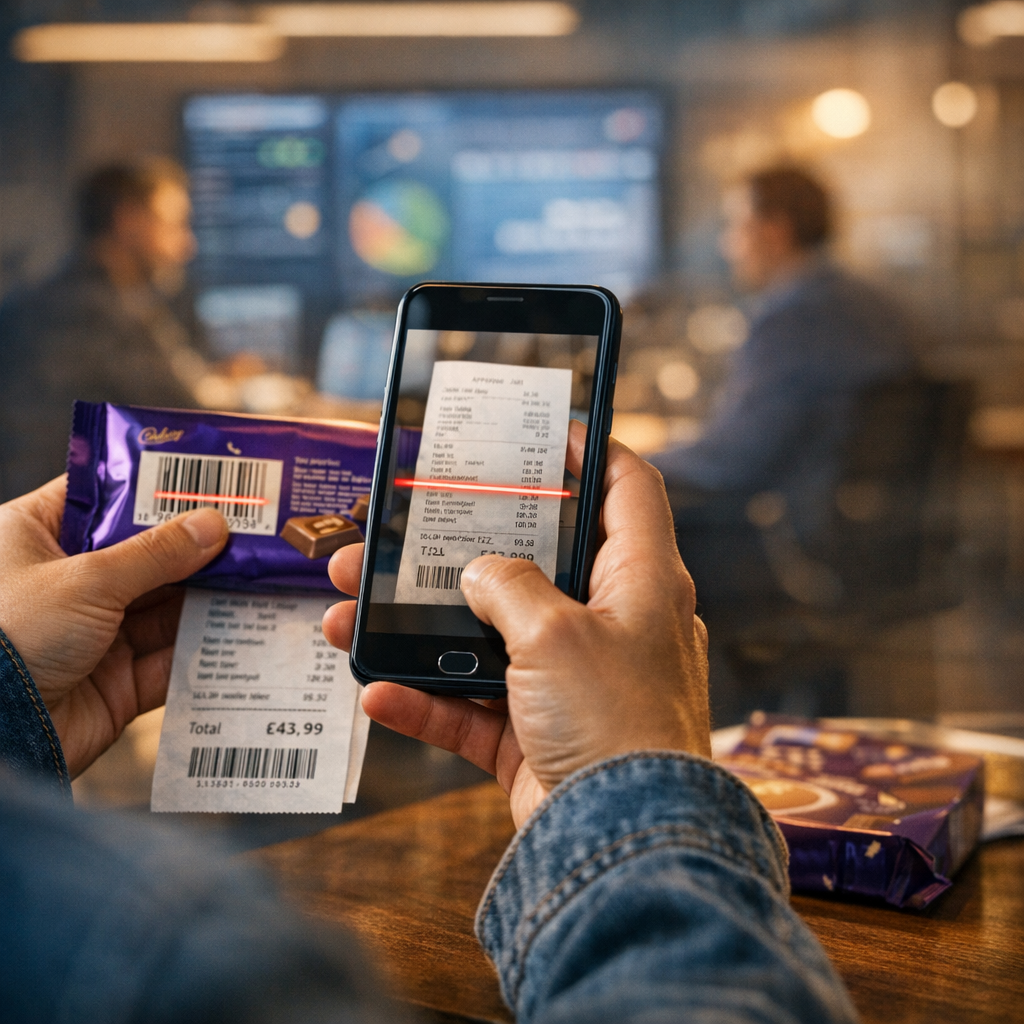
A surprising number of promotion losses do not come from sophisticated attacks. They come from ordinary operational gaps: blurry receipts approved in a rush, duplicate claims slipping through at peak volume, voucher fulfilment sitting on a separate workflow with no clean audit trail. My view is simple: a strategy that cannot survive contact with operations is not strategy, it is branding copy.
For UK promotions teams, the market movement is not towards heavier friction for consumers. It is towards better evidence, faster validation and cleaner controls that still feel fair. POPSCAN sits in that lane. The practical advantage is straightforward: if proof, validation and fulfilment are connected properly, brands can tighten promotion fraud prevention without turning every entry mechanic into a chore. As it stands, that is the trade-off worth a closer look.
Signal baseline
The baseline is operational, not theatrical. Most proof-of-purchase campaigns still ask a consumer to buy, capture evidence, submit it and wait for a claim decision. The weak point is rarely the headline mechanic. It is the handover between evidence collection, review rules and reward fulfilment. In a strategy call this week, we tested two paths and dropped one after the first hard metric came in. The manual-review-heavy route looked reassuring on paper, then approval time stretched and inconsistency crept in. The more structured route, with standardised checks and evidential logging, gave clearer outcomes faster.
This aligns with broader UK evidence. According to the Office for National Statistics quarterly personal well-being series, it tracks anxiety in the UK over time, a useful reminder that uncertainty in consumer journeys has a measurable human dimension. I would not overclaim the link, but the direction holds: people respond better when processes are understandable, consistent and fair. For brands, consumers are less forgiving when a valid receipt is rejected with no explanation. Trust in the route to claim affects both participation quality and support load.
What is shifting
The notable shift is that secure promotions are moving from isolated fraud rules to connected operating systems. The evidence object, often a receipt image, barcode or pack code, is not treated as a static upload. It becomes the centre of a chain: eligibility checks, duplication checks, exception handling, reward release and audit evidence. POPSCAN is well placed here because the POPSCAN and ONECARD logic can be framed as one operational sequence rather than two disconnected tools.
Another shift is timing. In 2026, brands are running promotions into more variable operating conditions. Sudden retail volume changes and campaign bursts driven by social distribution can push validation queues out of shape quickly. The national weather signal this week, with snow accumulation in Sunderland, Cumbria and a sharp cold snap on 15 March 2026, is a practical reminder that demand patterns change abruptly. A plan looked strong on paper, then one dependency moved, so we re-ordered the sequence and regained momentum. Promotions teams need the same habit: adapt thresholds and review capacity when external conditions move.
Teams often ask whether digital promotions have become so exposed that paper-era mechanics were safer. I do not buy that. Physical promotions had their own leakage, only it was harder to see. Digital operations make patterns visible: repeated device fingerprints, clusters of near-identical receipt images, and voucher claims that move too quickly to be ordinary consumer behaviour. Visibility is not the problem. The problem is what you do with it.
Who is affected
Brand activation teams are usually first to feel the pain because they own the campaign promise. If the entry mechanic says "buy, upload and claim" but the back office creates a three-day delay, the consumer does not blame a workflow diagram. They blame the promotion. In practical terms, that hits participation quality, support volume and repeat trust. One weak approval process can distort the headline numbers, making campaign reach look healthy while valid redemption confidence falls.
Fraud and operations teams see a different version of the same problem. Their concern is not merely blocking bad claims. It is doing so in a way that stands up to challenge. That requires evidential audit trails: what was submitted, what was checked, why a claim was approved or declined, and who intervened if a case was escalated.
Finance and commercial teams are affected too, even if they enter the conversation later. Poor controls distort accruals, inflate expected fulfilment costs and make voucher breakage hard to interpret. A redemption total by itself tells you very little. What matters is the composition underneath it: first-pass validation rate, duplicate submission rate, time to approve, suspicious clustering and breakage by source. Growth claims without baseline evidence should be parked until the data catches up.
Customer support agents often end up arbitrating edge cases created upstream. If receipt image checks are inconsistent, duplicate-account rules are blunt, or escalation thresholds are vague, support becomes the unofficial fraud desk. That is expensive, morale-draining and creates inconsistent outcomes, which consumers read as unfairness.
Actions and watchpoints
POPSCAN has a credible angle because it can frame proof of purchase, validation and reward control as one operating design. The advantage appears first in the handoffs. POPSCAN can anchor proof capture and validation logic. ONECARD can handle fulfilment controls so a valid claim turns into a released reward through a governed path, not a manual scramble. To be fair, the value does not come from software names. It comes from reducing ambiguity at each step.
The option set is fairly clear. One route is to keep entry friction very low and absorb more review effort later. That may work for small campaigns, but under volume it often drives backlogs and inconsistent decisions. The other route is to improve evidence quality at source, score submissions against defined suitability fundamentals, and gate publishing or fulfilment when confidence falls below the threshold. I liked the first option, but the evidence favoured the second once the numbers landed. The trade-off is accepting that no workflow eliminates all fraud, but over-reviewing valid entries is its own cost.
If I were defending the plan next week, I would start with four actions. First, map the claim path end to end, from purchase evidence to reward release, and identify where data changes hands. Secondly, define the evidence standards that matter most: image clarity, retailer detail, date visibility, product match, barcode or code validity, and duplication tolerance. Thirdly, agree escalation thresholds before launch, including who can override a decline and what proof is required. Fourthly, report on quality metrics, not just volume metrics, in the first seven days of the campaign.
The timing matters. Early campaign days are where rule flaws show up fastest. If duplicate submissions spike on day two, or approval time blows out after a social burst on day three, you need the option to adjust quickly. Waiting for a post-campaign review is how preventable leakage becomes accepted cost. Promotions operations should work with the same discipline.
There are a few watchpoints. If a campaign uses a prize draw, say so plainly and document the random selection method. If it is judged, publish the criteria and panel details, or at least the independent judging process. Keep the winner contact route explicit, such as direct message or email, and state the timeframe. Never ask winners to pay fees. Those points are as much about consumer confidence as compliance. Hidden mechanics breed complaints and scam imitation.
If your proof-of-purchase workflow relies too much on manual judgement, or if promotion fraud prevention is detached from fulfilment, now is a sensible time to tighten the sequence. contact Holograph to review your current mechanics, pressure-test the evidence trail and identify quick operational changes that improve trust, validation accuracy and commercial control.
If this is on your roadmap, Holograph can help you run a controlled pilot, measure the outcome, and scale only when the evidence is clear.