Full article
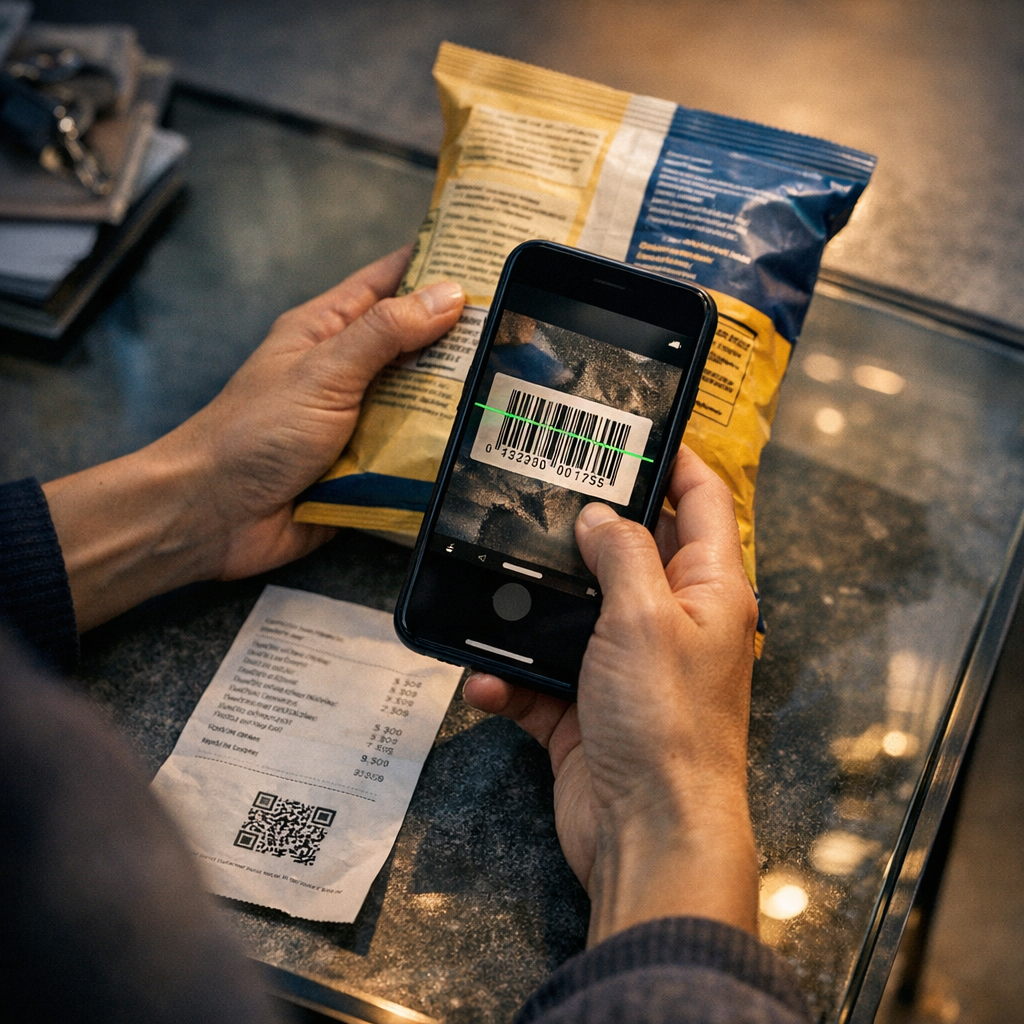
A surprising amount of promotion loss starts with something small: a blurry till receipt, a reused barcode, or a winner contact route nobody documented properly. That sounds operational, not strategic, until claims volume rises and the leakage starts to distort the campaign result. My view is blunt: a strategy that cannot survive contact with operations is not strategy, it is branding copy. For UK promotion teams, the market movement worth watching is this shift from headline reach to participation quality, because weak validation now carries a clear commercial cost.
This has changed how secure promotions are being built. In a strategy call this week, we tested two paths and dropped one after the first hard metric came in. The lighter-touch route looked friendlier on paper, but duplicate submission exposure was too obvious once the flow hit real-world conditions. I liked the first option, but the evidence favoured the second once the numbers landed. For brands running cashback, prize draws, or voucher-led campaigns, POPSCAN is addressing that reality through a proof of purchase workflow built around evidential checks, controlled claims, and auditable decision points, rather than vague trust.
Context
The backdrop in 2026 is not simply that fraud exists. It is that promotions now sit inside a more sceptical operating climate, where consumers expect easy entry, platforms change rules quickly, and internal teams are asked to show measurable quality instead of just redemption volume. According to the UK Code of Non-broadcast Advertising and Direct & Promotional Marketing, promotional mechanics must be administered fairly, clearly, and lawfully. CAP guidance has been consistently plain on this point: the mechanic, the route to claim, and the way winners are selected should be stated before or at entry. That matters because poor mechanics create both compliance risk and avoidable support work.
There is also a market signal outside promotions that is worth a closer look. According to the Office for National Statistics, quarterly personal well-being and local authority estimates continue to track anxiety and satisfaction as live public indicators. They are not promotions data, so they should be handled with care, but they do reinforce a wider truth: people have limited patience for confusing or opaque systems. Add the current cold snap, with Met Office-style local conditions showing East Sussex and Surrey near 2°C on 15 March 2026 and snow in parts of Cumbria, and the practical point becomes obvious. When people are busy, cold, and on mobile, your claim journey needs to be clear and forgiving without becoming porous.
That is where POPSCAN has a useful position. Rather than treating validation as a back-office afterthought, it frames secure promotions operations as part of campaign design. If a shopper uploads a receipt, enters a pack code, or claims a digital reward, the control layer is built into the experience. The benefit is not theatrical security. It is cleaner evidence, faster triage, and fewer arguments later.
What is changing
The biggest shift is from broad campaign visibility to verified participation. A few years ago, many teams were still willing to accept manual checks, inbox-based winner handling, and simple voucher issuance if the media plan looked strong enough. That looked efficient until duplication, impersonation, and disputed claims started absorbing margin. Platform volatility has made this worse. Meta, TikTok, and other channels change promotional expectations and moderation patterns often enough that any mechanic relying on informal social handling is high risk by default. Re-checking platform policy before launch is not legal fussiness; it is basic operations hygiene.
POPSCAN responds by tightening the points where fraud usually enters. In practice, that means structured receipt or barcode capture, rules for duplicate detection, timestamped validation steps, and cleaner separation between entry, verification, and fulfilment. The detail matters. If a promotion is a random draw, the process should say so plainly and preserve evidence of the random selection method. If it is judged, the judging criteria and panel independence need to be clear. Too many campaigns blur that distinction, which creates avoidable mistrust.
A useful tangent here, because readers often raise it: does stronger validation scare people off? Sometimes, yes. But the answer is not to remove controls wholesale. It is to place them where they do the least harm and the most good. A one-step mobile upload with behind-the-scenes duplication checks usually outperforms a frictionless but weak flow that creates downstream disputes. The trade-off is not ease versus control in the abstract. It is front-end convenience versus total campaign cost.
Another change is how teams define performance. Gross claim volume can flatter a campaign while hiding poor evidential quality. Better operators now watch first-pass validation rate, duplicate submission rate, time to approve, and voucher breakage by source. Those are not vanity measures. They indicate whether the promotion is reaching genuine participants and whether the economics hold up after fraud controls are applied. Growth claims without baseline evidence should be parked until the data catches up.
Commercial implications of secure proof-of-purchase
A sound proof of purchase workflow does two jobs at once. It reduces fraud exposure, and it protects the commercial read-out of the campaign. That second point gets missed. If duplicate receipts, multi-account behaviour, or weak code validation inflate apparent participation, media and retail teams can end up backing the wrong mechanic next quarter. A campaign may look healthy on paper and still be leaking value through invalid claims.
POPSCAN is strongest when proof-of-purchase controls are treated as a measurement framework rather than a compliance chore. Receipt image checks, barcode matching, claimant artefact capture, and audit logs all create an evidential chain. If a dispute lands with support on a Friday afternoon, the team can see what was submitted, when it was checked, and why it was approved, flagged, or rejected. That is far cheaper than relying on manual recollection or scattered screenshots.
The same logic applies to digital voucher security. Voucher fulfilment often looks like the easy end of the process, but weak distribution mechanics can wipe out the benefit of a well-built entry flow. If rewards are issued without account linkage, anti-duplication controls, or channel-specific limits, resale and repeat claiming become hard to contain. According to CAP guidance, promotions should be administered fairly; fairness in this context is not abstract. The consumer should understand how entry leads to claim, how verification works, and how contact will happen if they win. That clarity also reduces scams, especially where fake direct messages are common.
I have changed my mind on one part of this over the past year. I used to think the major risk sat mainly in high-value prize campaigns. The evidence now points more broadly. Lower-value, high-volume voucher promotions can be just as vulnerable because attackers can scale quietly. A plan looked strong on paper, then one dependency moved, so we re-ordered the sequence and regained momentum. The sequence was simple: validate earlier, fulfil later, and do not let voucher issuance become the first real check.
Actions to consider
If you are reviewing promotions operations this quarter, start with the mechanic, not the martech stack. Be explicit about whether the campaign is a prize draw, judged competition, instant win, or voucher-led claim. Then map the claimant path from entry to reward. Hidden steps are where disputes gather. According to CAP promotional guidance, consumers should know the core mechanic and conditions up front. If your internal team cannot explain the claim route in one breath, the public version is probably too fuzzy.
Next, define the minimum evidence needed to support a fair claim. For a retail purchase mechanic, that may be receipt image, retailer, date, and qualifying product identifier. For coded packs or single-use rewards, it may include barcode, batch logic, or account-linked redemption controls. Keep a timestamped record of approval or rejection, plus the reason. Avoid manual winner-picking via comment scrolling or ad hoc notifications. Use a defensible randomiser for prize draws, or an independent judging process for competitions, and preserve the output.
Then focus on metrics that reveal quality. Four are usually enough to start: first-pass validation rate, duplicate submission rate, time-to-approve, and blocked claim rate by source. If voucher fulfilment is involved, add reuse attempts and breakage by channel. Those figures let you compare options honestly. In a strategy call this week, we tested two paths and dropped one after the first hard metric came in. That discipline matters more than perfect forecasting.
Finally, review contact and anti-scam language. State how winners will be contacted, through which channel, and in what timeframe. Say clearly that no fee is required to claim. In scam-prone categories, that sentence does more work than another paragraph of glossy copy. The consumer experience improves when verification is visible, fair, and unsurprising.
For a practical next move, consider how your current workflow handles proof-of-purchase under real campaign pressure. If you need a grounded view of building secure promotions, contact Holograph. They can help you pressure-test a workflow that fits your timeline and economics, turning market signals into clear strategic options.