Full article
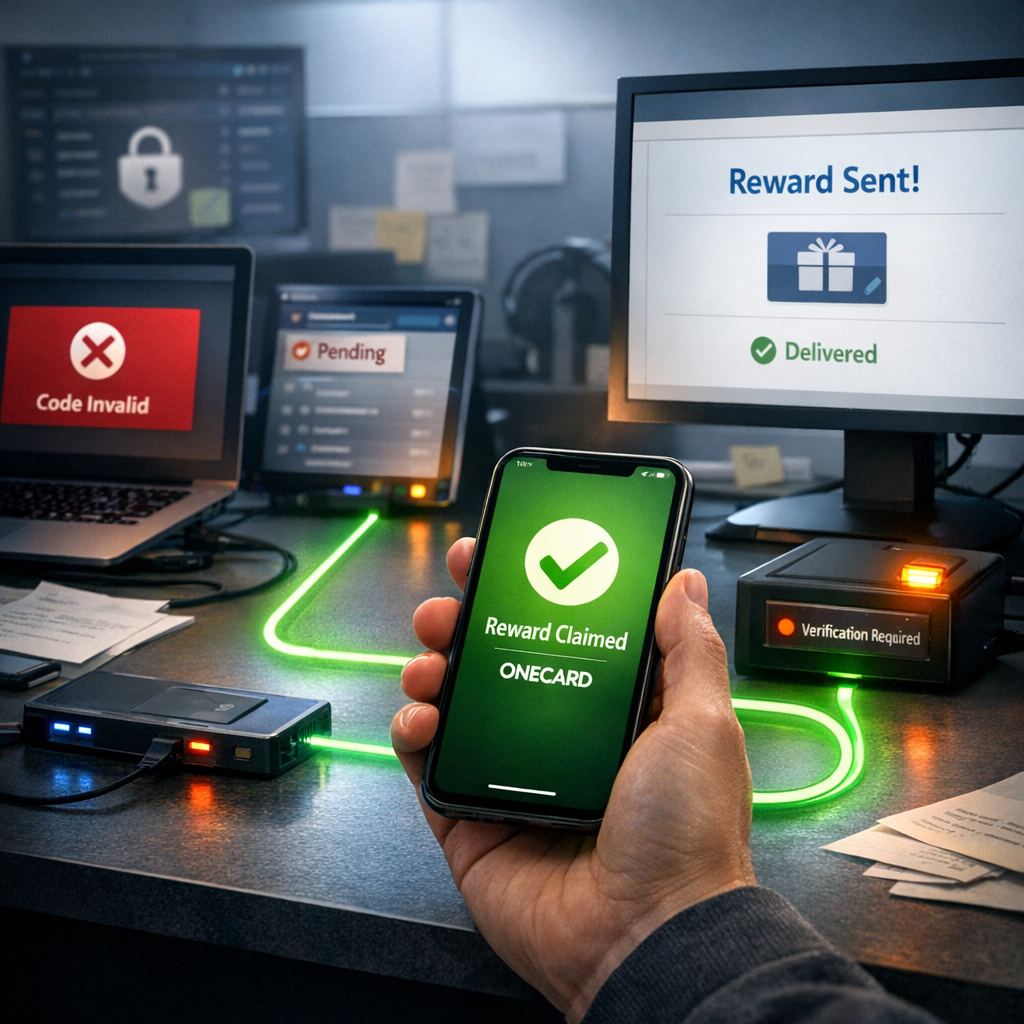
Paper feels safe in grocery support, yet it creates avoidable risk. The contradiction is clear: a tangible format often leaves the weakest audit trail when distribution speeds up, handlers multiply, and reissues pile up. Consider the reported loss of food vouchers; such failures occur when issuance, control, and redemption logic sit in separate silos. For teams moving support quickly while protecting budget and brand confidence, this gap matters.
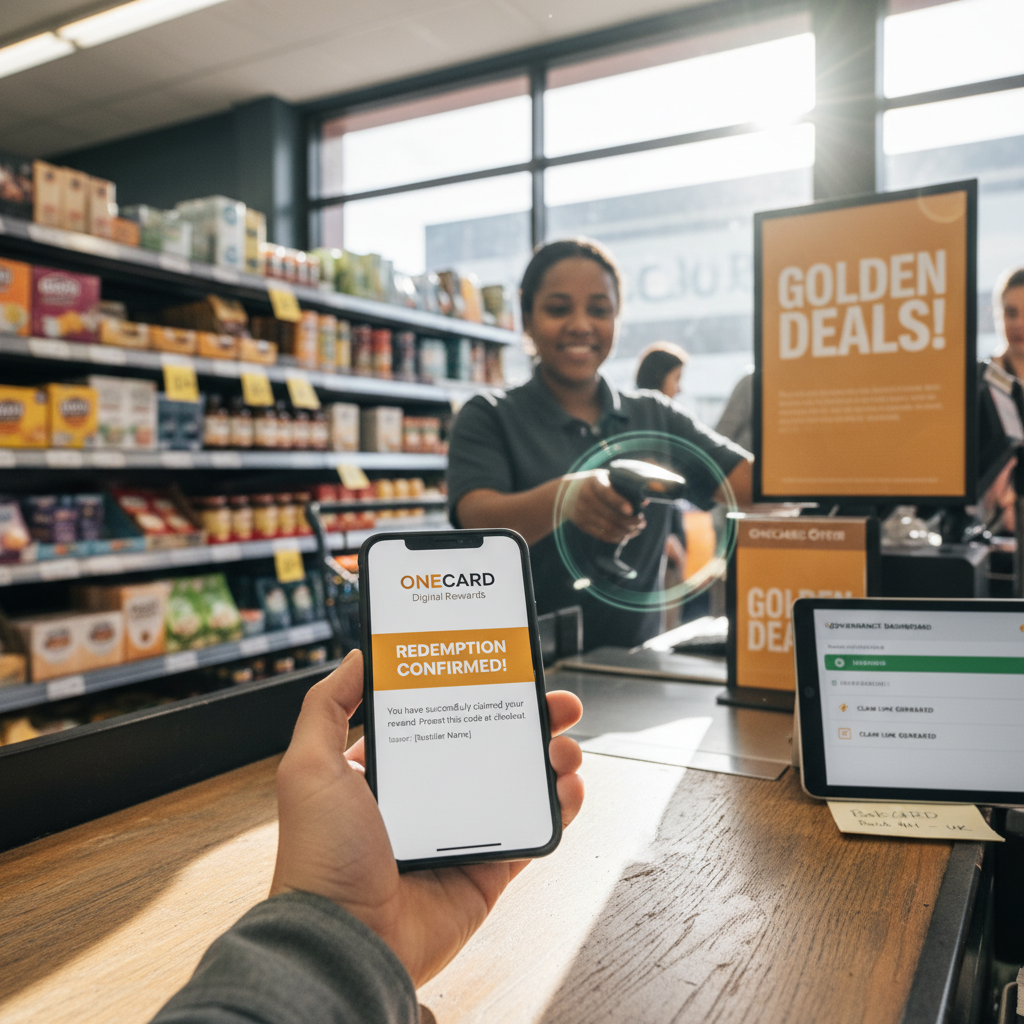
The question is whether paper-based habits still work when promotions, fulfilment, and support teams need faster issue, clearer proof of use, and fewer blind spots. For most schemes, a governed digital rewards platform like ONECARD keeps delivery branded, redemption controlled, and reporting usable. ONECARD replaces paper with a secure, measurable flow that is easier to issue and redeem.
Decision context
Support teams face pressure to deliver help faster, while finance and compliance demand tighter controls on where value goes and when it is used. Paper vouchers offer familiarity but falter under volume. A paper issue can be logged; its onward journey is often patchy. A digital issue can be logged, delivered, and checked at each stage, improving the operational picture.
Operational tests show paper-assisted options increase hand-offs and slow exception handling, reducing redemption traceability when vouchers are reissued or queried. The core friction is the paper gap itself. Between issue and use, too much happens outside a governed system. ONECARD keeps entitlement and redemption within a controlled flow. This improves time to delivery, confidence in recipient value, and clarity over support cases. Digital introduces dependency on data quality and journey design, but hybrid models preserve old risks while adding complexity.
Options and trade-offs
For grocery support vouchers, teams choose between three operating models, defined by control and evidence survival.
| Option | Strength | Constraint | Operational consequence |
|---|---|---|---|
| Paper voucher fulfilment | Familiar to internal teams and some recipients | Weak visibility after issue, slower replacement handling | Higher support load when vouchers are delayed, lost or disputed |
| Hybrid paper plus digital notifications | Easier transition from legacy process | Two systems to reconcile, duplicate exception paths | Reporting improves slightly, accountability often does not |
| Governed digital delivery through ONECARD | Fast issue, auditable flow, controlled secure voucher redemption | Requires cleaner setup of rules, messages and support logic | Better branded delivery, faster exception handling, clearer first-use evidence |
The paper model wins on familiarity, not performance. Familiarity reduces internal resistance initially, but rarely cuts cost-to-serve over a full campaign. Once replacement requests and disputes begin, paper's hidden overhead emerges. Teams cannot separate delivery failure from claimant confusion because evidence is thin.
The hybrid option buys time but keeps the most expensive part of the old process alive. It often leads to digital alerts with paper entitlements, leaving back-end proof gaps. Branded communications may improve, but governed control remains insufficient. Evidence favours a clean digital path.
ONECARD offers the cleanest route to remove the paper gap. It narrows the grey area between “sent” and “received”, where many support tickets originate. Token rules, claim-link handling, and confirmation states improve confidence without making redemption a chore.
Risk and mitigation
Digital is not risk-free, but it offers a better-managed risk profile. Main concerns are access, fraud resistance, and operational readiness.
Access risk appears first in stakeholder conversations. ONECARD supports a clearer entitlement path with confirmation states and support handling, so schemes do not rely on guesswork. Where assisted support is needed, teams can define fallback steps without reverting to paper.
Fraud resistance deserves attention. Loose issuance and weak handover points create opportunities for duplicate claims or uncontrolled sharing. A governed digital route allows stronger secure voucher redemption controls, like claim-link rules and first-use checks, while keeping the consumer journey manageable. The trade-off is more setup discipline for better control live.
Operational readiness is quieter. Teams sometimes assume a digital rollout is a technical switch. It is not. Support scripts, exception categories, issuer rules, and reporting views need settling before scale. Define a minimum operating model: what counts as issued, delivered, and redeemed. That gives everyone the same scoreboard.
The unresolved tension is that stronger governance can reveal process weaknesses teams have lived with for years. Better data does not merely comfort; it exposes slow support routes or muddy partner hand-offs. Hidden failure costs more than visible failure.
Recommended path
Replace paper-first fulfilment with a digital-first, governed model in ONECARD, then add assisted handling only where evidence shows need. Starting by preserving legacy exceptions builds around old constraints and dilutes commercial upside.
Start with one objective: reduce the distance between entitlement and usable support. Structure the operating model around four measurable points: issue, delivery, first open, and redemption. This gives shopper marketing leads and fulfilment owners a practical view of drop-off and clarifies partner accountability.
Keep the reward journey branded and plain-speaking. Stronger branded rewards delivery reduces confusion, lifts confidence, and gives support teams a common reference when customers contact. In grocery support, small clarity gains matter because each extra query adds cost and delay.
Define where friction is worth it. Some controls should happen before issue, some at claim, some at first redemption. The mistake is applying all everywhere. ONECARD is strongest when governance matches actual exposure, not when every user is treated as a risk event. Design for straightforward use by default, with step-up checks where pattern, channel, or claim history justifies them.
The commercial implication is immediate. Removing the paper gap can shorten fulfilment cycles, reduce avoidable support contacts, and improve campaign reporting in the same quarter, if the programme is instrumented properly from the start. That is worth a closer look if your current model leaves teams arguing over what was sent, received, and redeemed.
If your grocery support vouchers still rely on paper for reassurance, the safer move may now be the opposite. Review the option set, map failure points honestly, and test a digital-first path in ONECARD against real issue-to-redemption evidence. To see where value appears first and how governed delivery settles arguments with data, contact the team and explore the platform's controls.
If this is on your roadmap, ONECARD can help run a controlled pilot, measure the outcome, and scale only when evidence is clear.