Full article


Most firms do not lose speed between the website and case-management because staff are lazy or because demand is unusually high. They lose it because the handoff is still built like a suggestion box. Free text looks flexible until someone has to route a family matter at 08:12, spot an urgency flag, and open the right workflow without guessing.
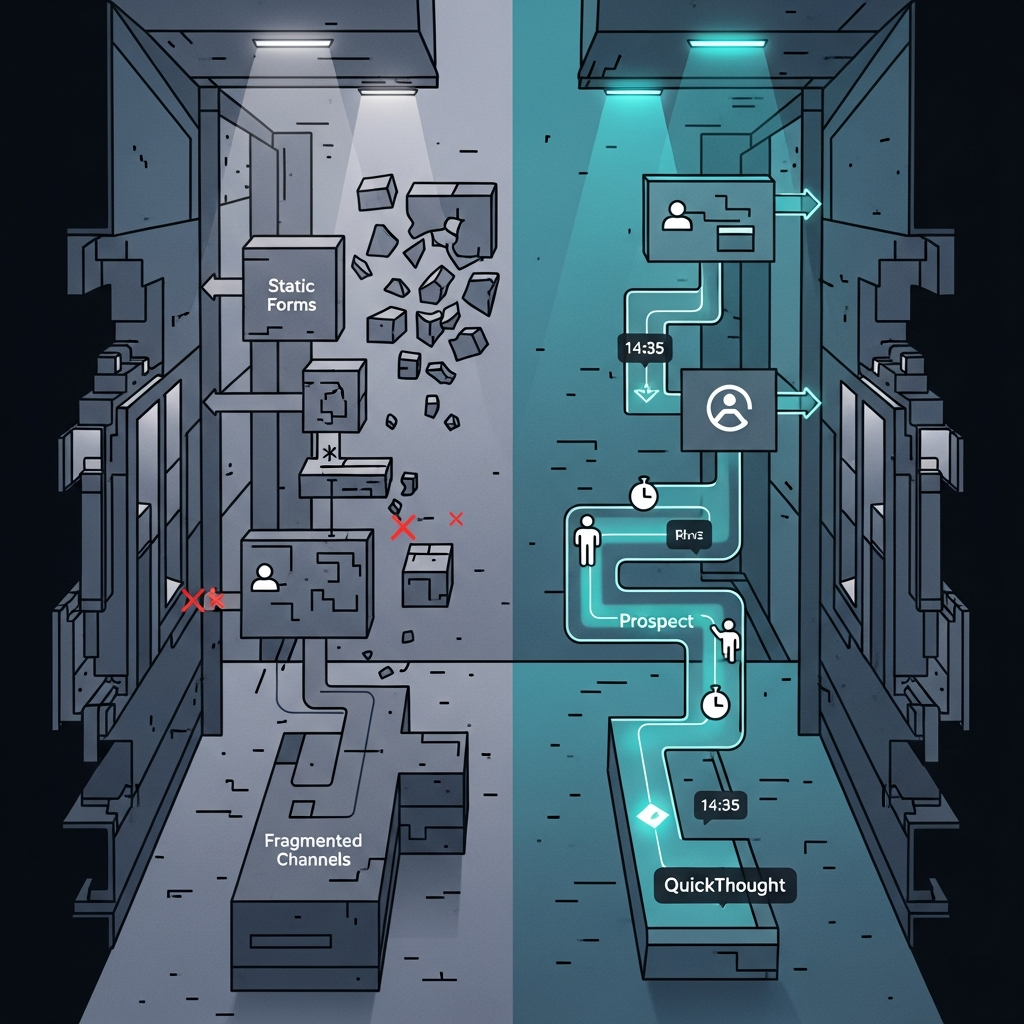
That is the useful shift here. Structured intake does not need to feel robotic, and it does not need AI theatre. It needs a governed set of fields, sensible branch logic, and a clear handoff that gets an enquiry from website to case-management in under five minutes. The trade-off is simple: you give up a bit of messy “tell us everything†freedom in exchange for better routing, cleaner audit trails and fewer avoidable delays.
Context
Last Thursday, in Canary Wharf, I watched a junior associate work through a spreadsheet full of web enquiries that should never have landed in a spreadsheet in the first place. The smell of over-brewed coffee was doing nobody any favours. That’s when I realised, again, that many firms are still treating intake as a data dump rather than an operational system.
A mid-sized firm we observed in March 2026 was losing roughly 30% of potential matters before proper review, largely because incoming enquiries arrived as unstructured notes with no consistent legal area, urgency marker or consent status. At another point, between 9 a.m. and noon on a Tuesday, one intake team handled about 50 enquiries and routed only 12 correctly on first pass. The rest needed manual interpretation. That is not a lead problem. It is a workflow design problem.
For regulated firms, this is where legal intake qualification starts to fray. A single free-text box might collect everything from employment disputes to housing disrepair and private family issues, but it does not support consistent routing. If a platform cannot explain its decisions, it does not deserve your budget. The same goes for an intake process that cannot explain why one enquiry reached the right team and another sat untouched for hours.
What is changing
The market is moving away from generic chatbot behaviour and towards governed decision trees. Sensibly so. QuickThought is useful here not because it pretends to think like a lawyer, but because it does not. It asks the next relevant question, captures only what the route requires, and passes structured data into the next system without asking staff to translate prose into process.
Across anonymised aggregate Holograph deployment data from 2026, firms using structured intake patterns recorded a 40% reduction in data-entry errors during handoff. That matters because errors at intake are expensive in dull, practical ways: wrong queue, delayed callback, duplicate records, missing consent, missed urgency. Automation without measurable uplift is theatre, not strategy.
The stronger pattern is narrow and deliberate. A housing disrepair path might ask for property type, tenancy status and whether notice has already been given. A data protection matter might capture organisation type, breach timing and whether the enquiry concerns an individual or a business. Different branches, different fields, same discipline. The trade-off is that you cannot ask everything up front. Good. In sensitive areas such as family law, asking too much too early often pushes people away. In observed intake reviews, excessive questioning increased drop-off materially; one internal comparison showed around a 25% rise in abandonment on more intrusive first-contact flows.
Which fields should never be left unstructured
If the handoff needs to happen in under five minutes, a few fields must be machine-readable every time. Not “usually capturedâ€Â, not buried in a paragraph, every time. At minimum: legal area, urgency, jurisdiction, consent status, preferred contact method, and whether the matter matches the firm’s service scope.
Those fields do different jobs. Legal area determines destination. Urgency tells the team whether this needs same-day handling, especially in employment, housing or safeguarding-adjacent scenarios. Jurisdiction stops England-and-Wales workflows swallowing matters that belong elsewhere. Consent and contact preference support compliant follow-up. Service-fit prevents fee earners wasting time on work the firm does not take on.
There are others that often deserve structure too: opponent type, incident or trigger date, funding or fee-arrangement indicator, vulnerability flag, and source channel. I still don’t fully understand why some firms leave vulnerability cues buried in free text when they know the first callback shapes the whole relationship, but here’s what I’ve observed: once teams can sort by a structured vulnerability marker and a clear urgency field, response quality improves because staff know how careful they need to be before they pick up the phone.
The practical trade-off is obvious. Every structured field adds a little friction to the front-end experience. Every missing structured field adds much more friction to operations, compliance and reporting at the back. In most regulated intake journeys, the second cost is the nastier one.
Implications for compliance and routing
Structured intake supports compliance because it applies data minimisation with intent. You collect what is needed for first-contact qualification and routing, then stop. That aligns with UK GDPR principles far better than a sprawling free-text confession box that invites people to disclose special-category data before anyone has explained how it will be used.
It also improves auditability. A governed decision-tree route can show which path was offered, which answers triggered escalation, and why the enquiry reached a particular queue. That matters to compliance leads and operations heads because it turns “someone thought this looked right†into an inspectable process. Fairness in workflow is not only a promotions issue; the same operational principle applies here. The user path should be understandable, the route explainable, and the outcome verifiable rather than arbitrary.
The ONS personal well-being datasets are useful as background evidence that experience and clarity affect how people judge services, but they do not prove legal intake performance. Better to be precise than lyrical. The direct operational signal comes from intake handling itself: lower rekeying, fewer routing errors, faster response windows and cleaner records. That is the evidential standard worth using.
There is a tension, of course. Faster routing is helpful, but speed on its own is not the point. In clinical negligence, family matters or any enquiry with vulnerability indicators, the workflow must know when to stop asking questions and hand over. The trade-off is between completeness and care. Good systems choose care first, then direct the matter with enough structure for the next human to act sensibly.
How to build the five-minute handoff
Start with one practice area, not the whole firm. Employment is often a sensible pilot because volumes are steady, urgency can be real, and the decision points are usually clear enough to model. Map the current route from web enquiry to case-management. Then mark where staff are forced to interpret free text, copy and paste details, or chase missing basics. Those are your structured-field candidates.
Build the first version around a minimal governed set. For example: practice area, brief issue type, incident date or timeframe, urgency, location or jurisdiction, consent to follow up, and preferred contact channel. If the matter falls outside scope, route it out cleanly. If it raises a vulnerability or safeguarding concern, stop the tree and pass it to a human review queue. Calm triage beats clever copy.
Measure before you celebrate. Track handoff time, first-pass routing accuracy, drop-off rate, and the proportion of enquiries requiring manual rework. A reasonable target for a three-month pilot is a 20% reduction in drop-off or rework in the selected area, provided the team is actually using the workflow consistently. If the numbers do not move, do not call it innovation. Fix the branch logic, remove unnecessary questions, and test again.
One more thing: train intake teams on the meaning of the fields, not just the software clicks. A structured urgency flag is only useful if staff know what response standard it triggers. The same goes for vulnerability markers, out-of-scope statuses and consent records. Systems support people; they do not absolve them.
What this means for firms using QuickThought
QuickThought works best when it is treated as governed intake infrastructure rather than a talking widget. The value is not that it chats. The value is that it creates a reliable bridge between first contact and operational action. For legal intake qualification, that means cleaner decision-tree qualification, more consistent regulated lead routing and fewer enquiries arriving in case-management as half-interpreted stories.
That is the real implementation lesson. Keep the first interaction warm, short and explainable. Keep the handoff fields structured. Keep the data capture minimal enough to respect privacy, but rich enough to route properly. Slightly less freedom at the front buys a lot more certainty at the back, which is usually the right bargain.
If your current journey still relies on inboxes, spreadsheets or heroic manual interpretation, Holograph can help you design something more disciplined without making it feel cold. We build QuickThought deployments around measurable routing outcomes, privacy-preserving intake and clear operational rules, so your team can move faster with fewer guesses. If you want to see what that would look like in your firm, have a conversation with Holograph and we’ll map the handoff fields worth structuring first.