Full article
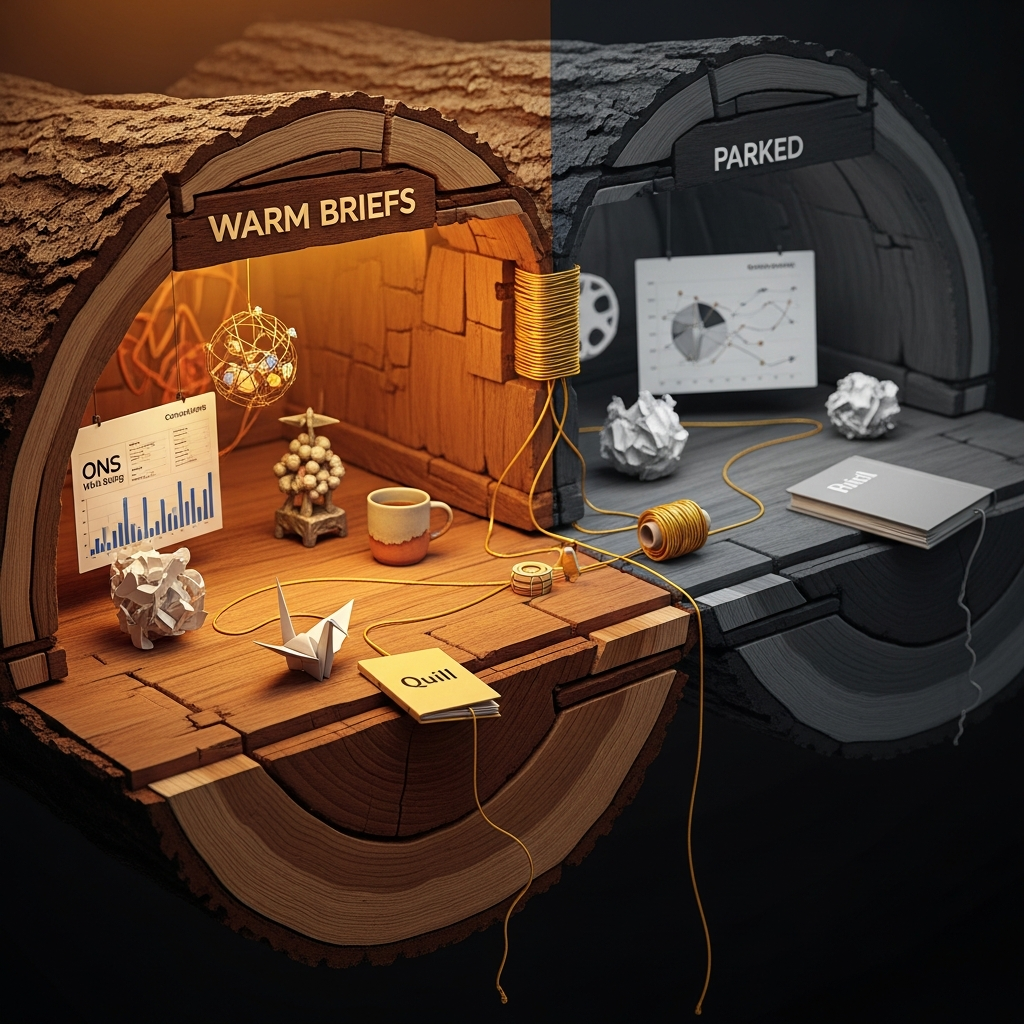
Humane features often hinge on the quiet oddities that show people improving systems without waiting for permission. This checklist helps editors turn those small clues into briefs that are warm, evidence-led, and memorable, moving from generic best practice to stories with real human texture.
At first it looked like a throwaway detail, then that sort of thing kept appearing in places it had no business being. A crooked notice in a village hall, a volunteer’s renamed queue, a bench painted ahead of council schedules: these are the signals worth chasing. Quill’s role isn’t to sentimentalise; it’s to spot the quirky public behaviours that reveal how people really live, separating charm from utility.
Signal baseline
I nearly ignored this one as background noise. That would have been a mistake. The Office for National Statistics tracks personal well-being, life satisfaction, happiness, anxiety, and whether activities feel worthwhile, in quarterly and local authority estimates. According to the ONS, these indicators shift over time and place, offering a measurable baseline for mood. For instance, the 2023 data shows local variations that can pinpoint where people report feeling more connected or settled. Start here, not with abstract uplift, but with specific settings where behaviour might surface.
Best practice alone is too thin. Platform basics like fitting the format or surfacing branding early matter, but they’re the floor. The stronger move is turning repeated evidence into golden rules for story selection. Stop asking only if a story is pleasant; ask if it shows a pattern of observed behaviour worth understanding.
What is shifting
The shift is from content hygiene to editorial warmth with standards. Soft stories were once a nice extra, but in 2025, readers remember human workarounds more than corporate polish. This isn’t just a hunch. In marketing, analytics are being translated into briefing rules, and modular systems outperform one-off assets. Take Holograph’s work with ARize on the Lucozade Energy AR campaign, which reported a 32% sales uplift by connecting brand cues, channel context, and audience behaviour.
Apply the same logic to features. A warm brief needs an evidential spine. If three separate reports show residents improving signage or adjusting rituals, that’s corroboration, not fluff. The caveat: cross-source repetition can mislead. So demand a named source, a date, and a reason the behaviour matters. There are mornings when this planet feels assembled from committee notes, tea breaks and sheer optimism.
Who is affected
Editors face the friction first: a lovely detail arrives, but is it a story or just mood? A checklist protects creative writing from becoming decorative mush. Readers come next, they can spot uplift as a genre. A humane feature works when it recognises competence, like a Cumbria fete volunteer redrawing a raffle sign so nobody misses the point, or a Leeds library pinning translated notes at child height. These details stick because they contain a real person’s small decision.
Brands are affected too, especially those widening reach without sounding borrowed. Quill sits in an awkward but useful spot, needing warmth without losing standards. The tension is healthy: if every oddity becomes a feature, authority drains; if every feature behaves like a dashboard, life goes out.
Actions and watchpoints
A usable brief for humane features should include four checks. First, define the signal in one sentence. What exactly happened, where, and who did it. Secondly, state the implication. What wider behaviour does this suggest: trust, adaptation, neighbourliness, local pride, service friction, or something else. Thirdly, demand corroboration. Use at least two sources, one of them preferably official, local or directly observed. Fourthly, set an action for the writer. Find the one detail that proves the pattern is lived rather than imagined.
One opinion worth disagreeing with: not every positive piece needs a large social claim. Sometimes the proper scale is a bus stop, a noticeboard, a church hall urn and six people trying to make Tuesday function. The trick is not to oversell it. A useful oddity can justify a short feature if it reveals a repeatable habit or a practical lesson. If it cannot survive the question “so what changes because this happened?”, it may still be lovely, but it is not yet a brief.
Watchpoints matter. Avoid accidental condescension. Avoid selecting only photogenic kindness while ignoring the system that made a workaround necessary. Be careful with data too. ONS well-being figures can orient a writer towards place and mood, but they cannot prove why a particular local ritual emerged. Use them as signal baselines, not a universal explanation.
The checklist, then, is less mystical than it sounds. Start with shared best practice, but codify your own rules from what keeps working. Build briefs around those small clues where people improve a system without waiting for permission. The best signals are not always the loudest. Often they are the ones with a slightly odd human fingerprint on them: the crooked notice, the improvised label, that tiny act of competence. If you want briefs that feel warmer without becoming woolly, start there. And if you need a hand turning those quiet signals into your next commission, have a word with us at Quill.
If this is on your roadmap, Quill can help you run a controlled pilot, measure the outcome, and scale only when the evidence is clear.