Full article
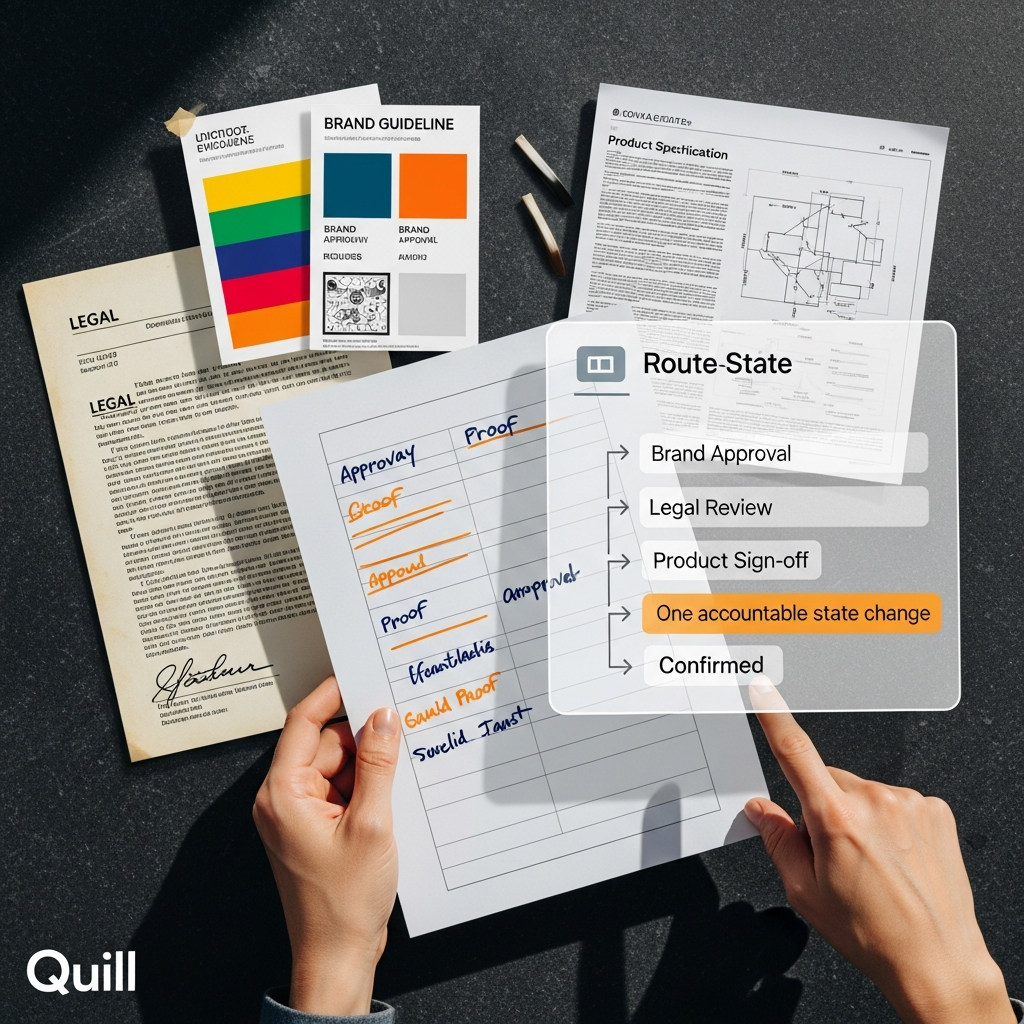
What should a UK team get straight before switching this on? Start with the risk that bites first: baseline drift between review teams. Multi-party approval in Quill now supports approval team baselining. Legal, brand and product can all be doing valid review work, but if each team is working to a different definition of done, the owner is left patching the route together by hand.
That decision comes before go live, not after it. Set one baseline per asset type, name the owner for each path, and run a real asset through the route inside the first 48 hours. If nobody owns the route, it is not ready.
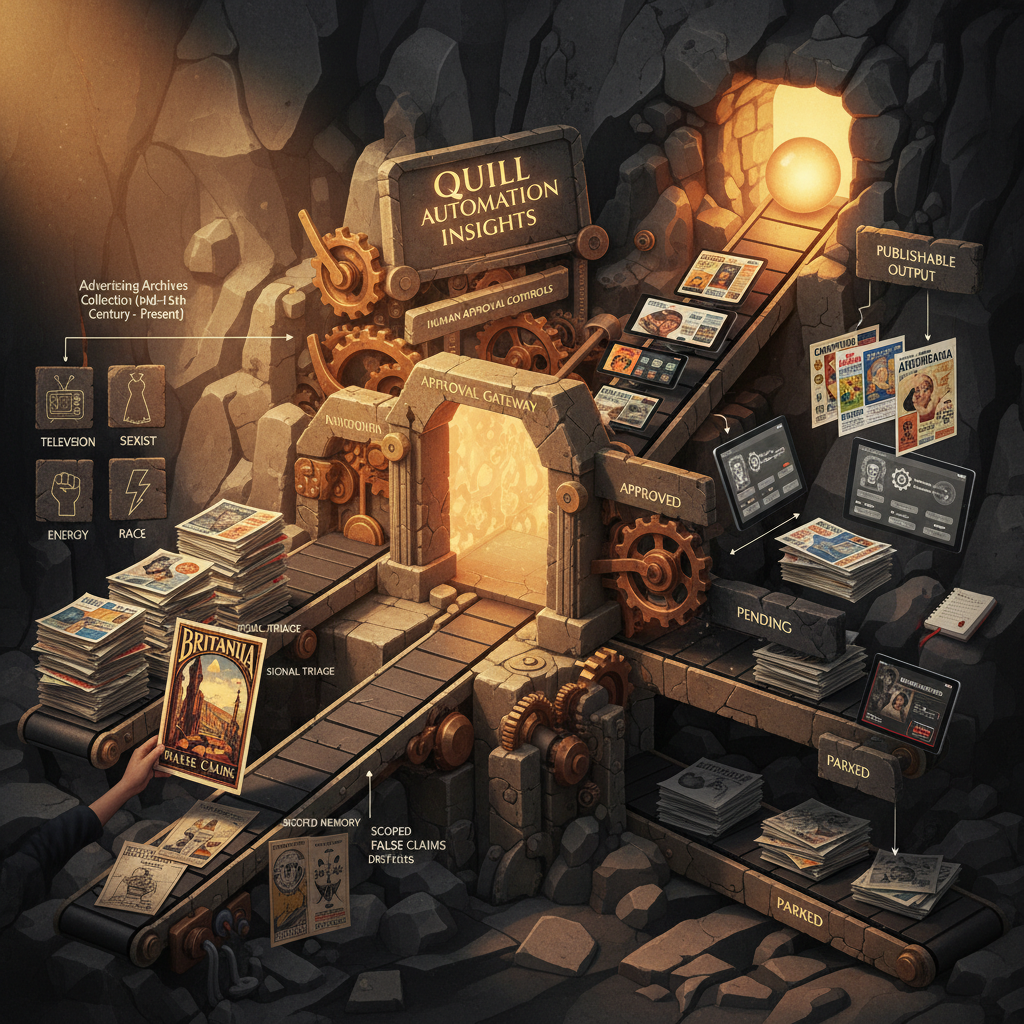
Quill matters here because it keeps signal triage, drafting, approval, imagery, and delivery inside one governed workflow. That is the practical break from an approval chain held together by habit. Reviewers work from the same version, comments stay in one approval workspace, and status is visible without the usual chase across email threads. See Quill and Holograph solutions for the product context.
The short answer
Before multi-party review goes live, your team should be able to point to one active baseline per asset type, one named final approver per path, and one shared place where review status is visible. Miss any one of those and you do not have a governed route. You have a longer queue.
What you are solving
Baseline drift starts when teams review to different standards. Legal checks risk. Brand checks tone. Product checks accuracy. That split is normal. The problem starts when those checks run without one agreed route through the asset.
That is the useful line between governed publishing operations and ad hoc content ops. In an email-led process, five reviewers can produce five versions and leave one content lead to reconcile the mess. In Quill, the review stays tied to one version and one workspace, with statuses visible as it moves. Human judgement still carries the hard calls. The gain is control over versioning, admin load, and route clarity.
The proof question is not whether the feature is there. It is whether memory, review discipline, and delivery controls hold once volume arrives. That is why the first 48 hours matter more than the launch toggle.
What governed editorial automation actually needs in the first 48 hours
Start with four decisions: roles, route order, escalation, and rollback checks. Get those wrong and the queue will show it quickly.
- Reviewer groups and roles: Create groups that match real operating roles, such as Core Brand, Specialist Legal and Product Marketing. Keep commenters separate from approvers. Acceptance criteria: each live path has at least two distinct roles and no generic catch-all reviewer group.
- Review paths: Decide where parallel review is acceptable and where a fixed order is safer. A standard blog post may cope with parallel review. If claims or compliance risk are in play, test a sequential route first instead of assuming speed is the priority. Acceptance criteria: at least one sequential path is configured and tested on a real asset in week one.
- Escalation and final say: Nominate a single owner for each approval path. Acceptance criteria: every path has a named owner and a clear escalation rule.
- Rollback checks: Decide what happens if the new route stalls, creates comment sprawl, or leaves assets blocked without a decision. Acceptance criteria: the owner for each live path can state when to pause the route, who can revert it, and which queue check confirms the rollback worked.
The test is simple. A reviewer should be able to tell, in under a minute, what they own, what they are not there to edit, and what happens if the path stalls.
Decision points that need owners and dates
One point is worth being blunt about: parallel review is not always faster once rework is counted. On regulated content, a legal-first sequence can cut late rewrites even if it adds time at the start.
| Decision point | Owner | Action by date | Acceptance criteria | Risk and mitigation |
|---|---|---|---|---|
| Define reviewer groups | Workspace admin | By end of day one | At least two active groups created, with separate reviewer and approver permissions | Risk: everyone gets the same access and governance collapses into comment noise. Mitigation: check permissions against one live asset before rollout. |
| Configure one high-risk sequential path | Content Ops lead | Within the first 48 hours | One path tested with a real asset, with Legal before Brand where claim or compliance risk is present | Risk: critical checks happen too late and trigger rework. Mitigation: run a pilot asset through the path and log any hand-off delays. |
| Assign final approvers | Head of Content | Before any multi-party workflow is made live | Every active path has one named final approver and one escalation point | Risk: assets stall in review loops. Mitigation: publish a simple ownership list in the workspace and review it weekly. |
| Set review status checks | Delivery owner | End of week one | Status is visible for each asset and one queue check is built into the weekly ops routine | Risk: blocked items sit unseen until the deadline bites. Mitigation: add a standing queue review and track time-to-approval as a baseline measure. |
If you cannot say who owns the next move and by when, sort that out before anything else.
Where teams usually come unstuck
The first failure mode is role creep. Someone brought in for compliance starts rewriting headlines. Someone asked to sense-check product detail starts arguing about tone. More comments do not usually solve that. A tighter baseline does.
The second is poor input quality. If the brief is vague, source material is thin, or claims are not evidenced, the approval path becomes a clean-up exercise. Quill can keep the route visible and governed, but it does not replace proper briefing or human judgement.
The third is volume pressure. A route can look tidy on one test asset and still buckle once the queue fills. Use two checks from week one: count how many review rounds an asset takes before approval, and log where it was blocked. If rounds keep rising or the same hand-off keeps failing, treat that as a configuration or briefing issue until you can prove otherwise.
Where Quill fits best
Quill fits best when the alternative is an ad hoc queue spread across inboxes, duplicate versions, and fuzzy sign-off. It gives teams one governed workflow across signal triage, drafting, approval, imagery, and delivery. That does not remove judgement. It gives judgement a route, an owner, and visible status.
If you are already running more complex approval paths, related products such as MAIA and DNA may matter at the edges. The narrower decision here is whether your reviewers can work from one baseline without losing ownership, audit clarity, or queue visibility.
Action checklist before go-live
- Name the workspace admin, delivery owner and final approver for each live path.
- Create reviewer groups that reflect real operating roles, not generic labels.
- Choose which asset types can run in parallel and which need sequential review.
- Test one real asset through the highest-risk path in the first 48 hours.
- Confirm sign-off criteria, including who can approve and who can only comment.
- Set one rollback check for stalled routes or failed hand-offs.
- Log risks, mitigations and baseline changes so the audit trail stays useful.
The aim is not a perfect workflow on day one. It is a clear first baseline that can survive a real test, with owners, dates, and a way back if the route misfires. If you want a second set of eyes on your setup, book a guided Quill workspace tour with the automation team.