Full article

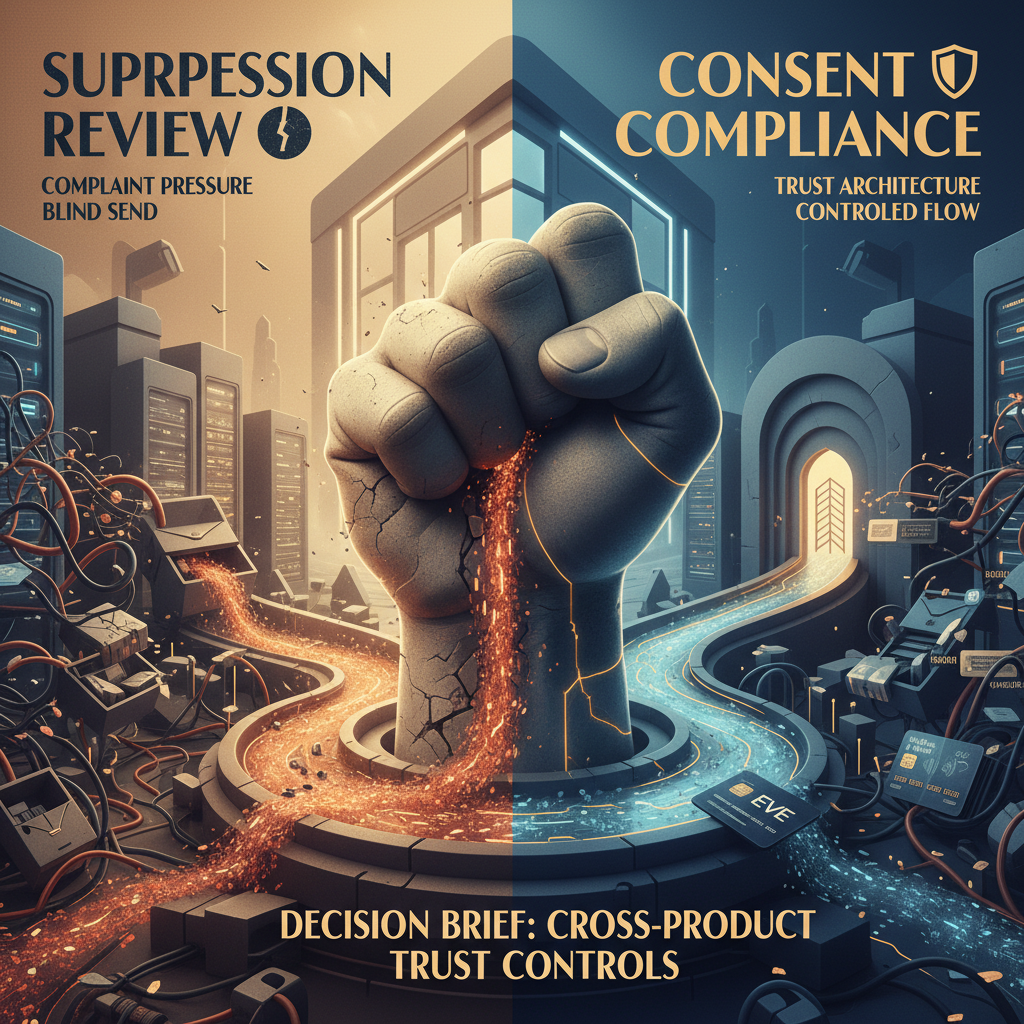
Validation mishandled stunts growth in UK CRM programmes. Teams want cleaner data and stronger email deliverability, but misaligned controls risk acquisition. EVE must balance quality improvement with friction avoidance. Start with acquisition, keep onboarding light, monitor retention.
What is being decided
Choose between three EVE placements: validate at acquisition on form submit, at onboarding during welcome-series entry, or rely on retention-stage monitoring. Each shifts metrics first. Acquisition controls impact form completion and fake-entry suppression. Onboarding controls affect activation rate and welcome-email reach. Retention controls influence sender reputation and list hygiene. The trade-off is concrete: stricter acquisition reduces toxic data early but risks false positives where intent is fragile.
Comparative view
Assess EVE's role by comparing where value appears first and risk compounds fastest.
| Placement | Immediate upside | Main constraint | Commercial consequence |
|---|---|---|---|
| Acquisition | Blocks typo traffic, disposable domains and fraudulent entries before CRM entry | Overly strict thresholds can lower form completion and deter genuine users | Better list quality quickly, but threshold tuning matters within days |
| Onboarding | Protects welcome journeys and catches weaker records before first-send damage | Bad data enters the system, requiring routing and consent clean-up | Safer activation, but more internal handling and slower time to value |
| Retention | Helps monitor drift, sender-health issues and ageing records | Inefficient for first detection as acquisition waste is already paid for | Useful for maintenance, weak as the primary control layer |
Acquisition usually wins because bad data costs start at CRM ingestion. Onboarding offers reversibility before sender damage spreads. Retention is often too late for efficient first-line defence. High-intent sign-ups can tolerate tighter checks than broad promotional mechanics.
Operational impacts
With EVE at acquisition, operations prevent issues. Its sub-50ms response time and intelligent caching evaluate risk without slowing page loads. Detection methods like keyboard walks, entropy analysis, alias unmasking and behavioural fingerprinting distinguish human error from abuse without adding friction. Onboarding-stage gating can be useful for second-pass validation in noisy sources like competitions, but as the main filter, it delays welcome journeys, increases support cases, and complicates consent records. Consent compliance is easier with simple forms and invisible fraud logic, aided by client-side execution and zero data retention. Separate hard blocks for obvious abuse from soft flags for ambiguous cases to avoid suppressing growth.
Recommendation and next step
Adopt a layered model: EVE first at acquisition, lighter onboarding checks, and retention monitoring for exceptions. This balances early validation with growth protection. Acquisition should handle the heaviest decisioning, onboarding verify edge cases, and retention watch for decay. Threshold calibration is not universal; separate hard blocks from soft flags.
Next week, focus on commercially tied tuning:
- Review acquisition thresholds by source. Compare paid social, affiliate traffic, organic content and promotions for form completion and bad-entry rates.
- Watch activation indicators within 24 to 48 hours. Monitor delivered welcome emails and first opens by source to detect over-aggressive filters.
- Keep the consent journey clean. Ensure clear opt-out wording and auditable decision trails, supported by EVE without visible gating.
Do not overhaul rules after one noisy day from AI-assisted surges or promotions. Check source mix against baselines first. This approach defends data quality and deliverability. To map these controls to your campaigns, book a frictionless validation walkthrough with our solutions team.